
Edinburgh Itinerary 3 Days: A Practical Plan
Use this Edinburgh itinerary 3 days plan for honest sightseeing, transit tips, free stops, museums, budget notes, and what to skip.
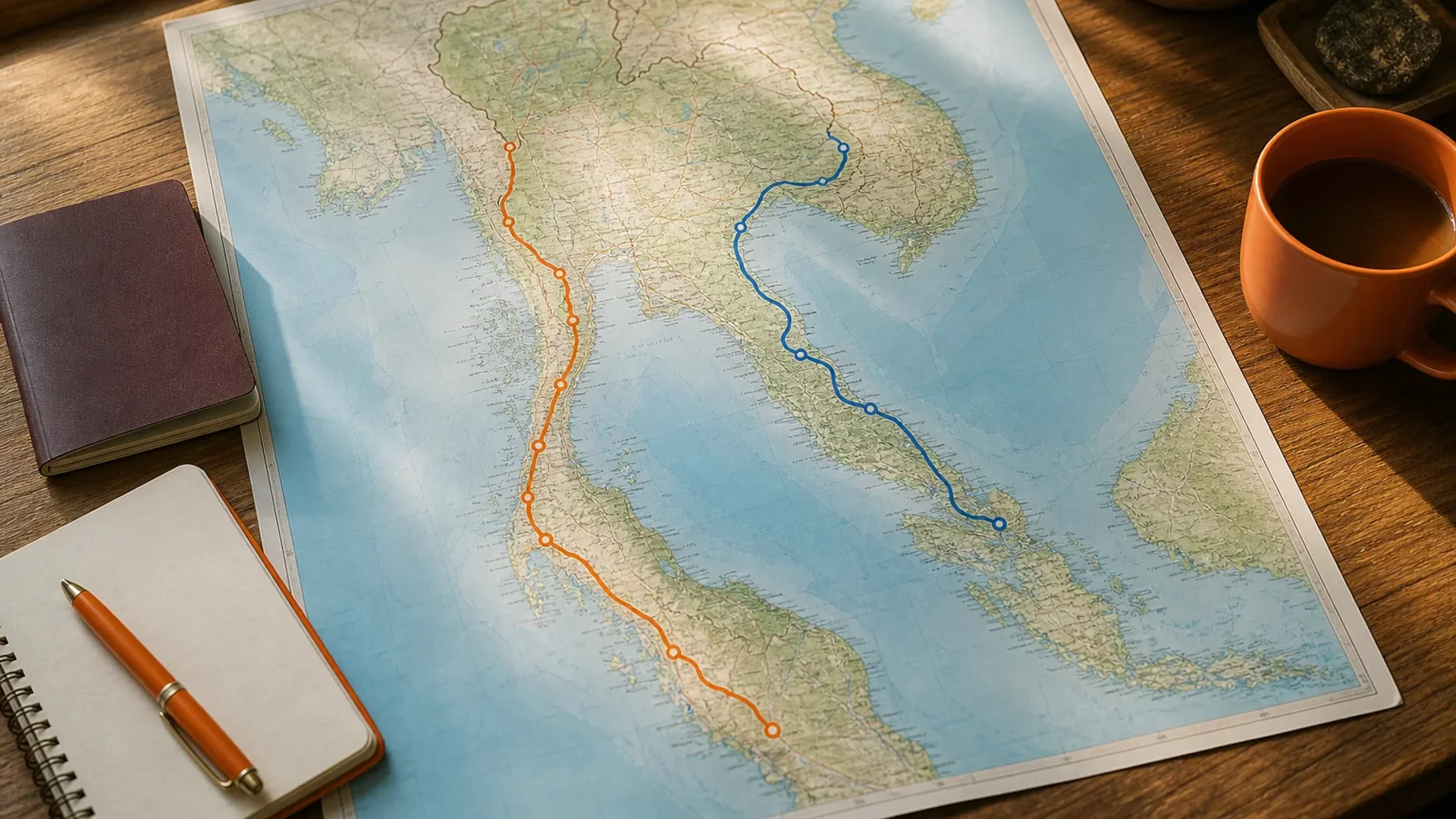
Thailand looks manageable on a map. It isn’t. Bangkok, Chiang Mai, and the islands sit far apart, so a rushed route can turn half your holiday into checkouts and transfers. We recommend one north stop, one Bangkok stay, and one southern coast. Here’s how to build a two-week plan that leaves room to enjoy the country.
A Thailand itinerary 2 weeks long works best when you pick either the Andaman coast or the Gulf coast. Trying to cover both usually adds long road transfers, ferries, and airport waits that eat into beach time.
Choose the Andaman side if you want Krabi, Ao Nang, Railay, Phuket, Koh Phi Phi, or Koh Lanta. Choose the Gulf side if Koh Samui, Koh Phangan, or Koh Tao matters more. These areas use different gateways, so this choice affects your flights before you book them.
The season matters too. The north can have poor air quality during the burning season, which often affects Chiang Mai and nearby areas late in winter and spring. The Gulf and Andaman coasts also follow different rain patterns. Check current conditions before you lock in a nonrefundable island stay. Thailand covers a large north-to-south stretch, as its geography and regional map make clear.
For a first trip, we would choose one of these two shapes:
Don’t book Chiang Mai, Phuket, Koh Samui, Koh Tao, and Koh Phi Phi because each name looks tempting. That’s how a fourteen-day trip becomes a packing exercise.
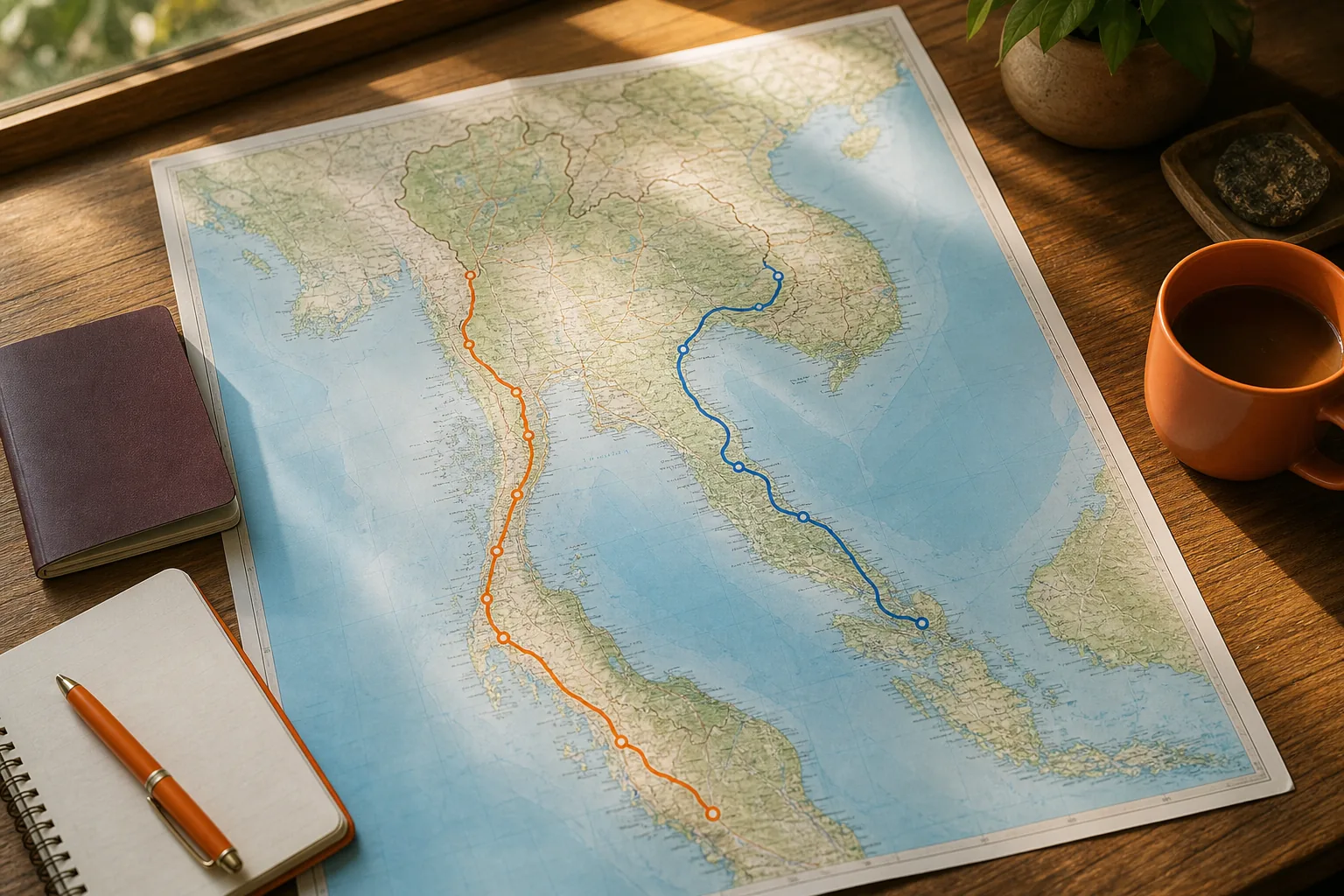
Key Takeaway: Pick one southern coast first, then choose the airport and island stops that support it.
For most first-time visitors, the clearest Thailand itinerary 2 weeks route starts in Bangkok, moves north to Chiang Mai, then heads south for the final beach stretch. We like the order because city days come before slower island days.
Give Bangkok three nights. Use one day for the old city, with the Grand Palace area, Wat Pho, and Wat Arun. Keep another day for neighborhoods and food. If you arrive tired, make the first day light. Bangkok is easier once jet lag has loosened its grip.
Chiang Mai needs three or four nights. That gives you time for the Old City and one day outside town. You can add Chiang Rai, but a same-day trip makes for a long road day. We would skip it on a first visit unless its temples matter more to you than rest.
Bangkok appears often in published sample plans because it is a natural arrival hub. The problem is that many plans then scatter across too many southern stops. Dream Book Travel takes a stricter view: a route earns its place only when the travel time supports the experience.
Before booking, compare a flight with the overnight train. A flight from Bangkok to Chiang Mai protects sightseeing time. The sleeper train can save a hotel night, but it may leave you tired. If you choose the train, keep your first Chiang Mai morning open rather than scheduling a paid tour at dawn.
We also recommend checking whether you can fly into one city and leave from another. An open-jaw flight can remove a return trip to Bangkok. It may cost more at checkout, so compare the complete fare rather than assuming it wins.
If you want to compare the pacing with another two-week trip, our Japan 2 Week Itinerary: Tokyo to Hiroshima uses the same useful test: count transfer time before adding another stop.
Chiang Mai is worth it for travelers who want temples, food, and mountain air. It is less useful for someone who wants a pure beach holiday. Decide that now, not after buying the ticket.
A day-by-day Thailand itinerary 2 weeks plan should show where you sleep each night and how many days disappear into transport. The sample below uses Bangkok, Chiang Mai, and the Andaman coast. Swap the coast for the Gulf if the season or your priorities point that way.
| Days | Base | Plan | Why it works |
|---|---|---|---|
| 1 to 3 | Bangkok | Arrive, visit the old city, then spend a day on food or neighborhoods. | Three nights absorb jet lag without rushing the main sights. |
| 4 | Travel north | Fly or take the sleeper train to Chiang Mai. | The route keeps the north in one block. |
| 5 to 7 | Chiang Mai | Explore the Old City, add one day trip, and leave one slower evening. | You get culture without changing hotels each night. |
| 8 | Travel south | Fly to Krabi or another chosen southern gateway. | One major flight protects a full day compared with a long overland route. |
| 9 to 12 | Ao Nang, Railay, or one island | Settle in, choose one boat day, and keep time for the beach. | Four nights make weather changes less painful. |
| 13 | Bangkok or southern gateway | Return close to your international departure point. | A buffer reduces the risk of a missed long-haul flight. |
| 14 | Departure | Leave Thailand. | Keep this day free of ambitious sightseeing. |
This plan gives you three main bases. That is enough variety for most people. If you add Chiang Rai, Ayutthaya, Phuket, and a second island, remove something else instead of squeezing them into spare half-days.
We would also avoid moving to an island on the same day as an international arrival. Delays happen. A missed ferry can turn a low-cost transfer into an expensive night near the pier.
For a shorter Bangkok stay, use the extra night in the south rather than adding another southern town. A slower beach block is usually more memorable than a quick hotel room in a fourth location. Dream Book Travel’s Greek Islands Itinerary: Plan Your Route follows a similar rule for ferry trips: reduce island changes when the journey itself takes most of the day.
If you prefer the Gulf, replace Krabi and its nearby islands with Koh Samui or another Gulf base. Don’t cross between coasts just to collect names. The route may look short on a map, but the full journey includes road legs, waiting, and the boat.
Transport is where a Thailand itinerary 2 weeks plan either works or falls apart. Compare the hotel-to-hotel journey, not the advertised flight or ferry time.
For every transfer, write down six points:
A one-hour flight can still consume half a day once you add the airport ride, check-in, baggage, and the transfer at the other end. That does not make flying a poor choice. It means you should place it on a day with no fixed tour.
Trains make sense when the journey is part of the trip. They work well for Bangkok to Ayutthaya and can suit Bangkok to Chiang Mai if you value the rail experience. Check the current departure station and ticket rules before paying. A national rail operator serves the network, but schedules and station arrangements can change.
Night trains deserve an honest warning. They replace a hotel night on paper, not necessarily a good night’s sleep. Noise, movement, an early arrival, and a long onward transfer can make the next day useless.
Ferries need the same care. Confirm the departure pier, arrival pier, luggage rules, and final ride to your hotel. A ticket labeled with a big destination may still include a van, a waiting period, and a second boat.
Pro Tip: Put a flexible day after your longest transfer. Don’t schedule a sunrise boat trip after an overnight train or a late ferry.
In Bangkok, use the city’s rail system where it fits your route. In smaller towns and on islands, your accommodation location may matter more than the transport app you choose. Staying near a useful pier or town center can save repeated car fares.
A useful Thailand itinerary 2 weeks budget has separate lines for lodging, food, local transport, long-distance transport, activities, and a buffer. Don’t hide flights inside a vague daily number. They can change the trip total more than meals do.
Published expense reports show why the south needs its own budget. One two-week report recorded an average double-room rate of about €60, or $73, found a double room on Railay at about €67, or $82, while a room in Krabi Town came in around €25, or $31. Those figures are past trip examples, not promises for 2026, but they show how much the beach location can affect the bill.
Use this worksheet before booking:
You can cut cost without making the trip grim. Stay in Krabi Town instead of Railay if you want lower lodging rates and don’t mind a boat or road transfer for beach days. Choose one paid boat trip. Walk in Bangkok when the heat allows it. Spend on the long transfer that saves a full day, then skip a minor tour.
What should you skip? We would skip a second coast, a rushed Chiang Rai day trip, and Phuket if your real goal is a quieter island. Phuket can be the right gateway, but a gateway is not automatically a reason to sleep there.

Dream Book Travel keeps this kind of cost check in the planning stage because a cheap ticket can still produce an expensive travel day. Set your anchor price for flights, then decide which comfort trade-off you actually accept.
Two weeks is enough for Bangkok, Chiang Mai, and one southern region, but it is not enough for every famous stop. A Thailand itinerary 2 weeks long works when you limit hotel changes. Plan three bases, then add a day trip only when the travel time stays reasonable.
Spend three nights in Bangkok on a first trip. That gives you time for the old city, food, and one flexible day. If you have a late arrival or an early departure, count hotel nights rather than sightseeing labels. Many travelers need the first morning to recover.
Choose Chiang Mai for a first visit unless Chiang Rai’s temples are your main reason for going north. Chiang Mai works better as a base and needs less road time. In a tight Thailand itinerary 2 weeks route, adding both can make the north feel rushed.
Fly when the route crosses a large part of the country and your schedule is tight. Take the train when you want the journey itself or prefer to avoid another airport day. For a Thailand itinerary 2 weeks long, compare door-to-door time and sleep quality, not only the ticket price.
You should usually choose one side for a two-week trip. The Andaman coast and Gulf islands use different airports, roads, and ferry links. Crossing between them can work with more time, but it often removes a beach day. Pick the coast that fits your travel window.
We recommend three bases: Bangkok, Chiang Mai, and one southern region. That route gives you city life, northern culture, and beach time without turning every other day into a transfer. Write down your hotel-to-hotel travel times before you book. Then use Dream Book Travel to keep the plan honest, set a price alert for the major flights, and leave one day with nothing scheduled.
Use this Edinburgh itinerary 3 days plan for honest sightseeing, transit tips, free stops, museums, budget notes, and what to skip.
Find the best areas to stay in London for tourists, with honest advice for first-time visitors, culture lovers, foodies, and theater fans.
Find the best Greek islands for families by travel style, beach access, activities, and travel-day tradeoffs. Honest picks and planning notes.