Edinburgh Itinerary 3 Days: A Practical Plan
Use this Edinburgh itinerary 3 days plan for honest sightseeing, transit tips, free stops, museums, budget notes, and what to skip.
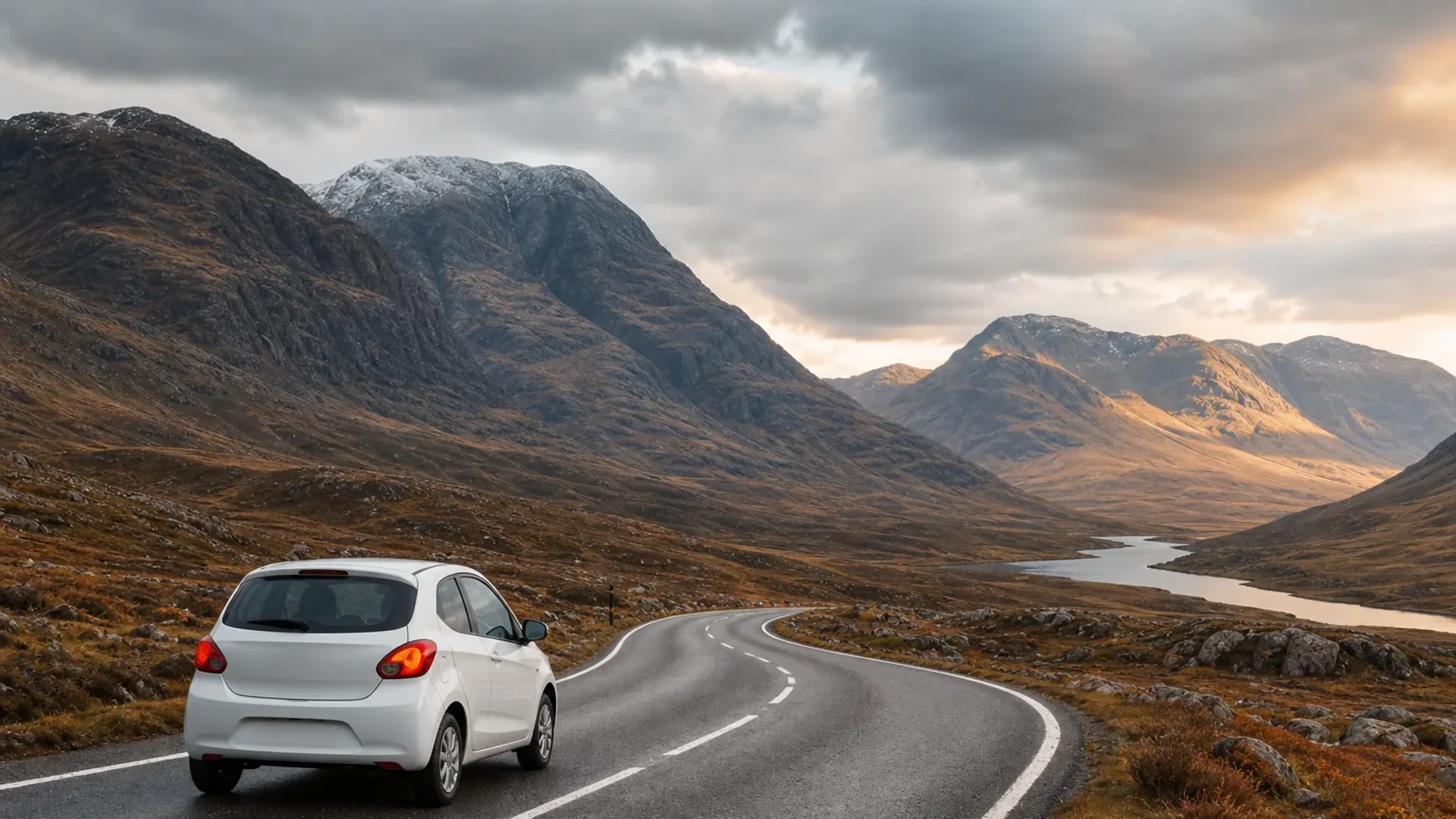
A Scotland road trip can cover Edinburgh, the Highlands, and Skye in one week. It can also turn into a tiring loop of long drives if you plan by map alone. We recommend two days in Edinburgh, two in Portree, and a westbound route that saves the most scenic driving for the end.
One catch: most itinerary pages skip daily costs. So we’ll show you the route first, then point out where you need to check current prices before booking.
A workable Scotland itinerary 7 days long needs a clear split between city time and driving time. Pick up your rental car after Edinburgh, not before. Parking in the city adds hassle, while the first two days work well on foot or by public transit.
Our route runs east to west. You’ll start in Edinburgh, pass through Aberdeenshire or Moray, reach Portree on Skye, then leave through Glenfinnan before sleeping in Glencoe.
Scotland drives on the left side of the road. A small car is easier on narrow roads, especially when you meet another vehicle on a single-track stretch. If you’re used to driving on the right, give yourself time to adjust before tackling long Highland routes. Scotland’s geography and regions are summarized by Wikipedia, but road conditions still need a current check before departure.
| Day | Base | Focus | Transport |
|---|---|---|---|
| 1 | Edinburgh | Old Town arrival | Foot or transit |
| 2 | Edinburgh | New Town and city views | Foot or transit |
| 3 | Aberdeenshire or Moray | Dunnottar Castle | Car |
| 4 | Inverness or Moray | Whisky country and coast | Car |
| 5 | Portree | Eilean Donan and southern Skye | Rental car |
| 6 | Portree | Trotternish Peninsula | Rental car |
| 7 | Glencoe | Glenfinnan and the Highlands | Car |
Book accommodation in Portree well ahead if your dates fall in a busy season. The town is a useful base, but it has limited room compared with a large city. Dinner bookings also help. You don’t want to finish a long drive and then spend an hour looking for an open table.
Dream Book Travel’s planning approach is simple: set the route, mark the travel days, then price the trip. The itinerary research behind this guide found no daily cost estimates, so don’t trust a route that gives you scenery without a budget plan.
Key Takeaway: Keep the car out of Edinburgh, then use it for the rural part of the trip.
Edinburgh gives this Scotland itinerary 7 days a strong start because the first two days need no car. Stay near the Old Town or New Town if the price works for you. Both areas put major sights within a manageable walk.
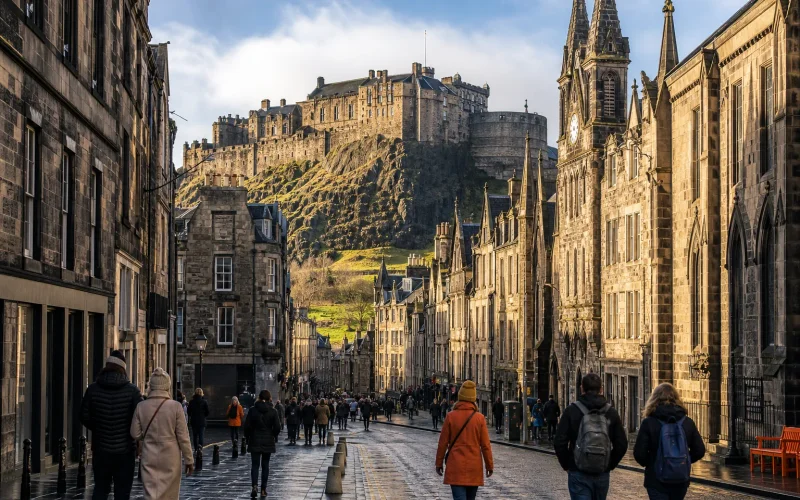
Start at Edinburgh Castle if you want the city’s main historic sight. Tickets can sell out during busy periods, so check availability before you build the rest of the day around it.
After the castle, walk down the Royal Mile toward Holyroodhouse. You don’t need to enter every attraction. Pick one major visit, then leave time for the closes, side streets, and small shops that make the Old Town feel less like a checklist.
Victoria Street is worth the short detour. It curves downhill toward a historic square and gives you a good photo stop without adding a major travel block.
If whisky interests you, the Scotch Whisky Experience fits well in the afternoon. If it doesn’t, skip it. The trip is already full, and you don’t need to force a tasting into a route built around castles and landscapes.
End with a night walk or historical tour if you still have energy. Jet lag can make the first evening unpredictable, so keep dinner plans flexible.
Use the second day for a slower loop. Walk through Princes Street Gardens, then continue toward Dean Village. Return through the New Town or climb Calton Hill near sunset.
Calton Hill is a good choice when you want a broad city view without giving up half a day. The National Galleries of Scotland and the Scott Monument can fill the middle of the day if the weather turns wet.
Pack layers. Edinburgh weather can shift quickly, and a light rain can change how far you want to walk. Waterproof shoes help more than stylish shoes on slick stone streets.
We’d skip a distant day trip here. Two Edinburgh days are already useful, and using one for a long excursion makes the later driving feel even tighter. For another route built around careful pacing, compare the Portugal itinerary with seven days in Lisbon and Porto. The same rule applies: fewer bases leave more time for the places you came to see.
Before leaving Edinburgh, collect the rental car and confirm where you’ll return it. A late pickup can push the next day’s drive into the evening.
This is the longest-feeling part of the route, even when the mileage looks manageable. Leave Edinburgh early, then aim for Dunnottar Castle in Aberdeenshire before continuing toward Moray or Inverness.
Dunnottar works well as a first major stop because it breaks the drive with a clear goal. Allow time for the walk from the parking area and for the coastal setting. Don’t try to add every nearby sight. The road itself is part of the day.
From there, choose your overnight base based on the next day. Moray gives you easier access to whisky country. Inverness gives you a stronger launch point toward Skye. You can’t optimize both in a single night.
The Moray route can include Glenfiddich, Macallan, or Aberlour. Pick one distillery tour, not three. Tastings take time, and someone still needs to drive. If whisky isn’t your main interest, the coast near Findochty, Portknockie, or Cullen gives the day a different shape.
This is also where a budget gap becomes obvious. Tour fees, fuel, parking, meals, and lodging can vary by date. Build a line-item sheet before booking, then check each official attraction page for current admission and tour details.
Give yourself a real stop at lunch. A rushed meal makes the second half of the drive feel longer, especially on roads that require more attention than a motorway.
Our verdict is firm here: don’t chase both the far northeast and the far northwest in one day. Choose Dunnottar plus whisky country, then save the west for Skye and Glencoe.
Portree is the most useful base for two Skye days in this Scotland itinerary 7 days plan. It lets you return to one room each night instead of moving bags after every hike.
Drive toward Portree through Eilean Donan Castle and across the Skye Bridge. Eilean Donan is an easy place to understand from the outside, even if you don’t tour the interior. The castle, bridge, and loch setting make a strong first stop.
Once you reach Skye, consider Eas a’ Bhradain waterfall or Sligachan Old Bridge before checking in. Keep this day light. You’ve already driven a long route, and Skye’s roads demand patience.
The Fairy Pools can fit if you arrive with daylight left. They’re worth seeing if you enjoy a short, rocky walk beside water. They’re also crowded and less magical than heavily edited photos suggest. Wear shoes with grip, and don’t treat the path as an easy stroll.
That honest trade-off matters. The Fairy Pools are popular, but popularity doesn’t make every stop worth your limited time. If the parking area is packed or the weather is poor, continue toward Portree and save your energy for the next day.
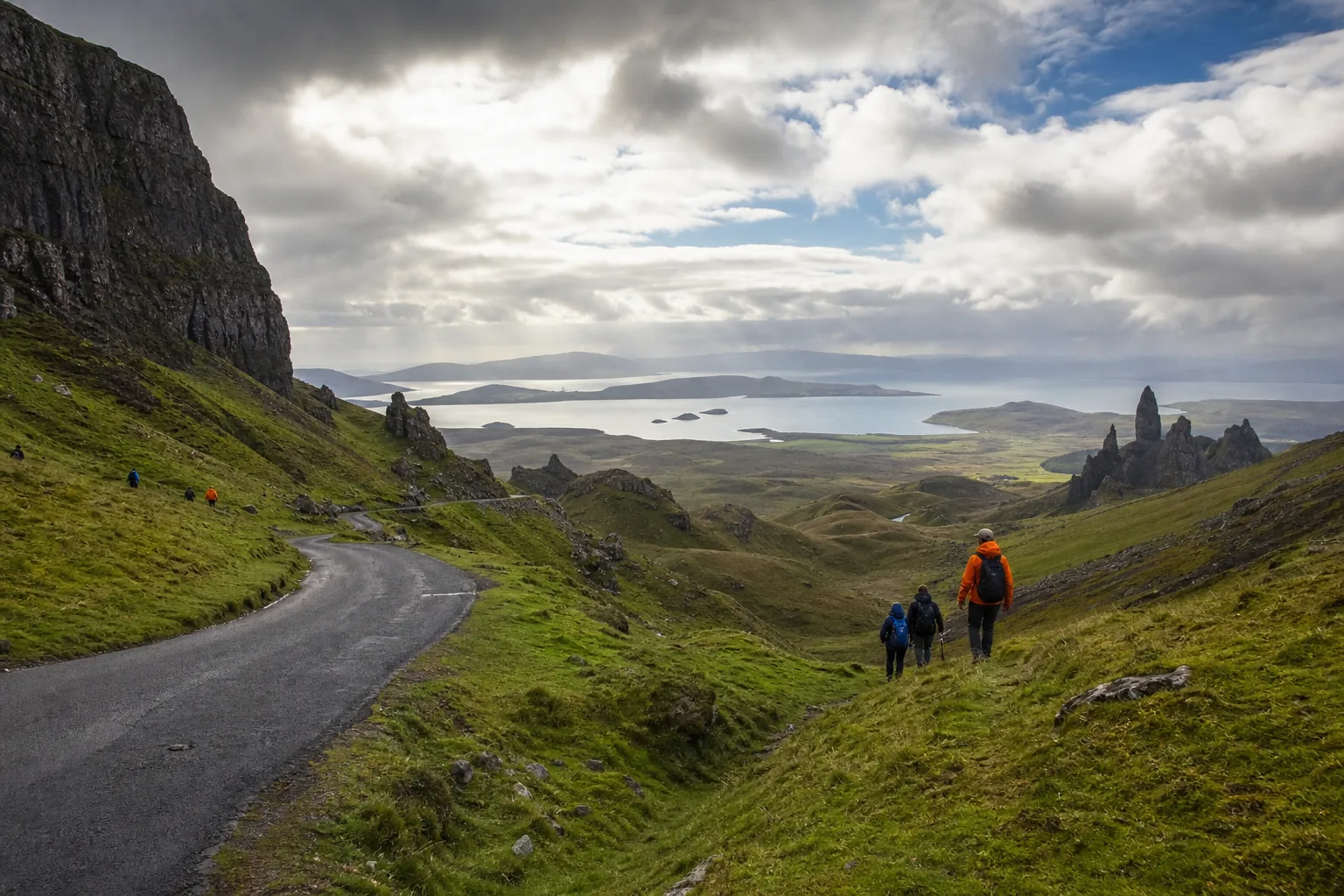
Start early for the Old Man of Storr. The climb is steep enough to make slow pacing worthwhile, and the parking area fills quickly. Give yourself time for the full viewpoint rather than rushing up for one photo.
Continue north toward Lealt Falls, Kilt Rock, and Mealt Falls. Then choose between the Quiraing and Fairy Glen. Doing everything in one loop may look possible on a map, but each stop takes longer once you add parking, walking, and weather delays.
If you want a longer day, add Dunvegan Castle or Neist Point. I’d choose only one. Neist Point adds distance, while Dunvegan gives you a more structured visit.
Skye is part of the Inner Hebrides, a group of islands with a distinct geography and travel pattern. Wikipedia’s overview of the Isle of Skye is useful for a basic geographic check, but local road signs and current access notices should guide your plans.
Make dinner plans before leaving Portree in the morning. You may return later than expected after a hike, and restaurant capacity is limited.
Pro Tip: Download your route before leaving Portree. Mobile service can be uneven on remote roads, and a missed turn can cost more time than expected.
Your final travel day should move south through Glenfinnan before ending in Glencoe. It’s a scenic finish, but it isn’t a short one. Leave Portree early and check ferry times if you plan to travel from Armadale to Mallaig.
The Skye Bridge gives you a simpler backup if a ferry schedule doesn’t fit. Either way, keep a little slack in the plan. A late departure from Skye can turn Glenfinnan into a rushed photo stop.
At Glenfinnan, walk to the viaduct viewpoint. The Jacobite Steam Train is a separate experience, so don’t assume seeing the viaduct guarantees a train sighting. Check the current operating schedule if that moment matters to you.
Continue toward Glencoe and stop at the Glencoe Visitor Centre if time allows. The Three Sisters Viewpoint and Meeting of Three Waters are good roadside stops, but weather may limit what you can see.
We’d skip a full mountain hike on this day. It needs its own time block, and adding it after Skye creates a poor safety margin. Glencoe rewards a slower look, even if that means leaving one famous stop for another trip.
If you fly out the next morning, decide whether to sleep in Glencoe or return to Edinburgh that evening. Returning gives you more departure security but removes the last Highland night. Dream Book Travel’s Iceland Ring Road route guide uses the same kind of decision: protect the final travel day instead of gambling on a tight airport transfer.
For readers who want more trip-planning structure, Dream Book Travel’s travel guides can help with route choices and transit planning. They’re a supplement, not a Scotland-specific cost sheet, so you’ll still need to price this trip yourself.
Seven days is enough for a highlights route, but not enough for the whole country. This Scotland itinerary 7 days plan focuses on Edinburgh, the Highlands, and Skye. You’ll see major sights, but you’ll also have several travel days. Add time if you want long hikes, the far north, or the Outer Hebrides.
You need a rental car for this exact route, especially on Skye and around Glencoe. Edinburgh works better without one. Public transit can cover parts of Scotland, but you’ll need to cut remote stops and accept less control over timing.
Spend two nights in Edinburgh for this route. Two days let you cover the Old Town without rushing, then walk through Princes Street Gardens, Dean Village, or Calton Hill. More time suits museum fans, while one night will feel tight after a long flight.
The Fairy Pools are worth it if you want a short streamside walk and accept crowds. They’re less impressive than many edited photos suggest, and the rocky path needs good shoes. If conditions are poor or parking is packed, skip them and use the time around Portree.
There isn’t one reliable total without your travel dates, room type, car class, and paid attractions. The itinerary research used here included no daily cost estimates. Price lodging, rental car, fuel, meals, admissions, and insurance as separate lines before you book.
I recommend this route for a first visit when you want Edinburgh, Highland scenery, and Skye in one week. Keep the car out of the city, book Portree early, and leave one major stop unplanned each day. Your next move is to price the route by travel date, then cut one detour if the total feels too high.
Use this Edinburgh itinerary 3 days plan for honest sightseeing, transit tips, free stops, museums, budget notes, and what to skip.
Find the best areas to stay in London for tourists, with honest advice for first-time visitors, culture lovers, foodies, and theater fans.
Find the best Greek islands for families by travel style, beach access, activities, and travel-day tradeoffs. Honest picks and planning notes.