Edinburgh Itinerary 3 Days: A Practical Plan
Use this Edinburgh itinerary 3 days plan for honest sightseeing, transit tips, free stops, museums, budget notes, and what to skip.
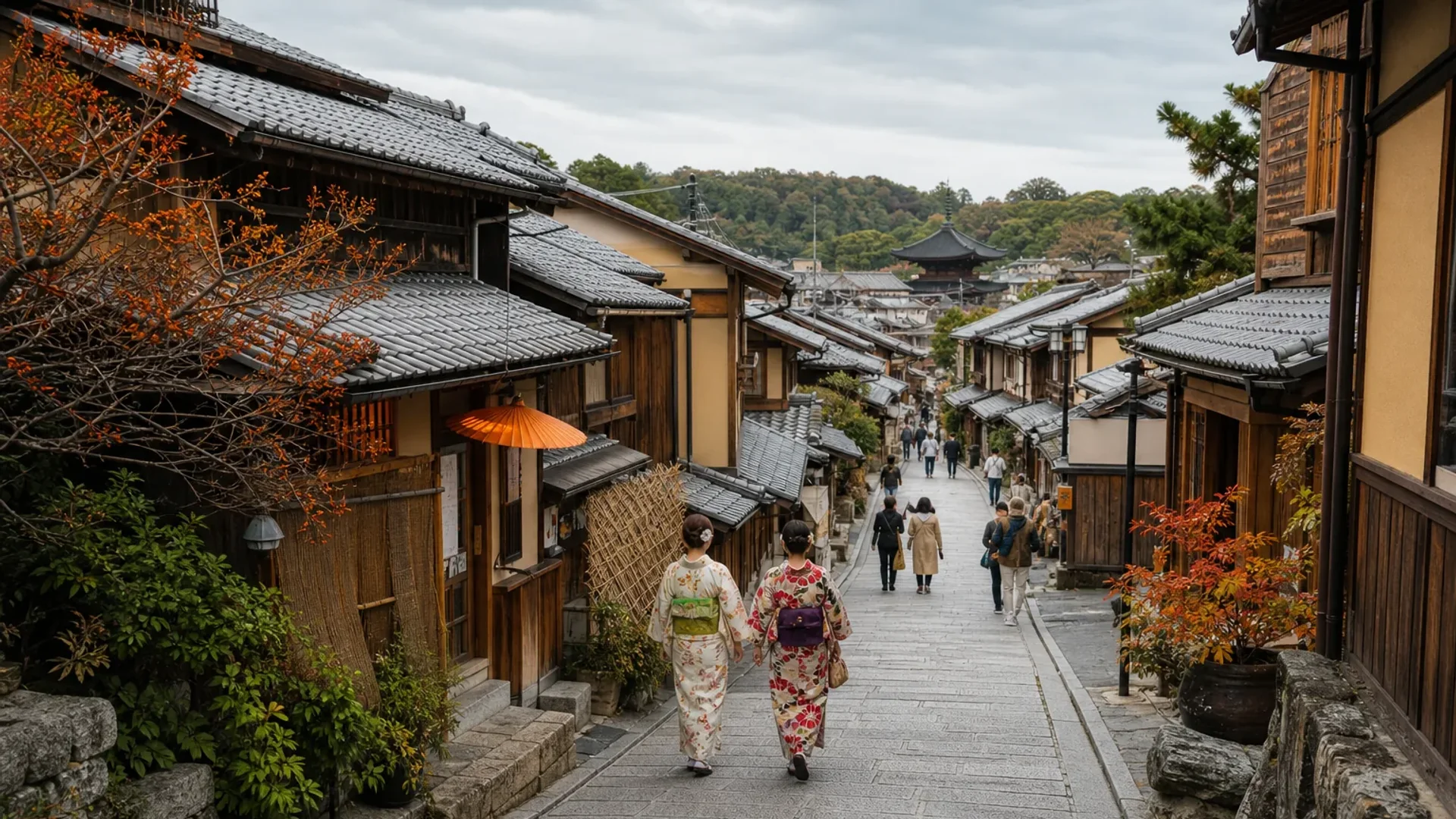
Kyoto can feel impossible in three days because its famous sights sit in different corners of the city. The fix is simple: group each day by district, then visit the busiest places before breakfast. We built this Kyoto itinerary 3 days around Fushimi, Higashiyama, Arashiyama, and central Kyoto, with honest trade-offs for pace, food, transit, and crowds.
A good Kyoto itinerary 3 days starts with your hotel location, not a long wish list. Three full days is enough for the major sights, but you’ll walk a lot and spend eight to ten hours out most days.
We’d choose one of two bases. Stay in Kawaramachi or Gion if you want evening walks and easy access to Higashiyama. Stay near Kyoto Station if you’re arriving with heavy bags, using the Shinkansen, or leaving early for the airport. Kyoto Station is less atmospheric, but it makes luggage and rail travel much easier.
Kyoto has more temples than any three-day trip can handle. Don’t try to collect them. Pick one major cluster each day, then leave room for a meal or a slow street walk. That approach also matches the city’s shape. Higashiyama and Arashiyama hold many of the sights first-time visitors want, while Fushimi works well as an early morning stop.
For more background on Kyoto’s long temple history, Wikipedia’s Kyoto overview gives useful context without turning your trip plan into a history lecture.
Set up the route like this:
| Day | Main area | Best use of your energy | What to skip if tired |
|---|---|---|---|
| Day 1 | Fushimi, Higashiyama, Gion | Early shrine hike, temple streets, evening walk | Full Fushimi summit hike |
| Day 2 | Arashiyama and western Kyoto | Bamboo grove, garden, river, Golden Pavilion | Monkey Park or a second garden |
| Day 3 | Kinkaku-ji, Nishiki, central Kyoto | Golden Pavilion, market food, flexible final stop | Adding another far-flung district |
Budget roughly ¥8,000 per day for meals and entry fees, then add lodging and transport. That daily figure works when you mix modest meals with one or two paid sites. A special meal can change the math quickly, so treat kaiseki as a planned splurge rather than an accidental dinner.
Dream Book Travel keeps its Kyoto planning advice focused on that same question: what earns your time, and what can wait. If you’re still choosing dates, our Kyoto seasonal guide can help you weigh weather against crowds before booking.
Key Takeaway: Sleep near your first evening area, group sights by district, and leave one flexible block each day.
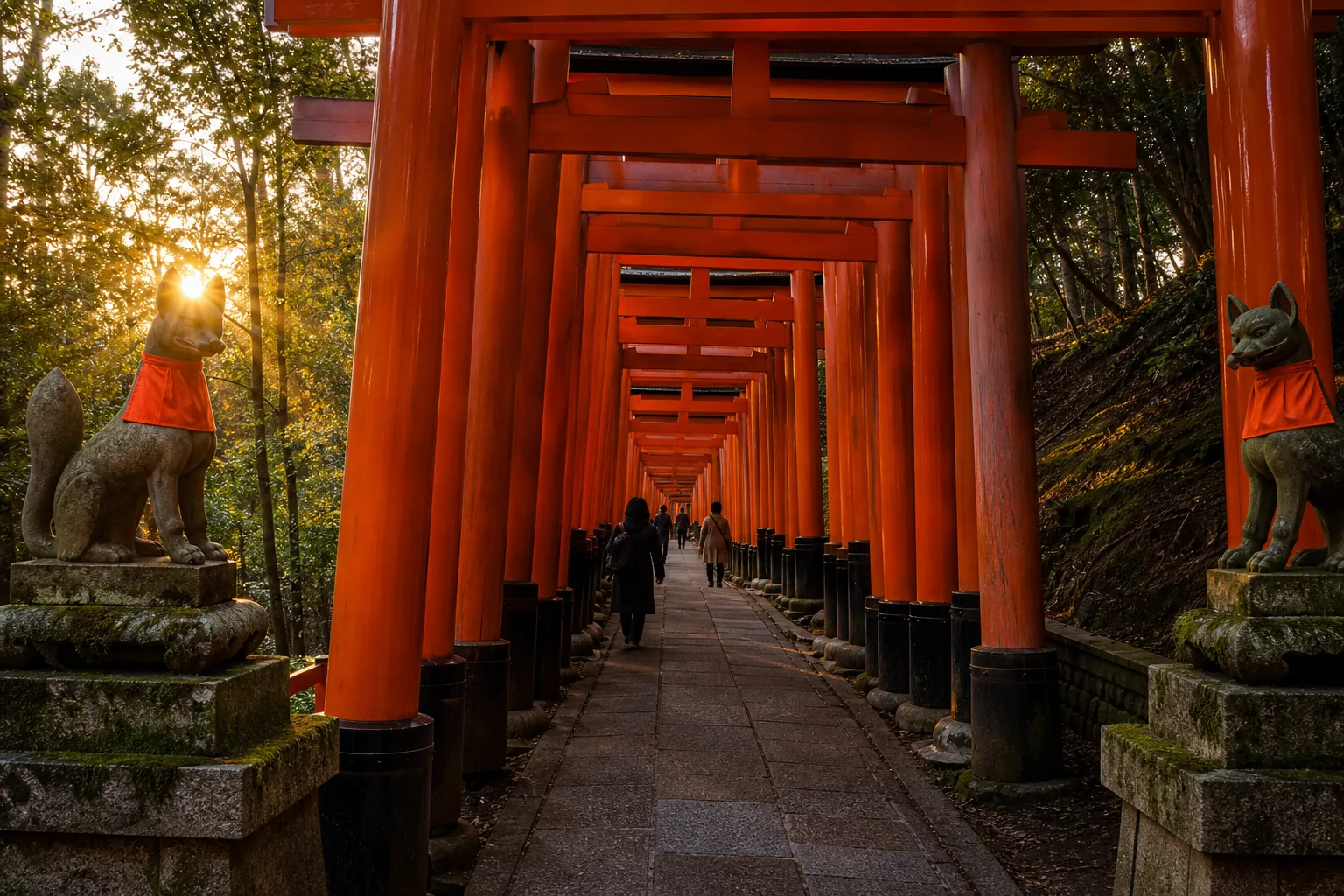
Start day one of your Kyoto itinerary 3 days at Fushimi Inari-taisha, then move north into Higashiyama and finish in Gion. This order puts the steep hike first, while your legs still work.
Take the train from Kyoto Station to Inari Station. The ride takes about five minutes. Fushimi Inari is free to enter and open around the clock, so arriving between 6:00 and 7:00 AM gives you the calmest part of the trail.
Allow two to three hours if you want to climb well beyond the lower gates. The full mountain loop takes about two hours for many visitors, but you don’t need to reach the summit to enjoy the shrine. Walk to the Yotsutsuji intersection, which takes roughly 30 to 40 minutes uphill, then turn back if the climb feels like work rather than fun.
Look for the fox statues along the route. Fushimi Inari is linked with Inari, the deity associated with rice and prosperity, and foxes appear as messengers. Keep the shrine path clear. This is a place of worship, not only a photo stop.
Return by train, then take a short taxi or bus toward Kiyomizu-dera. You can also leave Fushimi for another morning if you’d rather begin at Kiyomizu-dera. The point is the timing. Popular temple streets become much harder to enjoy after 10:00 AM.
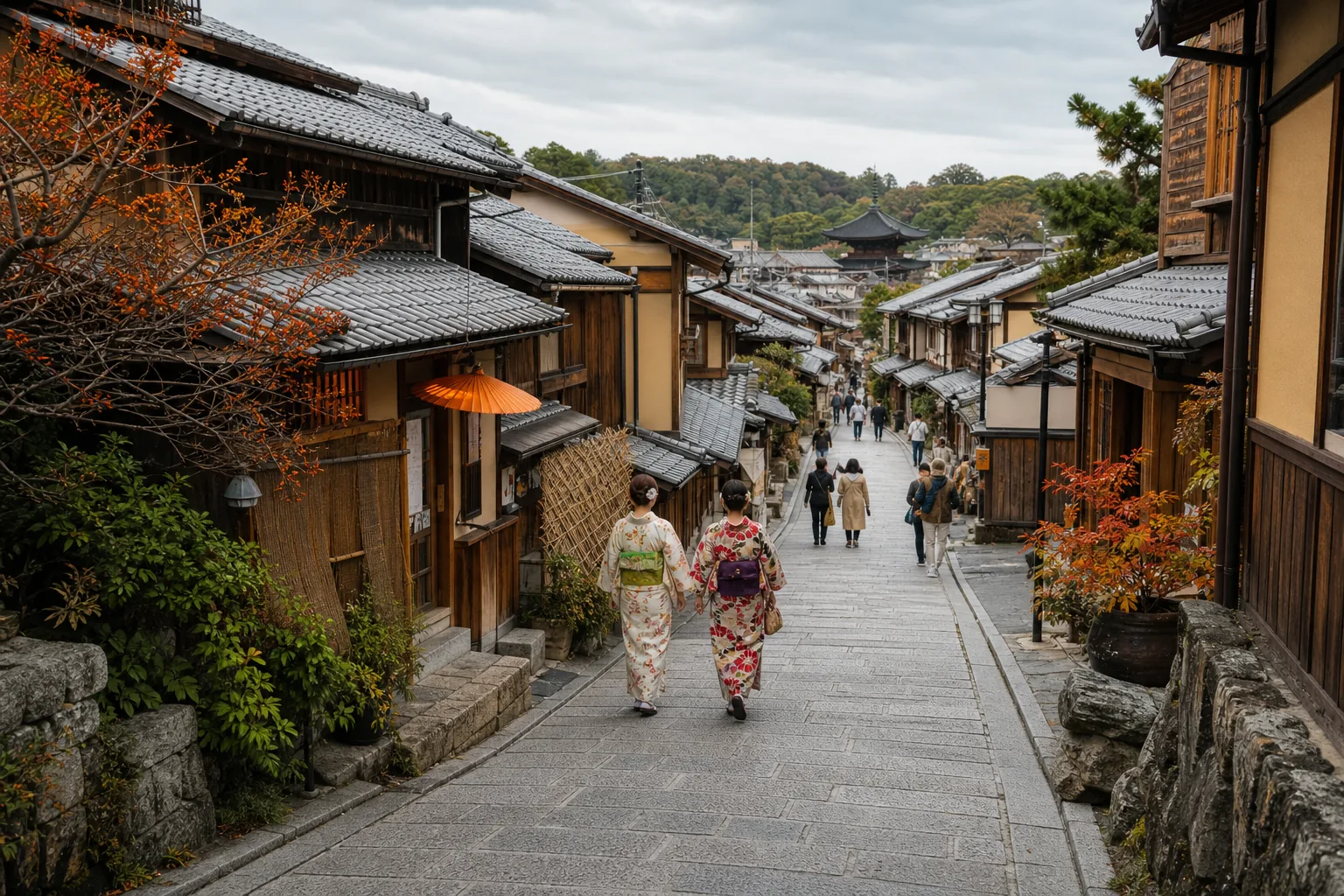
Kiyomizu-dera sits above the Higashiyama streets. Walk through the grounds, then descend via Sannenzaka and Ninenzaka. The lanes are lined with wooden buildings, tea shops, sweets, and souvenir stores. Many shops won’t be open early, which is a fair trade for quiet views and less shoulder-to-shoulder traffic.
The main visit usually takes about one to one and a half hours. Admission is listed around ¥400, or roughly a few US dollars depending on the exchange rate. At the Otowa Waterfall, choose one stream rather than trying all three. Local etiquette matters more than getting the perfect ritual photo.
Yasaka Pagoda is worth a short pause on the way down. The photo angle is from the street below, looking up toward the five-story structure. Admission is ¥400. Don’t block the lane while taking the shot.
Have lunch in Higashiyama or Gion. A soba bowl, udon set, tofu dish, or bento keeps the afternoon moving without turning lunch into a two-hour event. If you’re already tired, sit down properly. Temple fatigue is real, and rushing through the next street won’t fix it.
Walk through Yasaka Shrine and Maruyama Park. Then head toward Hanamikoji Street in Gion. The late afternoon window around 5:00 to 6:00 PM gives the district more atmosphere as shops close and evening appointments begin.
Gion is a working neighborhood. Don’t chase geiko or maiko, block doorways, or take close photos without permission. A quiet walk is the experience. The guides won’t always say that clearly enough.
Stay in Gion for dinner rather than crossing the city again. Afterward, walk along a nearby canal or return toward the river. Kyoto feels calmer after the day crowds leave, though the main lanes can still be busy.
If you only have energy for one evening walk, choose Gion. If the early start has beaten you, eat near your hotel and stop there. A good first day ends before exhaustion takes over.
Day two of this Kyoto itinerary 3 days belongs to Arashiyama. Arrive early, stay in the western district for the morning, then choose between Kinkaku-ji and a slower afternoon.
Take a train from Kyoto Station toward Arashiyama, or use another rail route that fits your base. The train ride from Kyoto Station takes about 15 minutes. From the station, walk toward the bamboo grove and arrive around 7:00 AM.
The famous path itself is short. The value comes from walking slowly and continuing into the surrounding lanes. By mid-morning, tour groups can fill the narrow route. Early light also gives you a better chance to see the bamboo without a wall of raised phones.
Don’t treat the grove as a full morning by itself. Once you’ve walked through it, move on.
Visit Tenryu-ji after the grove. Allow about an hour for the temple and garden. The garden uses the Arashiyama mountains as a backdrop, so pause beside the pond instead of racing through the buildings.
Okochi Sanso Garden sits farther along the bamboo route. It gives you a quieter garden setting, but you don’t need to add it if you’re trying to keep the day light. This is one of the useful choices in a three-day plan: add a garden when you want more calm, not because a checklist tells you to.
Cross Togetsukyo Bridge before lunch for river views. The area around the bridge is busy, but it gives you a clear sense of Arashiyama’s setting between the hills and water.
Plan for a casual tofu or soba lunch in Arashiyama. If you want a lighter meal, split the day with a snack and an earlier dinner downtown. Keep cash on hand for small purchases because payment methods vary.
Monkey Park Iwatayama is an optional add-on. The uphill walk takes about 20 minutes. Choose it only if you still feel good after the bamboo and temple. The climb is short on paper, but your feet may disagree by this point.
Another option is a riverside walk. It costs nothing, gives your legs a break, and keeps the day from becoming five indoor visits in a row.
If you want to add Kinkaku-ji today, expect roughly 30 to 45 minutes of travel from Arashiyama, depending on the route and traffic. Arrive near the 4:00 PM period if you can. If the journey looks slow, skip it and save Kinkaku-ji for day three.
That flexibility matters. The mistake is forcing Arashiyama, Kinkaku-ji, Ryoan-ji, and dinner into one perfect chain. Kyoto’s map makes those places look close. The transfers can still eat an hour.
Dream Book Travel’s approach is simple here: keep the headline sight, then remove the add-on that makes the day brittle. You’ll remember the bamboo path more clearly if you aren’t watching the clock every ten minutes.
Pro Tip: Put the most crowded outdoor sight first each day. If you miss the early window, switch to a garden, market, or neighborhood walk instead of chasing the same plan through peak traffic.
Use day three of your Kyoto itinerary 3 days for Kinkaku-ji, Nishiki Market, and one central Kyoto choice. This is the day to slow down if the first two were full.
Arrive at Kinkaku-ji right at the 9:00 AM opening. The Golden Pavilion is famous for its gold-covered upper floors and reflection across the pond. The visit follows a set path, so allow about 45 to 60 minutes.
Admission is listed around ¥400 to ¥500, depending on the current rate. Check the official gate information before you go because temple fees can change. Kinkaku-ji is visually strong but compact. See it, walk the garden route, then leave before the crowd thickens.
Ryoan-ji is a sensible nearby add-on if you want a quieter garden. The walk from Kinkaku-ji takes about 20 minutes. Its dry garden has 15 stones arranged across white gravel, with at least one stone hidden from any single viewing angle. Sit down for a few minutes. Don’t turn the garden into a speed test.
Travel back toward central Kyoto for Nishiki Market. Most shops operate roughly from 9:00 AM to 6:00 PM, though individual hours differ. Don’t arrive near closing and expect every stall to be open.
The market is a narrow covered street, so eat beside the stall or at its standing counter. Carrying a skewer while pushing through the crowd is poor manners and a good way to bump someone.
Small bites can keep lunch flexible:
Pricing varies by item and stall. That can replace a sit-down lunch, but don’t assume every stall is cheap. Premium skewers may cost more than other small bites.
Bring a mix of payment methods, including small bills and coins. Card use has improved, but some older stalls still take cash only. Eat near the stall, return waste where requested, and carry a small bag for anything you buy later.
Pick one option based on your energy:
For a wider look at food, neighborhoods, and six worthwhile stops, Dream Book Travel’s Kyoto experiences guide is a useful companion while you trim or expand this plan.
Skip a far northern detour on your final day. Kurama and Kibune can be good additions with more time, but they don’t fit neatly after Kinkaku-ji and Nishiki Market.
Transport can quietly ruin a Kyoto itinerary 3 days. Use trains for long cross-city moves, walk within each district, and treat buses as one tool rather than the default answer.
An IC card such as ICOCA, Suica, or Pasmo works on many trains, subways, and buses. Load it before your first busy morning if possible. Tapping is faster than finding exact fare coins at every stop.
Rail connections can link major areas of Kyoto and make transfers useful for cross-city travel. Learn the key transfer points before you need them.
City buses reach many temples, but tourist corridors can slow to a crawl during blossom and foliage peaks. Fares in the main flat-rate zone are fixed. You usually board at the rear and pay when leaving at the front.
A combined transit day pass can make sense on a day with several rides, but it won’t always save money on a walking-heavy Higashiyama day. Do the math before buying it.
When a bus queue looks long, take the subway as close as you can, then walk or use a short taxi ride. A taxi is a useful tired-person splurge, but narrow streets around Gion and Nishiki can make a five-minute walk faster than a car.
Higashiyama rewards walking. So does central Kyoto. Cycling can work well in flatter northern and eastern areas, provided you use marked routes and park only where allowed.
Keep luggage off buses. Use station lockers or a luggage delivery service when available, especially on arrival day. Dragging a suitcase up temple lanes is a bad first impression of Kyoto.
Google Maps is helpful for station exits and bus stops, but check the direction of travel before boarding. Kyoto stations can have several exits, and choosing the wrong one can add 15 minutes before the walk even starts.
Key Takeaway: The fastest route is usually train first, walking second, and bus only when it saves a clear transfer.
A flexible Kyoto itinerary 3 days works better when you plan for weather, appetite, and tired legs. We’d aim for April to May or September to October when the seasonal balance can be more comfortable, but every window has trade-offs.
Spring brings blossoms and heavy demand. Autumn brings foliage and crowded temple routes. Summer can feel hot and humid, so start early and add water breaks. Winter is colder, but shorter lines can make famous sites easier to enjoy.
If you’re visiting during a major seasonal peak, book your room early and add a buffer to every transfer. A route that takes 20 minutes on a quiet day can take much longer when buses fill and streets slow down.
Rain can help. Use a wet afternoon for a museum, market, tea stop, or covered shopping arcade. Don’t cancel the entire day because the bamboo looks different under cloud.
Kyoto food is more varied than one expensive kaiseki dinner. Try soba, udon, tofu dishes, yudofu, pickles, matcha sweets, and market snacks. Casual meal pricing varies by area, while a formal meal can rise much higher.
One high-end dinner can cost ¥25,000 before drinks. That is a choice, not a requirement. Balance it with a market lunch or a simple noodle meal the next day.
Most of all, keep one decision rule: if a transfer takes longer than the sight is worth, remove the sight. Dream Book Travel’s editorial promise is to tell you what to skip as well as what to keep, and this city rewards that restraint.
Three full days is enough to see Kyoto’s major districts at a brisk but workable pace. You can visit Fushimi Inari, Higashiyama, Gion, Arashiyama, Kinkaku-ji, and Nishiki Market. You won’t cover every temple or make relaxed trips to distant areas such as Kurama. Add a fourth day if you prefer slow meals and fewer stops.
The most useful bases are Kawaramachi, Gion, Higashiyama, and Kyoto Station. Kawaramachi and Gion make evening walks easy. Higashiyama puts you near temple streets. Kyoto Station works well for Shinkansen connections, airport transfers, and heavy luggage. Pick the area that matches your first and last travel days.
Visit Fushimi Inari between 6:00 and 7:00 AM for a quieter trail. The shrine is open around the clock, and the lower torii gates become much busier later in the morning. Allow two to three hours for a longer hike, or turn around at Yotsutsuji after roughly 30 to 40 minutes uphill.
The Kyoto International Manga Museum is a museum in Central Kyoto.
Skip distant detours and extra temples that force long transfers. A full Fushimi summit hike is optional, as is Monkey Park Iwatayama. You can also skip Ryoan-ji if Kinkaku-ji and Arashiyama already fill your day. Keep the sights you care about most, then protect time for food and rest.
Use the early hours for Fushimi Inari, Kiyomizu-dera, Arashiyama, and Kinkaku-ji. Keep each day in one area, then leave one flexible block for weather or tired feet. Before you book, save the route and check the seasonal advice in Dream Book Travel’s Kyoto travel window guide. Then reserve your base and build the first morning around sunrise.
Use this Edinburgh itinerary 3 days plan for honest sightseeing, transit tips, free stops, museums, budget notes, and what to skip.
Find the best areas to stay in London for tourists, with honest advice for first-time visitors, culture lovers, foodies, and theater fans.
Find the best Greek islands for families by travel style, beach access, activities, and travel-day tradeoffs. Honest picks and planning notes.