Edinburgh Itinerary 3 Days: A Practical Plan
Use this Edinburgh itinerary 3 days plan for honest sightseeing, transit tips, free stops, museums, budget notes, and what to skip.
A ten-day Iceland trip works best as a loop with room to stop. It does not work as a race around Route 1. We recommend a self-drive route through the Golden Circle, South Coast, Eastfjords, North Iceland, and Snæfellsnes, with clear rules for weather, road checks, costs, and rest.
Most published plans rely on a rental car. That makes sense for this route, but Dream Book Travel also keeps public transit in view for travelers who do not want to drive. Here is the route we would actually book.
We read the 8 currently ranking guides for iceland itinerary 10 days ring road, checking each for three things: a non-driving option, a Reynisfjara sneaker wave warning, and a built-in buffer day. Zero of the 8 include an unscheduled buffer day, and only one raises any alternative to a rental car, a guided tour mention rather than a transit plan. Two of the 8 warn readers about sneaker waves at Reynisfjara; the rest describe the beach only for its scenery. That coverage gap is why this route keeps a public-transit option in view and holds day ten open as a buffer.
For an Iceland itinerary 10 days long, choose the Ring Road plus one west-coast detour. That gives you a full loop without forcing you to repeat the same road.
The route covers substantial distance when you include the main stops and the Snæfellsnes detour. Route 1 is paved, so a small car works for the main loop in summer. You do not need a 4x4 unless you plan to use highland F-roads. Those roads have different rules and may include river crossings.
Summer gives you the easiest driving conditions and the most daylight. A live itinerary checked on August 19, 2026, listed about 16 hours of daylight in Reykjavík. That changes how a long drive feels. You can start later, stop for a walk, and still reach your lodging with light left.
Winter is a different trip. Storms can close roads, daylight is short, and a fixed loop can fall apart fast. If you travel outside summer, build in spare days and check Visit Iceland’s official travel guidance before each long drive.
Book a normal rental car rather than a campervan if your main goal is the Ring Road. A campervan does not remove campsite costs, and parking outside designated camping areas is illegal. It can also be tiring to pack and reset your sleeping space each night.
Before leaving the airport lot, photograph every mark on the car. Pay special attention to the doors, windscreen, wheels, and front bumper. Gravel damage is a common source of rental disputes, so take the photos while the staff can see them.
Dream Book Travel is useful at this planning stage because the site treats the trip as a set of travel days, not a list of pins on a map. Use that same test yourself. If a day has five major stops plus four hours of driving, cut two stops now.
Pro Tip: Keep the last night near Reykjavík or Keflavík if your flight leaves early. A short final transfer is worth more than one extra attraction.
Begin with Reykjavík and the Golden Circle so you can recover from the flight before the longest driving days. Keep the first day light, then use day two for the classic loop.
After collecting the car, drive toward Reykjavík. If a geothermal lagoon is part of your plan, place it on the airport transfer rather than driving back later. Volcanic conditions around the Reykjanes area can change, so check closures before setting out.
Spend the evening in Reykjavík. Walk the central streets, eat something simple, and sleep. Do not turn an overnight flight into a full sightseeing day. That is how small mistakes become a bad second day.
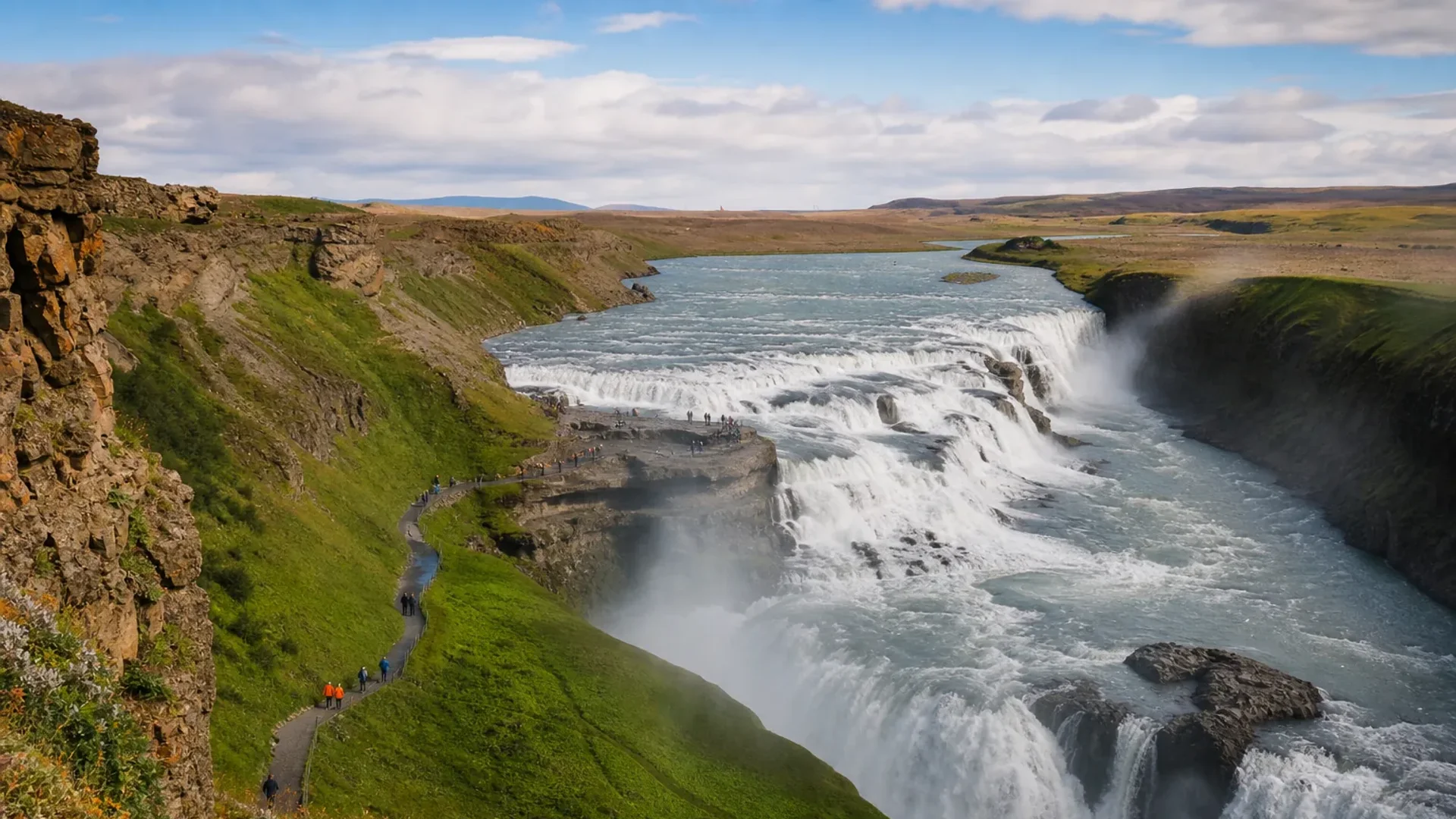
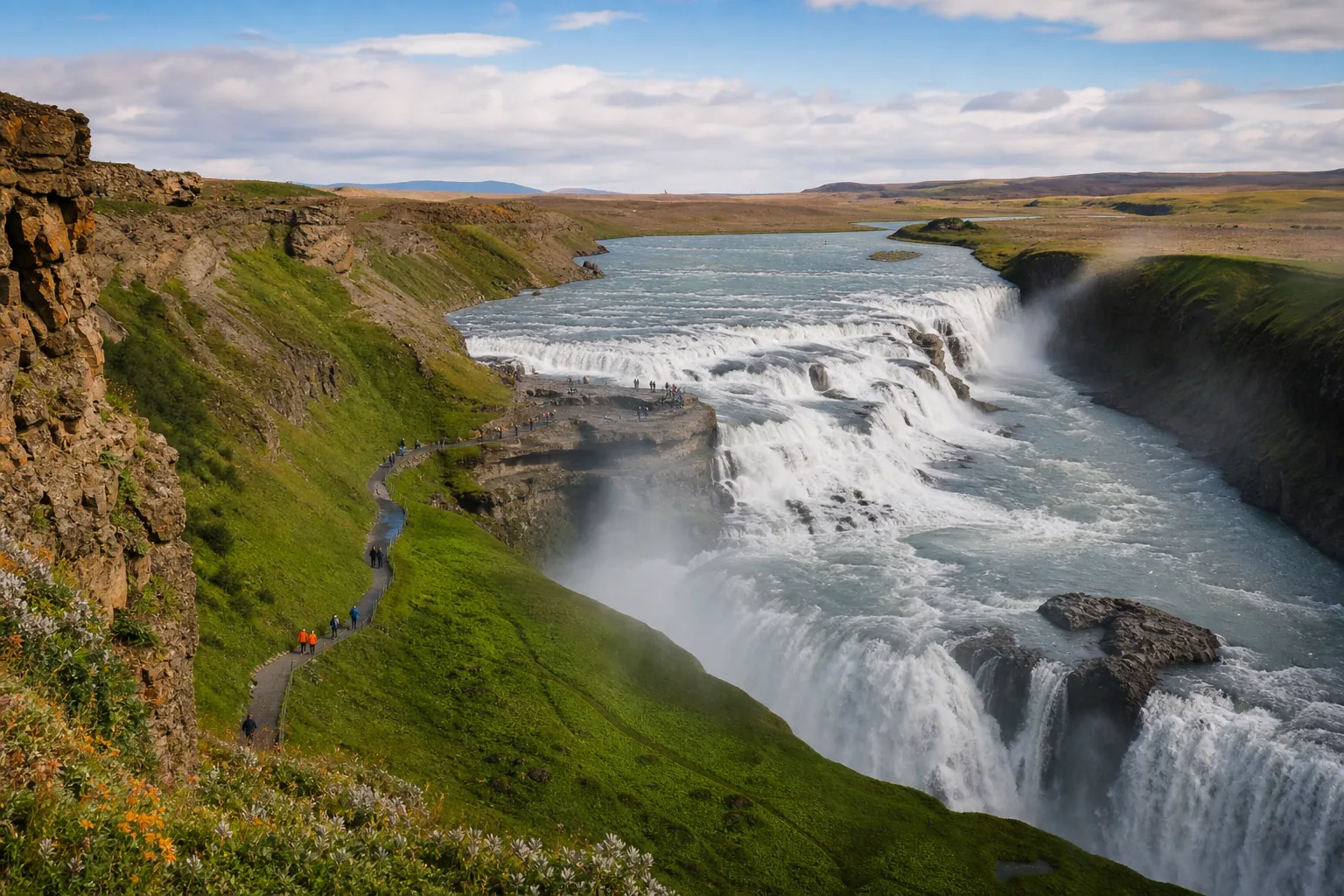
On day two, drive the Golden Circle. Visit Þingvellir first if you want the usual clockwise order, or start at Gullfoss to meet fewer tour buses early in the day. The full loop is roughly 250 kilometers and takes about three to four hours of driving before stops.
| Stop | Time to allow | Keep or skip? | Reason |
|---|---|---|---|
| Þingvellir | 1 to 2 hours | Keep | Good first stop with short walks and clear signs. |
| Geothermal stop | 45 minutes | Keep | Easy stop beside the main route. |
| Gullfoss | 1 hour | Keep | One of the route’s main sights. |
| Kerið crater | 30 to 45 minutes | Optional | Add it only if the day still has space. |
| Extra spa stop | 2 to 3 hours | Choose one | Do not add several bathing stops to the same day. |
Sleep in Reykjavík if you want a calm start. Sleep near Hvolsvöllur if you want to shorten the next day’s drive. That small move gives you more time for Seljalandsfoss and Skógafoss.
Road and weather checks belong in your morning routine. Visit Iceland’s official route and safety information is a useful starting point, but local road conditions can change after you check.
If you want a second opinion on pacing, Dream Book Travel’s Greece 10 Day Itinerary with ferry logistics uses the same useful idea: treat transport days as part of the trip, not empty space between sights.
Days three and four take you east along the South Coast toward Jökulsárlón. This is the densest part of the route, so resist the urge to stop at every pullout.
Start with Seljalandsfoss. The path behind the waterfall can be wet, so wear a waterproof shell and protect your camera. Gljúfrabúi sits close by in a narrow canyon and takes little extra time.
Continue to Skógafoss. The staircase gives you a high view, but the base is often the better stop if the wind is strong. From there, choose between a short stop at Dyrhólaey and a longer walk near Vík.
Reynisfjara needs a firm rule. Stay well above the waterline and never turn your back on the sea. Sneaker waves can reach much farther than the last wave, even when the beach looks calm. This is the stop we would skip before we would ignore the warning signs.
Sleep in Vík or farther east, based on how much time you spend on the coast. Do not force Jökulsárlón into the same day if you still want to walk at Skaftafell.
On day four, stop at Skaftafell. The walk to Svartifoss takes about an hour and a half round trip. Afterward, continue to Jökulsárlón Glacier Lagoon and Diamond Beach. The lagoon is worth seeing from shore, even if you do not book a boat tour.
The South Coast has good fuel access, with stations often separated by roughly 30 to 60 kilometers. Fill up before the longer eastern stretches. Weather can still shut Route 1 for hours, so check road conditions each morning instead of trusting yesterday’s plan.
Published itinerary estimates vary sharply. Across the sample reviewed for this route, daily estimates ran from $30 to $120, with a median of $45. A single $900 outlier pushed the average to $142.78. That outlier likely reflects a costly activity or a luxury-heavy day, so do not use the average as your normal target.
For a more useful budget, plan around the lower daily range for food and basic stops, then set a separate fund for car hire, lodging, fuel, and paid activities. Those large costs do not vanish just because many waterfalls are free.
Key Takeaway: Give the South Coast two days. Cutting it to one long drive saves time on paper and removes the walks that make the route worth taking.
The Eastfjords are where a ten-day route earns its extra time. Drive from the Jökulsárlón area toward Höfn, then continue along the fjords toward Egilsstaðir.
Leave Höfn with fuel and food. The road passes fishing towns such as Djúpivogur, Breiðdalsvík, and Fáskrúðsfjörður. You can cut inland in places, but the coastal road gives the better trip when weather and daylight allow it.
Do not measure this day only by kilometers. Each fjord adds bends, climbs, and short photo stops. A route that looks quick on a map can take much longer once you stop safely and walk to a viewpoint.
Sleep in Egilsstaðir, or choose Seyðisfjörður if the pass is open and you want a smaller town base. Check the road before committing to the pass. The weather can change quickly around exposed roads.
On day six, drive toward Lake Mývatn. This stretch crosses open land, so it can feel stark after the coast. Stop at the geothermal areas near Námafjall, then visit Dimmuborgir if you still have energy.
Midges can be thick around the lake on still summer evenings. Pack a head net. It is a small item that can save a walk.
End the day near Mývatn or Reykjahlíð. A soak at the Mývatn Nature Baths can work well here, but only if it does not turn a long drive into a late arrival.
Our verdict is simple: do not rush the Eastfjords to reach the North early. The quiet road is the point. A plan that leaves no room for it is too full.
Days seven through ten finish the loop through North Iceland, Akureyri, the west coast, and Snæfellsnes. This is where you need to protect one full day for the peninsula.
Use day seven for the Diamond Circle. Dettifoss is the main stop, followed by Ásbyrgi if the road and timing work. Húsavík is another option for a whale trip, but do not book it unless you can accept a fixed departure time.
Check which side of Dettifoss you plan to use. The western approach is paved. The eastern route is gravel and may have different seasonal access. These roads do not connect at the falls, so choose before leaving Mývatn.
Spend the night in Akureyri. A morning walk through the botanical garden is a good reset after several driving days. Then begin the long westward run.
The drive toward Borgarnes is one of the longest single legs, at roughly 388 kilometers and about five hours before stops. Start early. Even with long summer daylight, fatigue does not care what time sunset is.
Sleep in Borgarnes rather than pushing all the way to Reykjavík. That puts you close to Snæfellsnes on day nine.
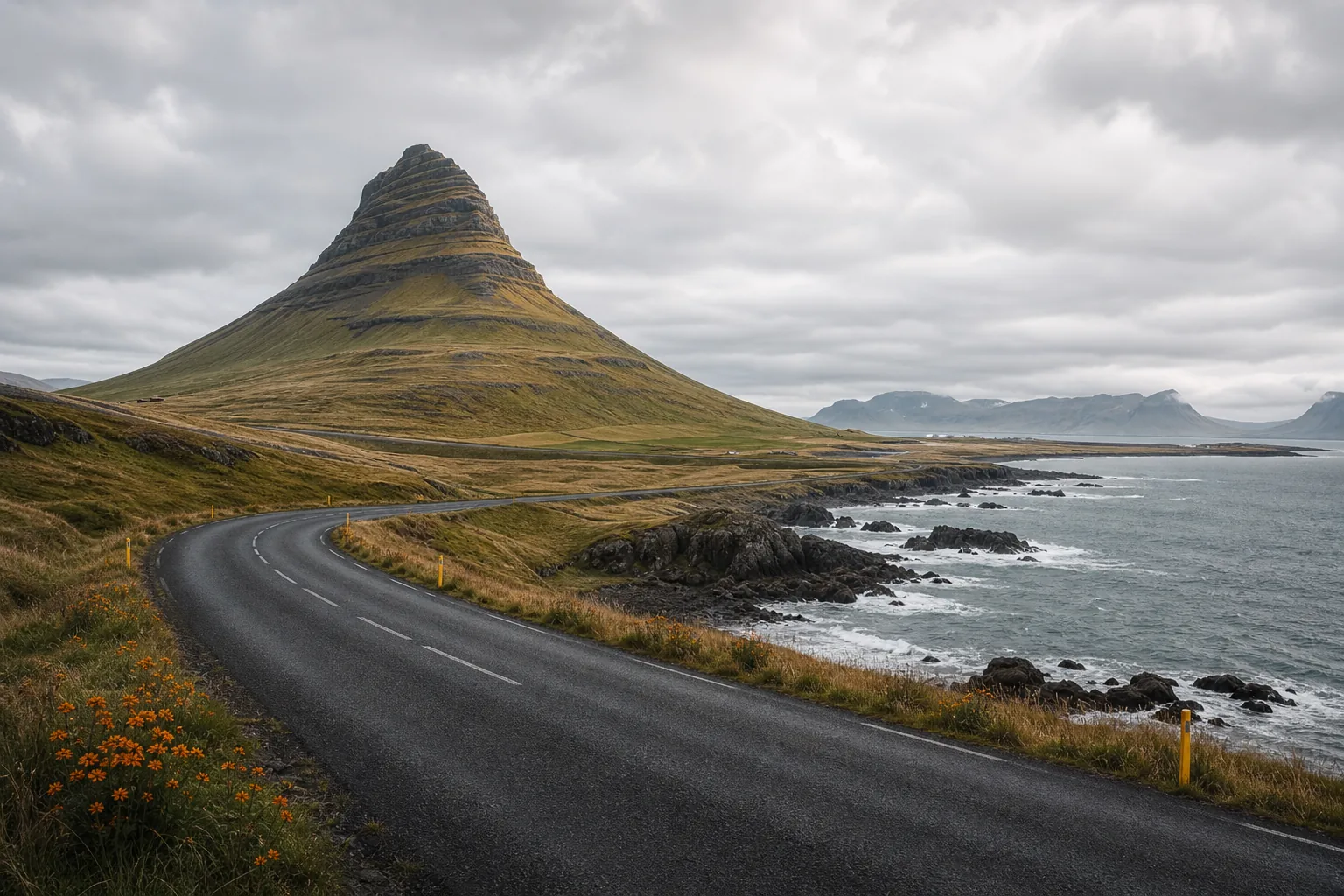
Spend day nine on the peninsula. Build the loop around Kirkjufell, Djúpalónssandur, Arnarstapi, and the views toward Snæfellsjökull. Búðir adds a small church and a very different landscape. Choose walks over extra driving whenever the weather is good.
Snæfellsnes is the right detour for most people because the main roads are paved and the area fits the schedule. The Westfjords need more time. The highlands need the right season, a suitable vehicle, and careful checks for F-road access. Do not add either as a side trip just because the map makes them look close.
Day ten is your buffer. Return to Reykjavík, spend the morning in town, or stay near the airport if your flight leaves early. A buffer day can absorb a weather delay. It can also give you a quiet final meal instead of a frantic dash.
Travelers who do not want to drive can use Dream Book Travel’s planning approach as a starting point, then build a transit version around the places with the strongest bus or ferry links. The public-transit gap is real, but a non-driving plan needs fewer regions and more nights in each base. Dream Book Travel’s Japan itinerary with train advice shows the kind of connection-first planning that works better than copying a car route.
For a self-drive trip, I would skip the highlands on this schedule. Save them for a separate trip rather than adding an F-road detour to an already full loop.
Ten days is enough for the Ring Road plus Snæfellsnes, but the route still includes long drives. You can see the main regions without backtracking if you keep the loop moving. You cannot see every trail, fjord, and highland road. If you want slow hikes, add nights in fewer regions instead.
Yes, you can drive the Ring Road in ten days, especially in summer. A small car is suitable for the paved main route. Plan roughly seven to eight days for the loop, then use the remaining time for Snæfellsnes and a buffer. Check road conditions before every exposed or lengthy drive.
A published sample reviewed for this Iceland itinerary 10 days topic estimated daily costs between $30 and $120, with a $45 median. One $900 outlier distorted the average. Treat those figures as daily estimates, not a full trip price. Car rental, lodging, fuel, and paid tours need their own budget.
Skip the highlands if you have not planned for F-roads, a suitable vehicle, and weather changes. Also skip extra stops on days that already include four hours of driving. We would rather remove one waterfall viewpoint than arrive late, tired, and unable to enjoy the next morning.
Iceland can work without a rental car, but this exact ten-day loop becomes harder. Public transit suits a slower plan with fewer bases. A car gives you access to the Eastfjords, rural stops, and Snæfellsnes on your own schedule. If you dislike driving, change the route instead of forcing the full circle.
I recommend a summer self-drive loop with two days on the South Coast, two days through the Eastfjords and Mývatn, and a full day for Snæfellsnes. Keep day ten open as a buffer. Next, price the car and lodging first, then remove any stop that makes a driving day feel rushed. Dream it. Plan it. Live it.
Use this Edinburgh itinerary 3 days plan for honest sightseeing, transit tips, free stops, museums, budget notes, and what to skip.
Find the best areas to stay in London for tourists, with honest advice for first-time visitors, culture lovers, foodies, and theater fans.
Find the best Greek islands for families by travel style, beach access, activities, and travel-day tradeoffs. Honest picks and planning notes.