Edinburgh Itinerary 3 Days: A Practical Plan
Use this Edinburgh itinerary 3 days plan for honest sightseeing, transit tips, free stops, museums, budget notes, and what to skip.
Barcelona is one of the most visited cities in Europe, and pickpocketing is the one thing that consistently catches tourists off guard. The good news: most effective tactics cost nothing. Research across 48 tips from multiple Barcelona safety sources shows that simple behavior changes, keeping your bag in front, locking zippers, staying alert, protect you better than any expensive gadget.
Before you land, know where the risk actually concentrates. Pickpockets in Barcelona don’t work randomly. They work where three things overlap: dense crowds, distracted tourists, and fast exits.
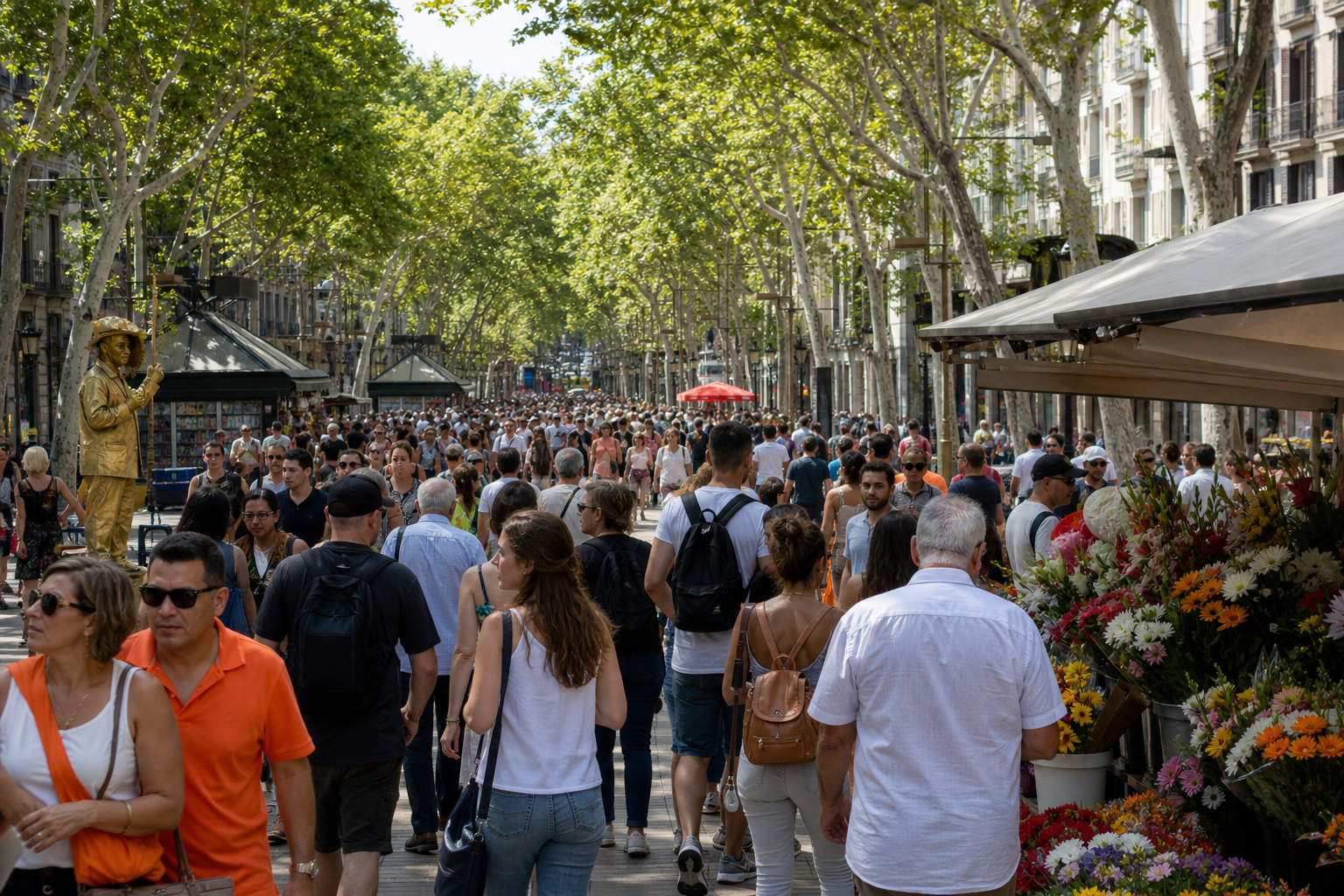
Here’s where to stay sharp:
| Zone | Risk Level | Key Threat |
|---|---|---|
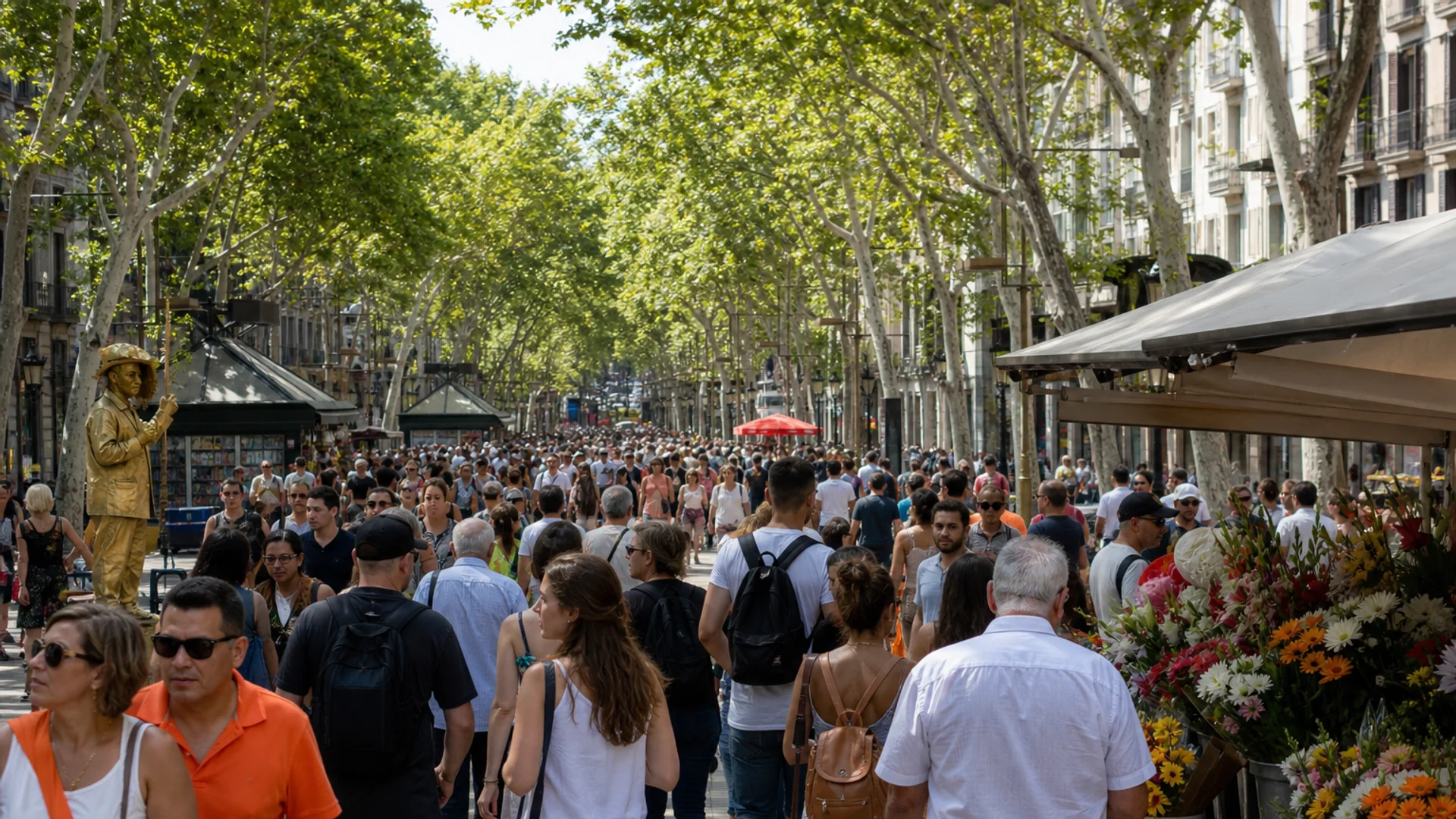
| La Rambla (full stretch) | Very High | Crowd pressure near living statues and Boqueria entrance |
| Metro lines L1, L3, L5 | Very High | Door squeeze at rush hour (8:00–9:30 AM, 5:00–8:00 PM) |
| Gothic Quarter | High | Narrow lanes, direction-asking distraction |
| Major monument entrances | High | Distraction while taking photos or using phone |
| Barceloneta Beach | High | Unattended valuables while swimming |
| Plaça Catalunya | Medium-High | Street performance distractions |
The metro deserves special attention. Lines L1, L3, and L5 carry the highest tourist density. Key stations include Diagonal, Plaça Catalunya, Sants Estació, Sagrada Família, and Barceloneta. If the carriage is unusually packed for the time of day, that overcrowding may be deliberate. Pickpocket teams sometimes engineer it.
One usable move: shift your sightseeing transits to 10:00, 12:00 or 14:00, 16:00. You avoid the peak risk windows on those metro lines, and the trains are less crowded anyway. Locals do this automatically. Most visitors don’t think to.
Key Takeaway: Five of the six highest-risk zones in Barcelona are also the most photographed spots in the city. Pickpockets follow tourists with phones in hand.
The single most effective thing you can do costs nothing. Wear your bag in front of your body. That one habit, ed, does more than any piece of gear.
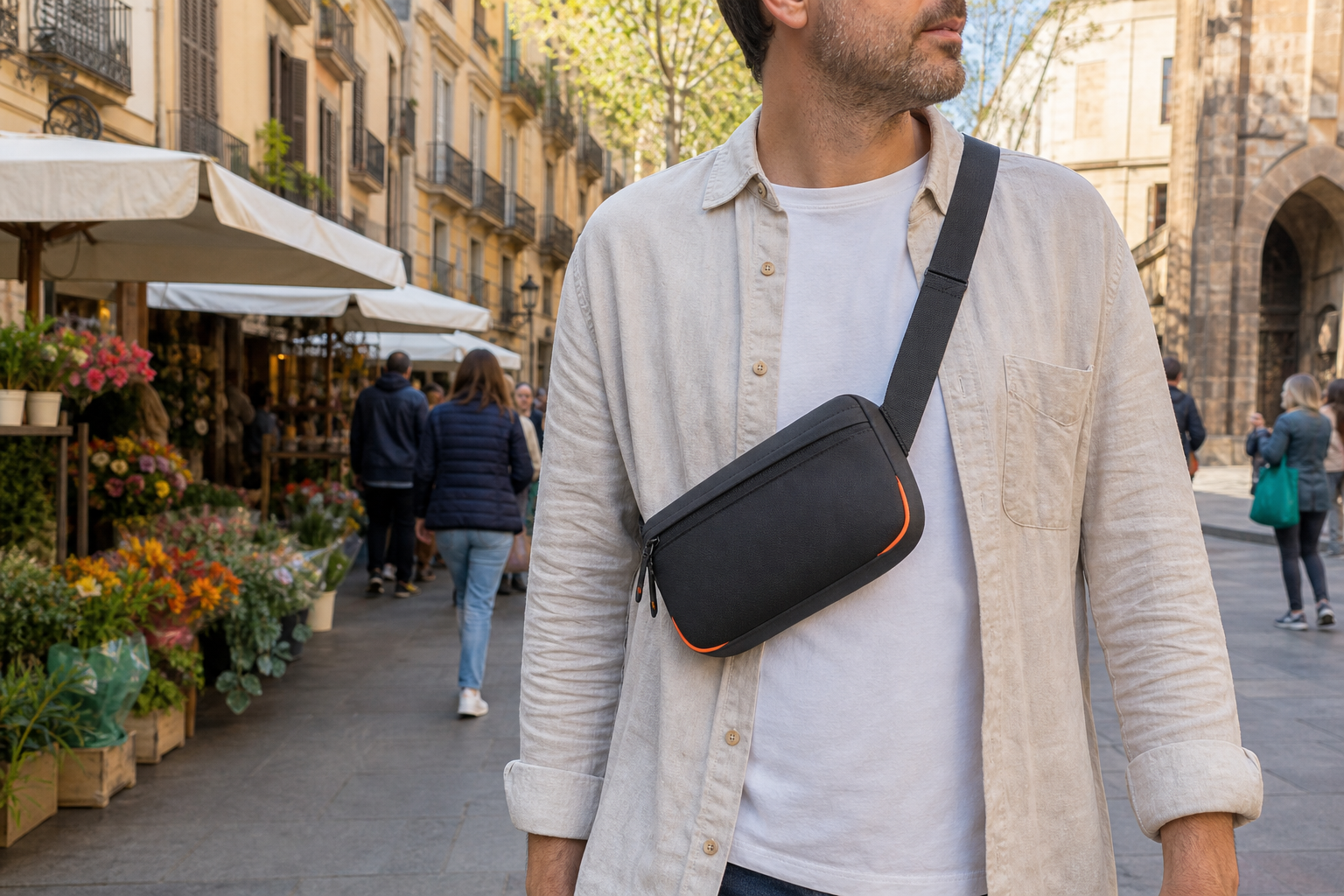
Here’s what actually works, in order of impact:
At restaurants, loop your bag strap around the leg of your chair. Don’t hang it on the back. Don’t leave your phone on the table. A thief can walk past, cover it with a map or menu, and it’s gone before you look up.
Leave your passport and spare cash in the hotel safe. You don’t need your passport on you for most of a day in Barcelona. A photo of it on your phone works for most situations, and it means a theft doesn’t become a consulate emergency.
Pickpockets in Barcelona rarely work alone. The typical team has three roles: a spotter who identifies easy targets, a distractor who creates the moment, and a thief who makes the move while you’re looking the wrong way. Sometimes there’s a fourth person who takes the item immediately, making recovery nearly impossible.
Knowing the specific scams makes them much easier to deflect. Here are the ones you’ll actually encounter:
The flower or bracelet offer: Someone approaches and hands you something before you’ve agreed to take it. A middle-aged woman with carnations, or a man who ties a bracelet around your wrist before you can react. If you engage, they see where your money is. The move: keep walking, say “no gracias,” and don’t stop.
The fake petition: A young person with a clipboard asks you to sign for a charity. The clipboard covers their other hand. Your attention goes to the paper. Their partner moves on your bag. Don’t stop, don’t sign. Walk past.
The pigeon poop scam: Someone tells you there’s a stain on your jacket, real or fake, and moves in to “help” you clean it. While you’re distracted, their partner takes your belongings. If someone approaches saying you have a stain, decline the help and deal with it later in private.
The metro sandwich: Someone blocks you at the turnstile or train door while another person comes from behind. The counter is simple: wait for everyone to exit before you enter. If you’re standing, position your back against a wall or pole.
As one travel creator put it after six months living in Barcelona: “No dar papaya.” It’s a Colombian phrase that translates roughly to “don’t give people a reason.” Don’t make yourself an easy target. That mindset, more than any specific tactic, is what keeps most experienced travelers safe.
How you carry money matters as much as where you carry it. The less cash you handle in public, the less exposure you have.
Buy a T-Casual transport card before you need it. Loading it up in advance means you’re not fumbling with cash or a ticket machine on a busy platform, which is exactly the moment pickpockets look for. You avoid handling money in the highest-risk environment in the city. If you’re planning your trip well ahead, booking summer travel packages early also gives you time to sort out a travel money card before you go.
Split your money across two places. Keep a small amount of cash and one card accessible for the day. Leave the rest, along with a backup card, in the hotel safe. That way, a theft costs you one day’s spending money, not your entire trip budget.
Travel money cards are worth considering for Barcelona. Because you preload a set amount, your main bank account stays protected even if the card is taken. Most cards can be topped up through an app, so there’s no reason to carry more than you need for the day.
Pro Tip: Use mobile data, not public Wi-Fi, for any banking or payment app while in Barcelona. Cybersecurity professionals consistently flag public Wi-Fi in metro stations and tourist areas as a risk for financial data. The small roaming cost is far cheaper than a compromised account.
On your phone: don’t leave it on restaurant tables. Don’t hold it up like a GPS billboard while walking. Check your pocket every few minutes in crowded areas. If you’re on the metro, hold the rail with one hand and keep your other hand on your phone or bag. An Apple AirTag in your bag won’t prevent theft, but it can help you locate a discarded wallet after the cash has been taken.
Even with good habits, it can happen. The first 15 minutes matter most. Here’s the order that minimizes damage.
Stay calm first. Panic leads to poor decisions. Take a breath, assess what’s gone, and move to a safe spot before doing anything else.
File a police report immediately. This is the most important step, even though it almost certainly won’t get your belongings back. A certified police report is required for travel insurance claims, replacement travel documents, and card issuer disputes. Without it, most claims go nowhere. In Barcelona, go to the nearest police station to file a report. You can also call 112. Get a stamped copy of the report before you leave.
Block your cards immediately. Call your bank or use your banking app to freeze the stolen card. Many banks can FedEx a replacement card to your accommodation if you’re staying in one place long enough. Ask specifically about this when you call.
If your phone was taken, activate the phone’s tracking service from another device. Do this quickly, before the thief powers it off or resets it.
If your passport was taken, contact your country’s embassy or consulate right away for emergency travel documents. Embassies are not open on weekends, so if you’re traveling soon, go in person during opening hours and explain the urgency. Bring passport-style photos if you have them.
If you need emergency funds wired from home, international money transfer services are available throughout Barcelona and accept valid ID. If your ID was also taken, some transfer services accept a photocopy of your ID alongside a copy of the police report.
The risk profile changes depending on how you’re traveling. Solo travelers face a specific challenge: there’s no one to watch your bag when you step away from the table or swim at the beach. The answer is simple. Don’t leave valuables unattended. At Barceloneta, take only what you can afford to lose. Your hotel safe should hold your passport, extra cards, and most of your cash. A beach day needs one card, enough cash for drinks, and your phone if you’re actively watching it.
For families, children can be both targets and, in some organized theft networks, used as distractors. Keep kids close in crowded metro stations and tourist squares. If a child approaches your group asking for something, stay alert to who else is nearby. It’s an uncomfortable reality, but it’s documented.
Groups have an advantage: more eyes. But groups also get complacent. Assign one person to watch bags when the group stops to look at something. At restaurants, don’t assume someone else has an eye on the table. If you’re planning the logistics of a group trip, the neighborhood guides on Dream Book Travel follow the same approach for other European cities, with honest breakdowns of where to stay and what to watch for.
One underused option: hire a local guide for your first day. An experienced local guide knows which metro doors to avoid, which sections of La Rambla to walk through quickly, and which “helpful” strangers to ignore. For families with kids or first-time visitors to the city, it’s worth considering for high-traffic days around the Gothic Quarter and other major attractions.
Walk confidently, even when you’re lost. Pickpockets look for people who look uncertain. If someone makes you uncomfortable, cross the street or step into a shop. You don’t owe anyone an explanation. And if you’re ever unsure about a neighborhood after dark, the same rule applies in Barcelona as any European capital: follow where the locals are, not where the tourist maps point.
At Dream Book Travel, we write these guides the way we’d brief a friend before their trip: tell them the honest risks, give them the specific moves that actually work, and skip the gear they don’t need. If you’re building out a broader Europe trip and want the same level of detail on other destinations, the guides on this site cover logistics the same way.
It has one of the highest rates of tourist theft in Europe, concentrated in specific zones like La Rambla and the metro. That said, violent crime against tourists is rare. Barcelona is safe to visit if you keep your bag in front and stay aware in the known hotspots.
Move away immediately. Don’t confront the person. Step to a different part of the carriage or get off at the next stop if you feel unsafe. Check your belongings once you’re clear. If something is gone, file a police report at the nearest station. Confrontation rarely helps and can escalate quickly with a team of three to five people nearby.
Yes, with basic awareness. The metro is efficient and most journeys are fine. The risk concentrates on lines L1, L3, and L5 during rush hours (8:00, 9:30 AM and 5:00, 8:00 PM) near major tourist stops. Wear your bag in front, keep zippers closed, and avoid standing near the doors with your back to the carriage if it’s crowded.
No. Research across 48 tips from multiple Barcelona safety sources found that behavior changes outperform gear. Keeping your bag in front, locking zippers, and avoiding back pockets are more effective than any specific product. A phone leash costs under $10 and is the most useful low-cost addition. An expensive anti-theft bag helps nothing if you’re not paying attention.
In your hotel safe. You don’t need your physical passport for most daily activities in Barcelona once you’ve entered the country. Keep a photo of it on your phone as a backup. If you’re asked to show ID, a phone photo works in most situations. Carrying your actual passport on the street means a theft becomes a consulate problem on top of everything else.
Call 112 or go in person to the nearest police station, which often has English-speaking staff. Get a stamped copy of the report before you leave. You’ll need it for travel insurance claims, card issuer disputes, and emergency travel documents. Filing the report is the most important single action after a theft.
Barcelona is worth every day you spend there. The pickpocket risk is real, predictable, and manageable. Bag in front. Zippers closed. No back pockets. T-Casual card loaded before you hit the metro. Hotel safe for your passport and spare cash. Those five habits cover most of what the research says actually works. If you want the same level of honest, specific advice for planning the rest of your trip, Dream Book Travel’s destination guides cover Europe the same way: real logistics, honest trade-offs, no filler.
Use this Edinburgh itinerary 3 days plan for honest sightseeing, transit tips, free stops, museums, budget notes, and what to skip.
Find the best areas to stay in London for tourists, with honest advice for first-time visitors, culture lovers, foodies, and theater fans.
Find the best Greek islands for families by travel style, beach access, activities, and travel-day tradeoffs. Honest picks and planning notes.