Edinburgh Itinerary 3 Days: A Practical Plan
Use this Edinburgh itinerary 3 days plan for honest sightseeing, transit tips, free stops, museums, budget notes, and what to skip.
Hakone is close enough for a day trip from Tokyo, but its transport loop can eat half your day if you get the order wrong. The Shinkansen reaches Odawara in about 35 minutes, yet the regular Odakyu route usually makes more sense for this trip. We’ll show you how to choose your route, time the classic loop, set a return cutoff, and avoid paying for sights you won’t reach.
A good Hakone day trip from Tokyo starts with the right transport choice. You have three sensible ways to reach the area, and each fits a different kind of day.
| Route | Time | Listed cost | Use it when |
|---|---|---|---|
| Regular train route | About 90 minutes | ¥1,240 | You want the lowest train fare and don’t mind a transfer. |
| Odakyu Romance Car | 85 to 90 minutes | Pricing varies | You want a reserved seat and a direct ride. |
| Shinjuku highway bus | 2 to 3 hours | ¥1,500 to ¥2,000 | You care most about price or have bulky luggage. |
| Tokaido Shinkansen to Odawara | About 35 minutes | ¥3,640 | You already have a JR Pass or are coming from outside Tokyo. |
The regular Odakyu express is our default. It costs about one-third of the Shinkansen fare, though the exact total depends on the tickets you buy. The Romance Car doesn’t save much time, but its reserved seats remove the morning shuffle. We like it on the way home, when tired legs make a quiet seat worth the extra cost.
The 2-day Hakone Free Pass is listed at ¥6,500 from Shinjuku in the research we checked. It covers most local trains, buses, the ropeway, and the Lake Ashi sightseeing cruise. It also includes discounts, such as ¥200 off the Hakone Open Air Museum. You can check the area’s volcanic setting through Wikipedia’s overview of Hakone, but check current transport conditions before leaving.
Buy the pass if you plan to complete the loop and use several forms of transport. Skip it if you’ll take a bus to one lake stop, avoid the cruise, and visit only one paid site. The pass has a two-day validity period, but that doesn’t mean it always pays off during one busy day.
Here’s a quick decision rule:
If you’re still choosing where to base yourself in Tokyo, Dream Book Travel’s guide to where to stay in Tokyo for first-time visitors can help you judge the morning trip from your hotel. A room near Shinjuku may save more time than an expensive train upgrade.
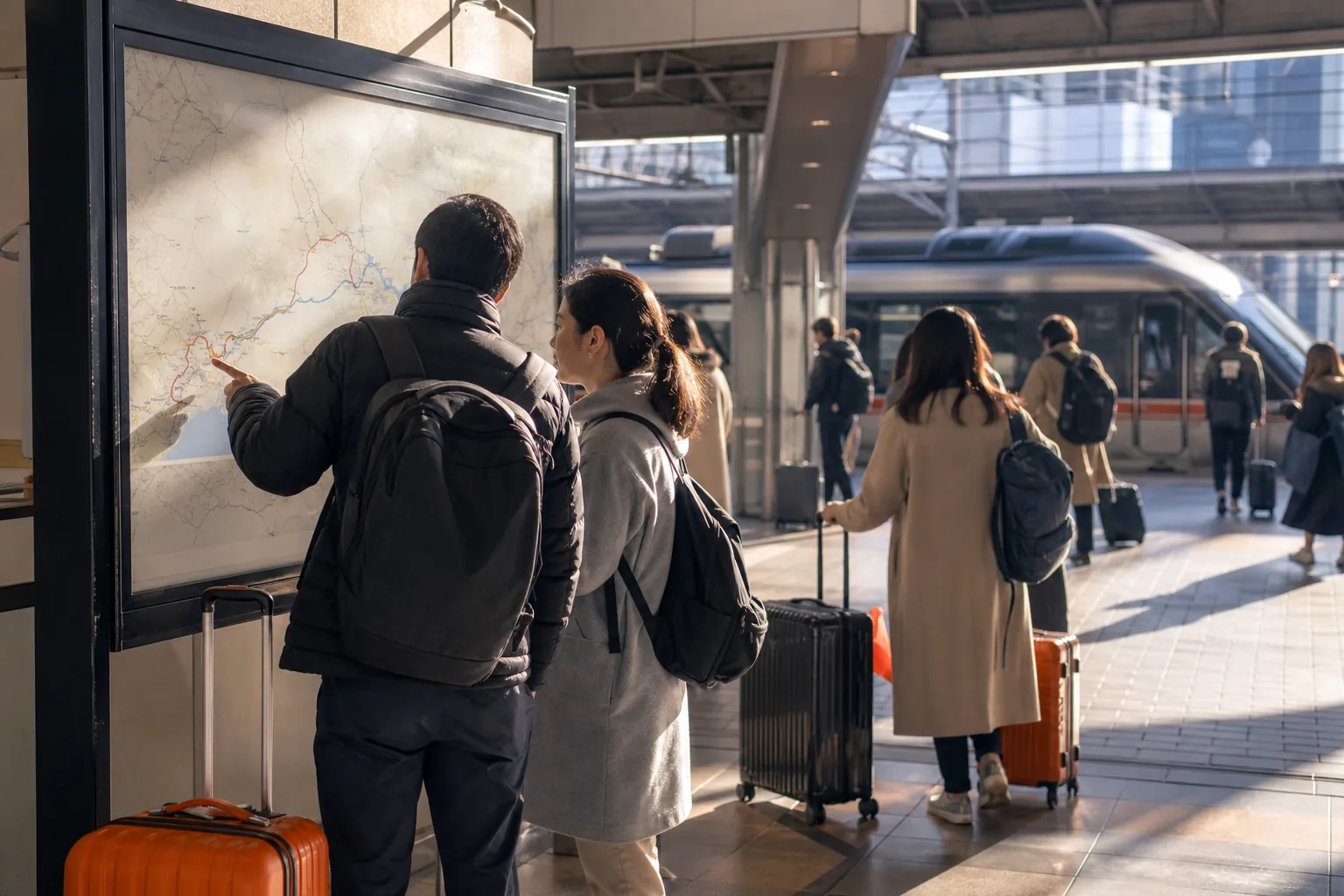
Key Takeaway: For most one-day visitors, the regular Odakyu route plus the Free Pass gives the cleanest balance of cost and access.
For a Hakone day trip from Tokyo, leave Shinjuku between 7:30 and 8:00 AM. That early start protects your best chance of clear mountain views and gives you room when a connection runs late.
Take the direct Romance Car if you bought a reserved seat. Otherwise, use the regular Odakyu express and change for a local connection. Aim to reach Hakone-Yumoto around 9:15 to 9:45 AM.
Don’t spend your first hour browsing Hakone-Yumoto shops. You’ll pass through again later. Move straight to Gora, then use local transport to reach Sounzan and take the ropeway toward Owakudani. The route climbs through forest before opening over Hakone’s volcanic zone.
Owakudani is the stop we protect most carefully. The valley has sulfur vents, steam, and a stark volcanic surface. It is also one of the places where Mount Fuji may appear, though clouds can block it. A clear view is luck, not a promise.
Allow 45 to 60 minutes. Walk only on open paths, since weather and volcanic conditions can change access. Buy the famous black eggs if you want the local snack. Five eggs cost ¥550 in the checked source material, and the old story says one adds seven years to your life. They taste like regular hard-boiled eggs, so don’t buy them expecting a sulfur feast.
Check the ropeway status before leaving Tokyo. If the ropeway is closed, don’t force the loop. Switch to a lake bus route or spend more time around Hakone-Yumoto. A flexible plan beats standing beside a closed gate while your day disappears.
By now you should have reached the volcanic valley before the largest crowds. If Fuji is hidden, keep going. Owakudani still earns its place through the landscape beneath the ropeway.
The Lake Ashi cruise gives your Hakone day trip from Tokyo a needed change of pace. From Owakudani, continue the ropeway to Togendai, then board the sightseeing cruise toward Hakone-machi or Moto-Hakone.
The cruise takes about 30 minutes in the route notes we checked. Yes, the pirate ship is touristy. We still recommend it when your pass covers the fare, because the lake-level view feels different from the gondola ride above. On clear days, Fuji may frame the water. On cloudy days, you still get the forested shoreline and mountain air.
Don’t build your whole day around a photograph of Fuji. The mountain can vanish behind haze by late morning, especially in warm weather. The geography of Mount Hakone helps explain why the area has such a mix of volcanic ground, steep slopes, and lake views.
Get off at Hakone-machi or Moto-Hakone, then walk toward Hakone Shrine. The shrine sits in cedar forest, with the well-known red torii gate standing at the water’s edge. Entry to the shrine is free.
Here’s the catch. The torii gate draws long photo lines on weekends. If you want the picture, visit mid-week and accept that the queue may still be slow. The shrine grounds themselves deserve more attention than the gate. Walk uphill through the trees, take a quiet look around, and leave room for the next connection.
For lunch, keep it simple near the lake. Meal costs vary, and menus change. Set a time limit before sitting down. A long lunch can force you to cut the museum or miss your return train.
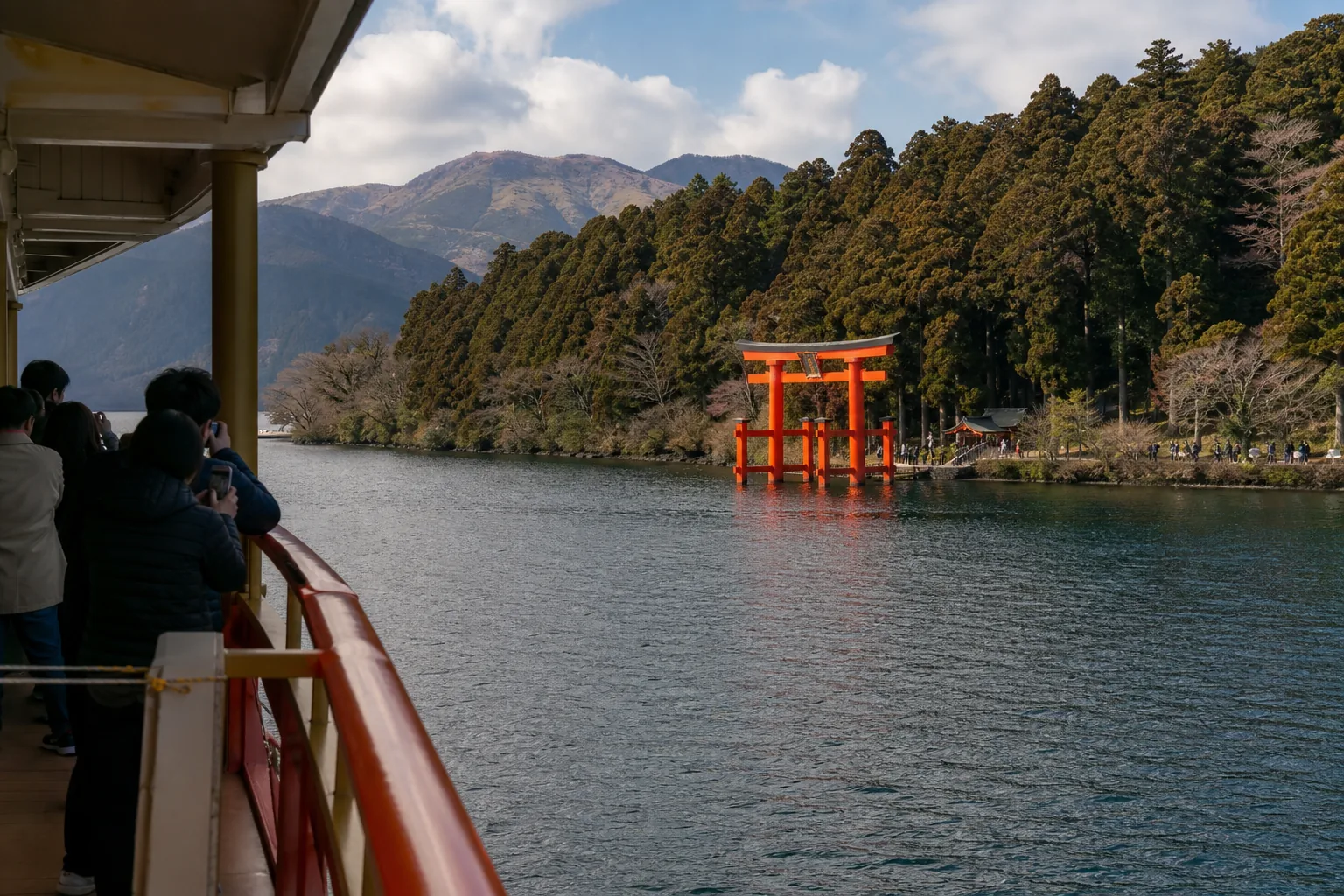
Pro Tip: If the shrine queue looks unreasonable, visit the main grounds and skip the gate photo. You’ll save time without losing the character of the place.
From Moto-Hakone, take the local bus toward your final stop. Use the Free Pass at the bus gate, but still check the destination board. Hakone buses can look simple on a map and feel less simple when several lines leave close together.
A day trip through Hakone works when you choose one final stop. Trying to add every museum, shrine, hot spring, and walking trail turns a scenic day into a transport audit.
Our museum choice is the Hakone Open Air Museum. Plan for about 90 minutes and budget ¥1,600 for entry, with a ¥200 discount listed for Free Pass holders. The park spreads sculpture across a mountain setting, so it feels like a walk as much as a gallery visit.
Choose the museum when you want art and space after the crowded lake stops. It also fits the route back toward Hakone-Yumoto better than a remote detour. Don’t try to inspect every work. Pick a few areas, allow time for the large pieces, then leave when your return window says it’s time.
Choose an onsen instead if rest matters more than another sight. Hakone-Yumoto has the area’s main cluster of day-use baths, but the research notes show a wide range of facilities and rules. Check tattoo policies, towel needs, opening hours, and bathing rules before paying.
Choose a free outdoor stop if you want some time outside. This is a poor choice late in the day if you’re already watching the clock.
We’d skip Gora Park, extra museums, and a long hike on a first day unless one of them is your main reason for visiting. The guides won’t always say that. Hakone is spread out, and every added stop has a transport cost in minutes, even when the pass covers the fare.
Dream Book Travel’s editorial approach is simple here: pick the thing you’ll still remember, not the thing that makes the itinerary look full.
Set your return cutoff before you leave Tokyo. For a comfortable day, aim to leave Hakone-Yumoto around 5:00 to 5:30 PM and reach Shinjuku in the evening.
If you’re using the Romance Car, reserve the return seat before the day fills up. If your return budget is tight, consider the highway bus. It costs about ¥1,500 to ¥2,000 in the route notes, but traffic can make the trip take 2 to 3 hours. The bus works better on the return than the morning, when you need every sightseeing hour.
A reasonable transport-led budget looks like this:
That full plan can pass ¥10,000 per person once food and optional upgrades enter the picture. A lower-cost day can skip the museum, use regular trains, and pay only for food plus the transport that fits your route. The pass is not a badge of good planning. Run the numbers.
Keep a small buffer for delays. A ropeway pause, a crowded bus, or a long shrine queue can erase 30 minutes fast. If you’re connecting to a flight or another city, return earlier and skip the last stop. We’d rather miss one museum than spend the evening sprinting through Shinjuku Station.
After you return, a relaxed meal can be the right finish. Dream Book Travel’s guide to izakaya in Tokyo worth your night is useful if you want food without turning the evening into another research task.
Key Takeaway: Treat 5:00 PM at Hakone-Yumoto as your working return target, not the moment to begin searching for a train.
Yes, Hakone is worth a day trip if you want a compact mix of volcanic scenery, a lake cruise, shrine grounds, and mountain transport. It is a long day, though. Leave early and choose one final stop. Stay overnight if your main goal is a slow onsen visit rather than a quick taste of the area.
The regular Odakyu express plus a connecting local train is the lowest listed train route at about ¥1,240. The highway bus is listed at ¥1,500 to ¥2,000 and may suit travelers with luggage. It takes 2 to 3 hours, so the lower fare costs you valuable morning time.
The Hakone Free Pass can pay off in one day when you ride the ropeway, cruise, local buses, and mountain railway. The listed 2-day pass costs ¥6,500. Compare fares first if you plan only one or two stops, since a light itinerary may cost less without it.
You can see Mount Fuji from Owakudani, the ropeway, and Lake Ashi when weather conditions cooperate. Clouds and haze often block the view, so Fuji should be a bonus rather than the sole reason for your trip. Check the morning forecast and keep the volcanic valley and lake scenery on your plan.
Skip extra museums, long hikes, and distant detours when you’re already doing the ropeway, cruise, shrine, and one final stop. Hakone’s sights sit across a wide mountain area. Adding one more attraction can cost an hour in transfers, which may push your return past a comfortable cutoff.
Yes, if you treat Hakone as a focused loop rather than a checklist. Take the regular route or Romance Car from Shinjuku, start at Owakudani, cross Lake Ashi, then choose one final stop. Before your trip, check transport status and reserve the return seat you actually plan to use. Dream Book Travel’s advice is simple: leave early, skip what doesn’t fit, and let the day feel like travel instead of a race.
Use this Edinburgh itinerary 3 days plan for honest sightseeing, transit tips, free stops, museums, budget notes, and what to skip.
Find the best areas to stay in London for tourists, with honest advice for first-time visitors, culture lovers, foodies, and theater fans.
Find the best Greek islands for families by travel style, beach access, activities, and travel-day tradeoffs. Honest picks and planning notes.