
Edinburgh Itinerary 3 Days: A Practical Plan
Use this Edinburgh itinerary 3 days plan for honest sightseeing, transit tips, free stops, museums, budget notes, and what to skip.
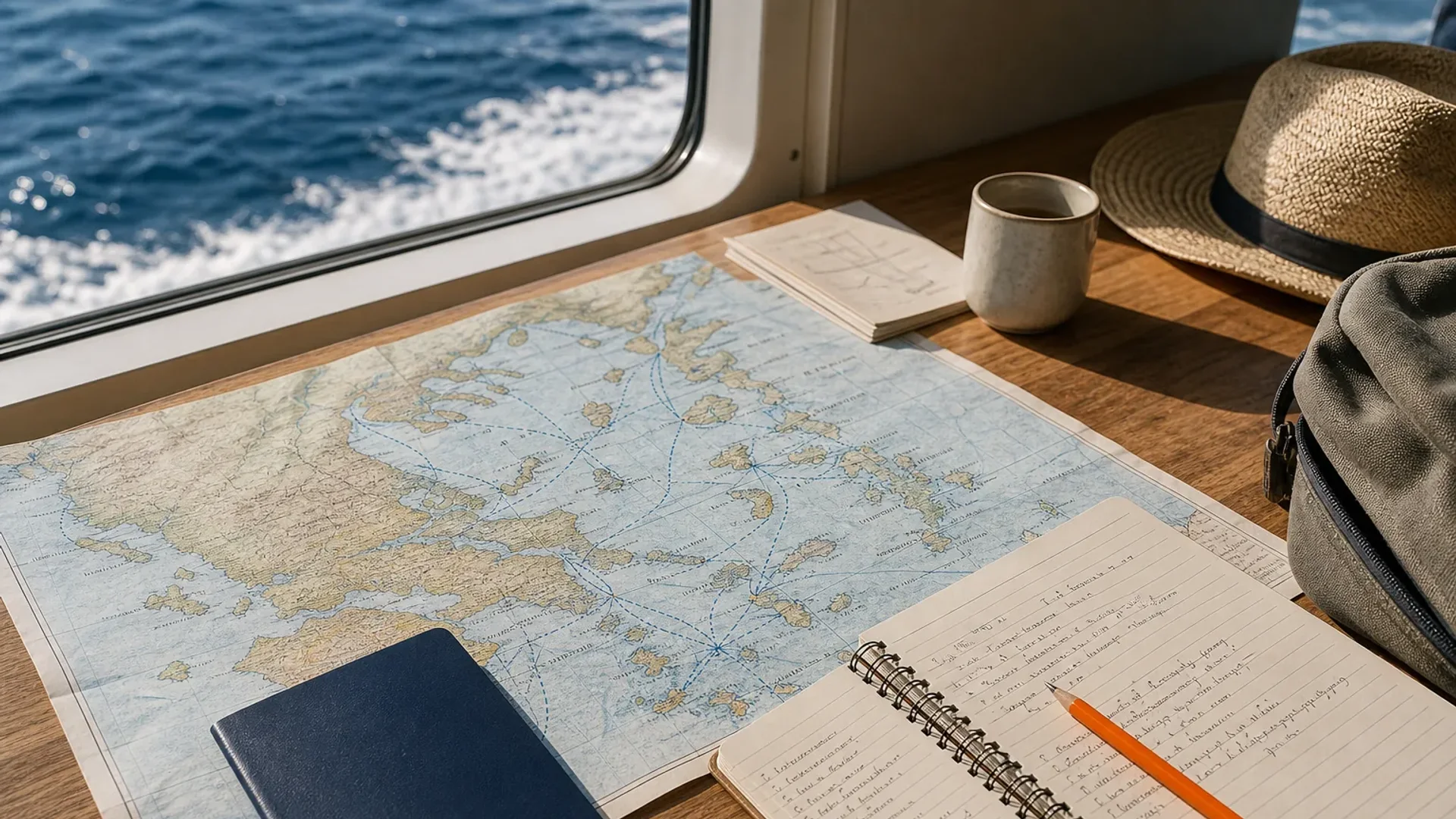
A Greek islands itinerary can look easy on a map and feel exhausting on the water. The fix is simple: choose one island group, limit your ferry hops, and price every travel day before you book. We’ll show you how to shape a route that leaves room for beaches, meals, and the occasional slow morning.
Start your Greek islands itinerary with the island group, not with a list of famous names. Each group has its own rhythm, so your choice should match the trip you want.
The Cyclades are the usual fit for a first trip. Santorini brings dramatic caldera views. Mykonos suits travelers who want late nights. Paros has a mix of villages and beaches. Naxos gives you more space and a broader range of food. Milos works well for travelers who care most about swimming and unusual coastlines.
Choose the Ionian islands if you want greener scenery and a slower road trip feel. Pick the Dodecanese if old towns, long ferry links, and a more eastern Aegean setting appeal to you. Crete can also anchor a trip on its own. It is large enough that adding several islands may make the plan worse.
Use this quick filter:
Also check the language on signs and menus before you go. Greek is the official language in Greece, and its alphabet has been in continuous use for centuries. You do not need to read Greek fluently, but learning place names helps when you compare ferry boards and bus stops.
Dream Book Travel’s advice is to skip a cross-country island mix unless you have plenty of time. Santorini, Corfu, and Rhodes may all sound appealing, but they do not form a neat ferry route. That plan usually adds flights, airport transfers, and lost half-days.
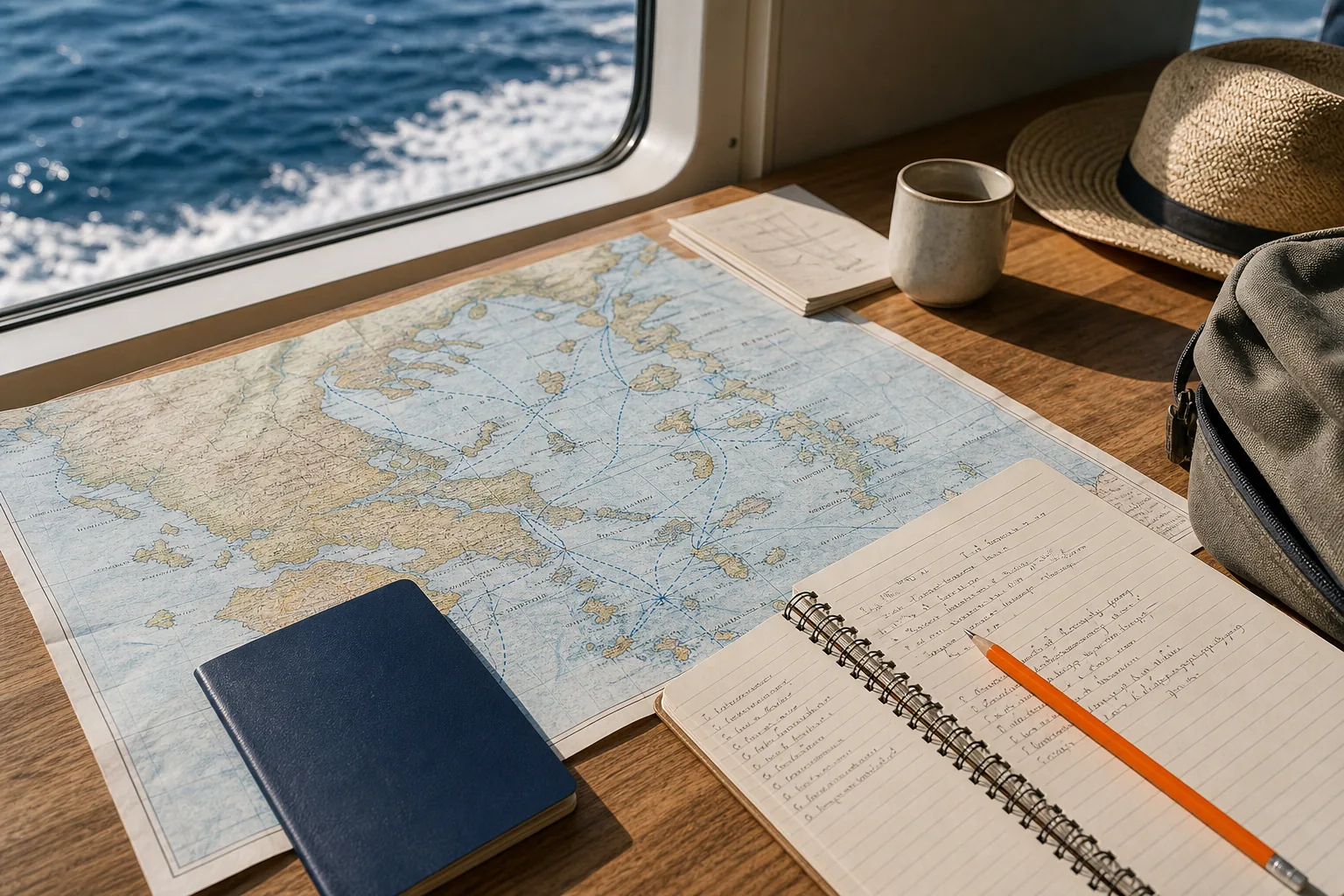
Your Greek islands itinerary should count travel days as part of the trip. A ferry departure at 7 a.m. can take more from you than the timetable suggests.
For seven nights, choose two islands. For 10 to 12 nights, three islands can work. Four islands may fit a two-week trip, but only if the ferry links are direct and you accept less room for weather changes.
| Trip length | Island count | How to use the time | What to skip |
|---|---|---|---|
| 5 to 7 nights | 2 islands | Give the first island three nights and the second four. | Do not add a one-night stop. |
| 8 to 10 nights | 2 or 3 islands | Use one longer stay as your anchor. | Do not cross island groups. |
| 11 to 14 nights | 3 islands | Allow a spare night before your flight home. | Do not plan back-to-back early ferries. |
| 15 or more nights | 3 to 4 islands | Add a less rushed island stay. | Do not treat every island as a checklist stop. |
Build around your arrival and departure airports. If you land in Athens, the mainland portion can be one night at the start or end. If you fly home from Athens, return to the city the day before your international flight. A missed ferry should not put your long-haul flight at risk.
Season matters too. Summer sailings can sell out on busy routes, while strong winds may affect departures. Check the forecast close to each crossing. A lower fare means little if the dates force a poor route.
We also recommend a pace check. Write down what you want from each island, then limit the list to two main plans per full day. You still need time to reach a beach, find lunch, and get back without watching the clock.
Key Takeaway: Treat every island change as a half-day event, even when the ferry ride looks short.
A ferry route should move in one direction where possible. Draw the islands in order before you check hotels. That one step can save you from a route that doubles back across the Aegean.
Start with the main port connection. Then check whether the next ferry leaves from the same island port or requires a long land transfer. Some islands have more than one port, and the hotel area may sit far from the dock. Add the transfer time before you call a connection “easy.”
Use this booking sequence:
Do not build an itinerary around the last possible connection. If a ferry arrives at 5:30 p.m. and your next sailing leaves soon after, one delay can ruin the day. Choose a route with a backup sailing, or stay another night.
Weather creates another problem. Wind can delay or cancel ferries, and a calm forecast at home may not match conditions near the islands. Keep the most important booking, usually your flight home, away from a same-day ferry connection.
Make a backup plan in plain language. If the ferry is canceled, will you stay put, switch to a flight, or spend the night near the port? Check the change rules on your booking before you need them. The guides won’t always spell out how much time a port change adds, so we write it into the plan ourselves.
A good Greek islands itinerary has fewer crossings than your first draft. That is a feature, not a failure.
The right number of nights depends on what you plan to do, not on an island’s fame. A one-night stay rarely gives you a fair view of a place.
Give a large or activity-heavy island at least three nights. You may need one day for arrival, one full day for your main plan, and another day for a beach, village, or food stop. Smaller islands can work with two nights if the ferry schedule is kind.
Use an anchor island. This is the place where you stay longest and stop moving bags. Naxos or Paros may work for travelers who want a mix of food, beaches, and town time. Milos may deserve extra time if boat access and swimming are central to the trip. Santorini may need fewer nights if you mainly want the caldera walk and sunset views.
We suggest this simple test for every stay:
If you cannot answer the first question, cut the island. If your only reason is “everyone goes there,” that is not enough. A route should fit your trip, not someone else’s photo set.
Plan the final night with care. If you must catch an international flight from Athens, sleep near your departure point before the flight. We would rather give up one island night than spend the last morning refreshing a ferry tracker.
For a useful example of grouping nearby plans and leaving space for delays, see this city itinerary example and the three-day Lisbon itinerary. Apply that logic to each island rather than filling every hour.
Pro Tip: Put your hardest-to-reach activity in the middle of the stay. If weather changes the plan, you still have time to move it.
A Greek islands itinerary needs a full trip budget, not a room price. Ferry tickets, port transfers, meals during travel, and unused nights can change the total fast.
Make a sheet with one row for each day. Add the cost of the room, ferry or flight, local transport, food, and your main activity. Use the currency shown by the booking site. Convert it to US dollars only after you have the local figure, since exchange rates move.
Track these categories:
Do not hide travel days inside the lodging line. A cheap room may cost more overall if it requires a taxi from a distant port. Likewise, a more expensive hotel near the dock may save money when it removes a transfer.
Use an anchor price before you search. Decide what a normal night, ferry crossing, and meal can cost within your plan. Then mark each booking as below, near, or above that figure. This keeps one attractive room from pushing the whole trip off course.
Dream Book Travel’s planning approach is plain: if the route needs several expensive transfers, cut one island before cutting food or rest. You are buying time as much as transport. Price alerts can help with flights, but they cannot fix a route that asks you to cross the sea every other morning.

Before you pay, total the trip twice. First, add the planned cost. Then add the likely cost of one changed ferry or extra hotel night. If the second number makes you uneasy, simplify the route now.
You can visit two or three islands in 10 days, but three is the usable limit for most travelers. Keep them within one island group and allow time for ferry delays. A Greek islands itinerary with two longer stays often feels better than three rushed stops with one night on each.
The Cyclades are usually the easiest place to start because several well-known islands connect through the same sea route. Choose two or three that match your pace rather than copying a fixed list. Check the ferry schedule before booking rooms, since the route should decide the order.
Book key Greek ferry crossings before the trip, especially during busy summer dates. You need the sailing confirmed before you commit to nonrefundable lodging. Leave room for changes, though. A ferry plan that depends on one late connection has too much risk for a short holiday.
Plan at least two nights for a small island and three or more for a larger island with several activities. One night often becomes a check-in and check-out exercise. In a Greek islands itinerary, give your anchor island the longest stay and place the least flexible activity in the middle.
Island hopping is worth it when the crossings are short and the islands offer different experiences. It is not worth it when you spend every other day packing and waiting at a port. We recommend cutting one stop if the route leaves less time for meals, swimming, or sleep.
We recommend building around two or three islands in one group, then checking every ferry before booking a room. Draft the route, price the backup plan, and cut the stop that adds the most stress. That is how Dream Book Travel keeps a Greek islands itinerary focused on the trip you want, not the number of pins on a map.
Use this Edinburgh itinerary 3 days plan for honest sightseeing, transit tips, free stops, museums, budget notes, and what to skip.
Find the best areas to stay in London for tourists, with honest advice for first-time visitors, culture lovers, foodies, and theater fans.
Find the best Greek islands for families by travel style, beach access, activities, and travel-day tradeoffs. Honest picks and planning notes.