Edinburgh Itinerary 3 Days: A Practical Plan
Use this Edinburgh itinerary 3 days plan for honest sightseeing, transit tips, free stops, museums, budget notes, and what to skip.
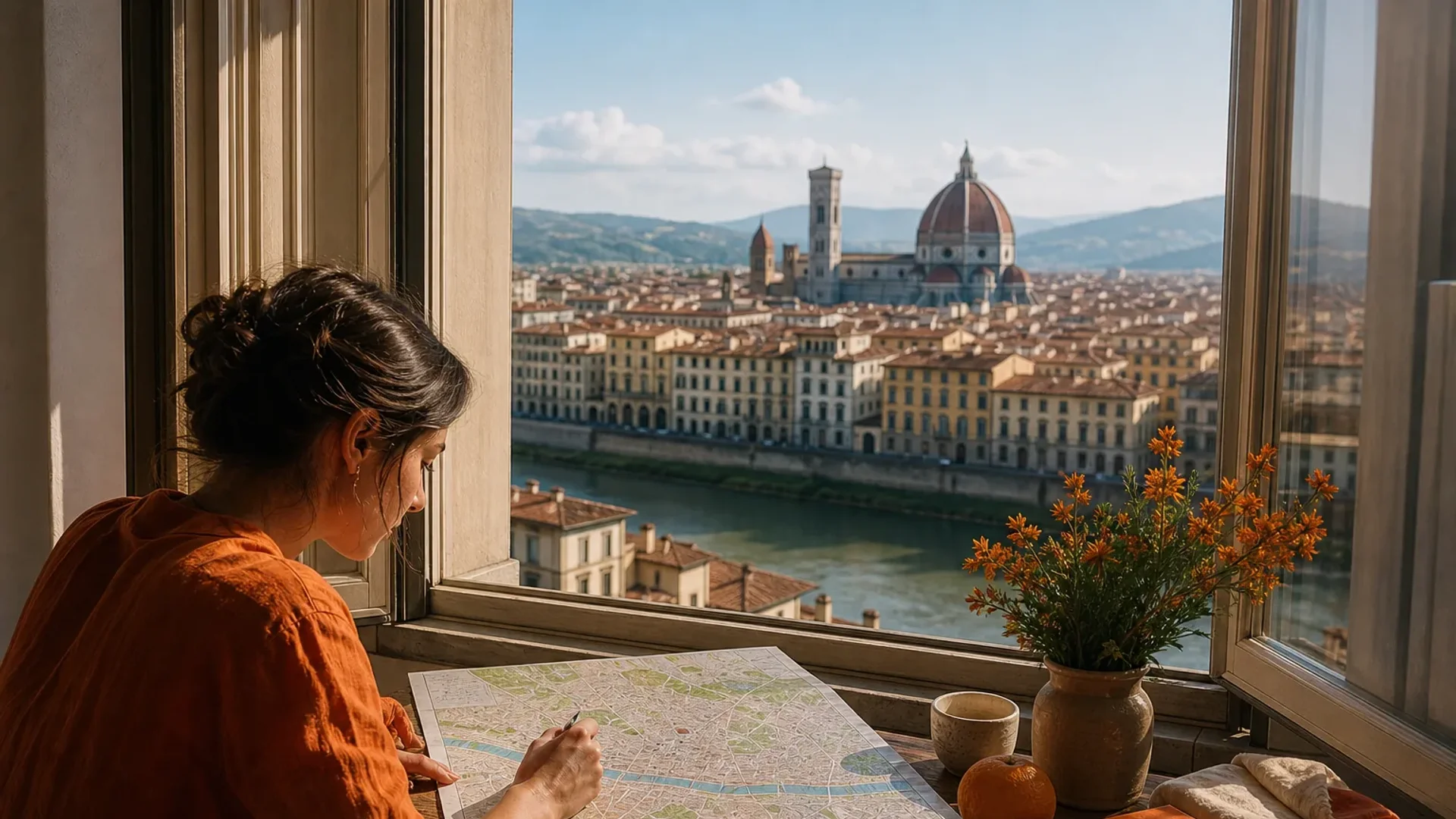
Florence can reward a single packed day, but three days is where the city starts to feel human. The funny part is that several local plans suggest skipping the famous Duomo dome, at least when queues and museum fatigue take over. We built this Florence itinerary around pace, walking geography, real costs, and the sights worth your limited time.
We read the five Florence itinerary guides currently ranking for the same searches, checking each for dome step counts, skip advice, and dollar pricing. Three of five list the 463 steps inside Brunelleschi’s dome; only one tells readers to skip it if they fear heights or are claustrophobic. Just one of the five converts any price into US dollars, and none list a bus route or fare for Piazzale Michelangelo. Most competing itineraries leave readers guessing on costs and on whether the dome climb suits them.
Your Florence itinerary should match your interest in art, not a checklist of landmarks. One day covers the core. Three days gives you room for both sides of the Arno. Five days lets you slow down. Seven days works best when you add Tuscany.
| Time | Build your days around | Skip or limit |
|---|---|---|
| 1 day | Accademia, the Duomo area, Uffizi, Piazza della Signoria | Long climbs and a second major museum |
| 3 days | Historic Center, Oltrarno, one viewpoint | Trying to fit every palace inside |
| 5 days | Core museums plus markets, churches, and slow walks | A day trip unless you can spare the city time |
| 7 days | Three or four Florence days plus Siena, Chianti, or Pisa and Lucca | Changing hotels too often |
For a single day, we’d reserve Accademia for Michelangelo’s David and choose either the Uffizi or the Duomo complex. Doing both in full turns the visit into a museum shift. A useful one-day plan follows the same basic idea: keep the historic center compact and walk between its main sights.
Three days is our sensible floor for a first visit. You can place the Uffizi on day one, Accademia and the Duomo on day two, then spend day three in Oltrarno. Five days gives you space for Santa Croce, San Marco, the Medici Chapels, and a market lunch without racing the clock.
Seven days needs a choice. Stay in Florence and explore at a calm pace, or use the city as a base for regional trips. Siena is about €10 round trip in the supplied plan, roughly $11. Chianti works better with a planned tour or car. Pisa and Lucca can share one long day, with transport listed at about €21 total, or roughly $23.
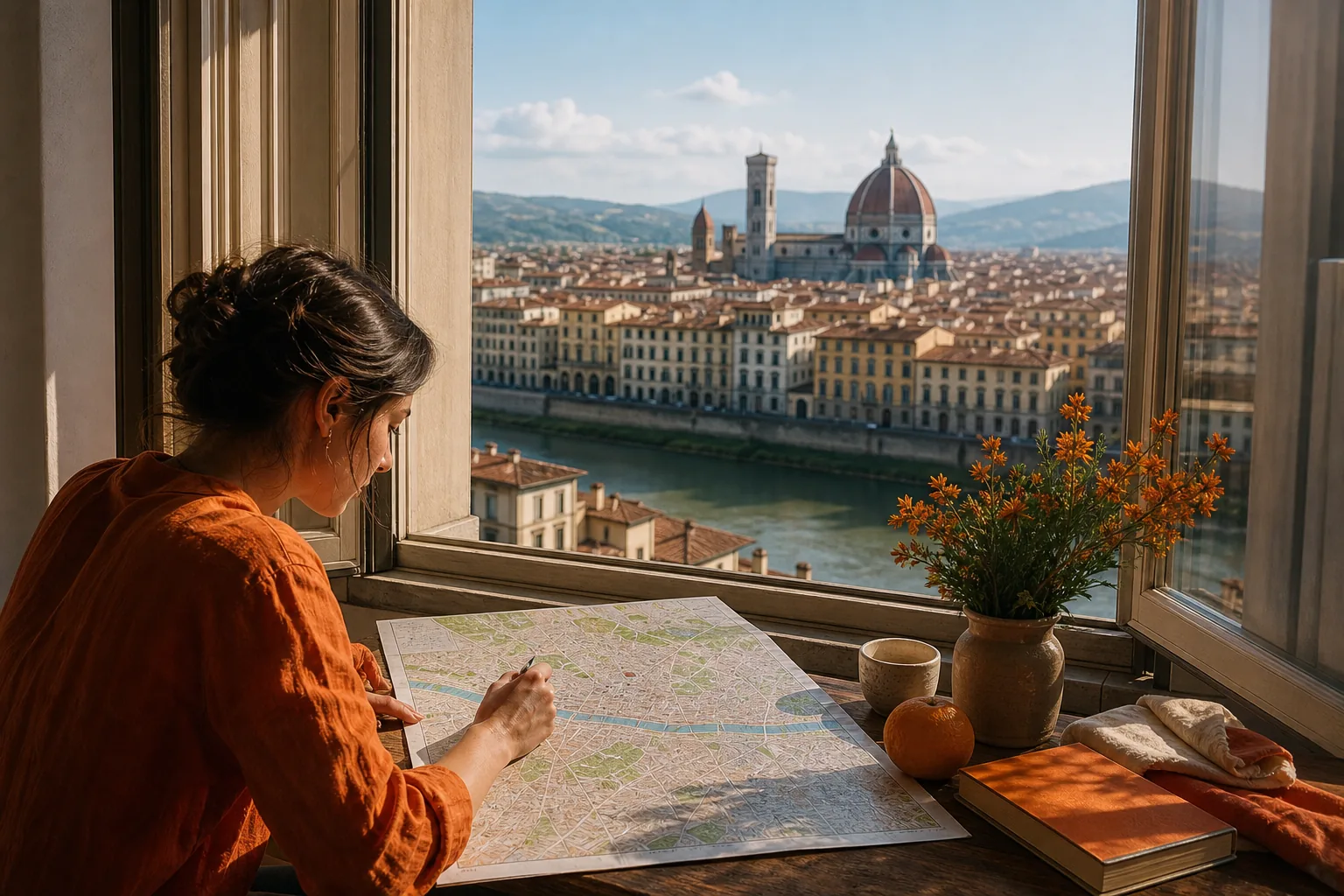
Dream Book Travel’s approach is simple: pick the city days first, then add day trips only when they improve the trip. If you have three nights, don’t spend one of them in transit just to say you left Florence.
Key Takeaway: Choose three days for Florence itself, five for a slower art and neighborhood trip, or seven for Florence plus Tuscany.
A one-day Florence itinerary works because the main sights sit close together. Start in Florence’s central area, then move east toward the Duomo before turning south toward the Arno.
Walk first to a nearby church and square. Admire them from outside unless you have extra time. The walk from the station to the Duomo is about 650 meters, or roughly eight to ten minutes. It gives you a quick sense of Florence’s scale.
Next, head to the Accademia Gallery. Give David 60 to 75 minutes, then leave. The museum has other works, but David is the reason most first-time visitors come. Reserve a timed entry when one is available. A queue can eat the morning before your day has even begun.
Return toward the Duomo complex. Walk around the Cathedral of Santa Maria del Fiore, Giotto’s Bell Tower, and the Baptistery. If you’re short on time, focus on the outside. The complex includes several separate sites, so entering every one can push lunch into the afternoon.
From the Duomo, walk through Piazza della Repubblica and continue to Piazza della Signoria. The square is free to visit and works as an open-air sculpture stop. Spend ten to fifteen minutes at the Loggia dei Lanzi before moving to the Uffizi.
Choose the Uffizi as your one major afternoon museum. Allow at least 90 minutes for a compressed visit, then stop. You don’t need to inspect every room to get value from the collection. If your energy is low, skip a second indoor attraction and sit near the Arno instead.
Cross Ponte Vecchio near sunset. Walk through Oltrarno, then decide whether you want the climb to Piazzale Michelangelo. The terrace gives you the city skyline in one frame, with the dome, towers, river, and bridges all visible.
We’d save a proper meal for Oltrarno rather than eat beside the busiest monument. The guides won’t always tell you this, but the best part of a first day is often the final slow walk, not the last ticket.
Day two of this Florence itinerary shifts the weight toward Michelangelo, San Lorenzo, and the parts of the Duomo complex you didn’t enter on day one.
Start at the Accademia if you skipped it earlier. David deserves a focused visit, not a rushed one squeezed between two timed tickets. Afterward, walk toward San Lorenzo and Mercato Centrale. Use the market for lunch or a short break, rather than treating it as another attraction to conquer.
The food hall is useful when people in your group want different meals. It also keeps the day flexible. Five of the researched plans name specific meal spots, and market venues appear more often than sit-down restaurants. That tells us something: Florence is easier to eat in when you leave room for choice.
After lunch, return to the Duomo complex. The Brunelleschi dome climb involves 463 steps, with steep and narrow sections. There’s no elevator. If you want the climb, book a time slot before your trip. If you don’t, visit the Cathedral or the Opera del Duomo Museum instead.
Our honest skip is the dome when you dislike heights, tight stairs, or long waits. Several itinerary plans make the same call. You can understand the Duomo from the square, the cathedral interior, and the museum. The climb gives you height and fresco views. It doesn’t give you a better version of Florence for every travel style.
If you still have energy, add Giotto’s Bell Tower instead of another museum. The tower has 414 steps and no elevator, so don’t choose both climbs in one day. Finish with San Lorenzo Market, an aperitivo, or gelato. For a focused food plan, Dream Book Travel’s Florence gelato guide helps you decide where a €3 to €5 serving, about $3 to $6, is worth the stop.
Pro Tip: Put your hardest climb before lunch. Your legs and patience will both be better for it.
Give Oltrarno a full day if you have three or more days. This side of the river slows the Florence itinerary down, which is exactly why we like it.
Cross Ponte Vecchio, then walk toward Via Maggio and Via Santo Spirito. The area is known for artisan streets, with leatherworkers, gilders, and bookbinders named in the supplied plans. Don’t rush past open workshops. Watching someone work can be more memorable than another grand room.
Continue to Santo Spirito if you want a piazza with a more local rhythm. Take a coffee break, then choose between Pitti Palace and Boboli Gardens. Both can take more time than expected. One research plan advises skipping them when the trip is short, especially after two heavy museum days.
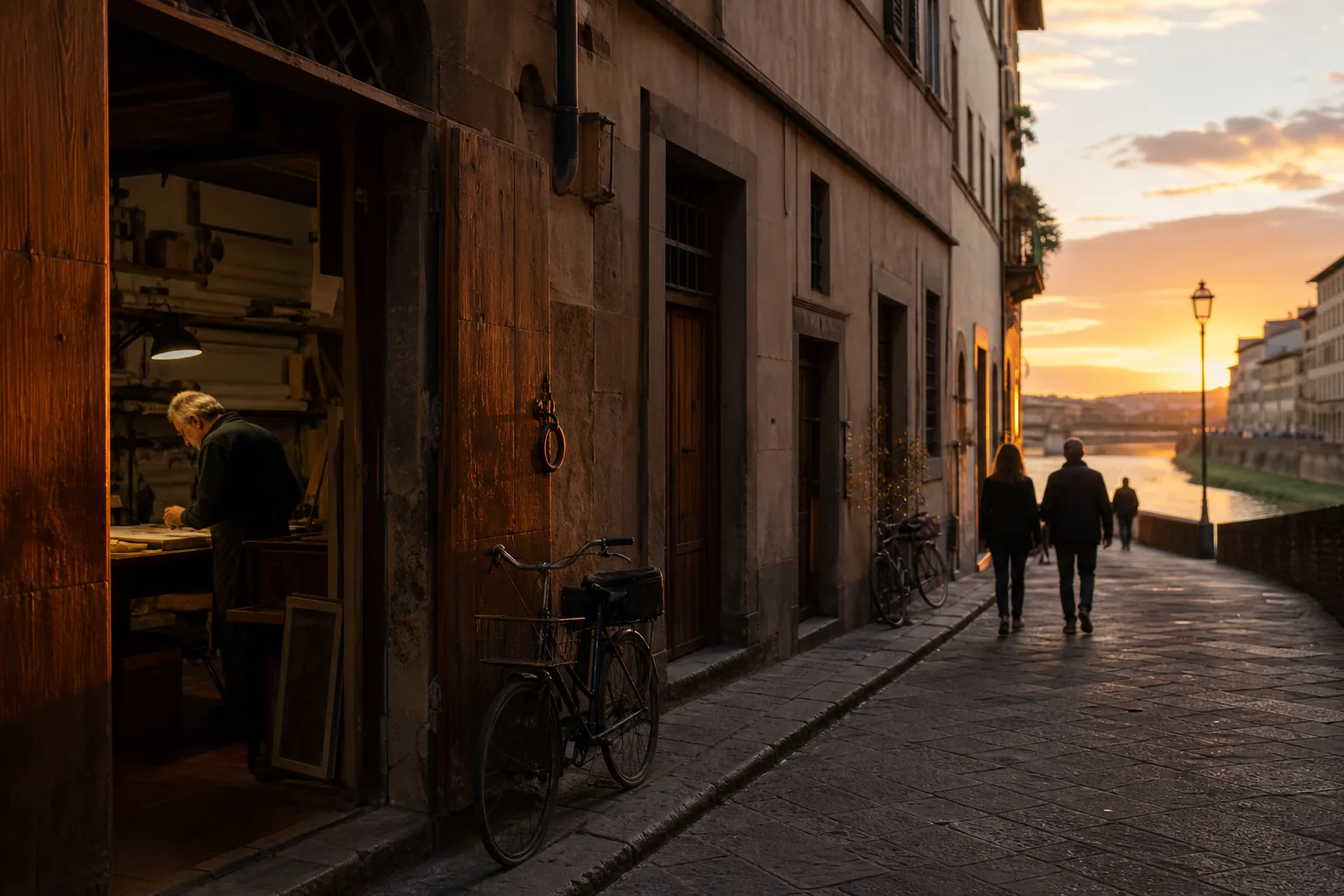
For a viewpoint, head to Piazzale Michelangelo. The bus ride on route 12 or 13 costs about €1.70, roughly $2, in the supplied budget plan. You can ride up and walk down, which saves your knees while keeping the evening view.
San Miniato al Monte is another strong choice if you want a quieter stop above the city. Pair it with Piazzale Michelangelo, then return through the Oltrarno streets. A sunset viewpoint is free, but it still costs time. Plan the walk back before dark if you’re tired.
Leave one block of the day unscheduled. Use it for espresso, a market, or a second look at a neighborhood you liked. That empty space is what keeps Florence from feeling like a set of appointments.
Dream Book Travel recommends this split because the Historic Center gives you the monuments, while Oltrarno gives you the daily texture. You need both to understand the city.
At five days, keep the extra time in Florence unless you have a strong reason to leave. At seven days, add one or two regional trips, but protect a final city day.
Use day four for Santa Croce and a second Oltrarno walk. Santa Croce costs about €9.50 to €10, around $11 to $12, in the supplied plan. Then explore the artisan streets along Via Santo Spirito.
Use day five for the Bargello, San Marco, and the Medici Chapels. Listed prices are about €12 for Bargello, €8 for San Marco, and €12 to €14 for the Medici Chapels. That puts the museum portion near €32 to €34, or roughly $35 to $37, before food.
Don’t force all three if you’re already tired. Pick two. A second-rate museum visit is still a poor use of a travel day, even when the building is famous.
Choose Siena for history, Chianti for wine, or Pisa and Lucca for two distinct cities in one day. Siena is listed at about €10 return from Florence. Pisa and Lucca have a combined transport estimate of about €21, or $23.
Cinque Terre is possible, but we’d avoid it unless you care more about the coast than Florence. It creates a long travel day. The same goes for stacking several distant stops because a guide says you can.
A cooking class can fill a slower day, with the supplied cost range at €50 to €70, or about $58 to $81. That is a large jump from the €1.70 bus ride, so treat it as the trip’s planned splurge. Don’t mistake a low daily average for a low total budget.
Keep your last day light. Walk through San Lorenzo Market, return to a favorite street, visit Cascine Park, or finish with dinner in Oltrarno. If your flight leaves that day, stay close to the station and skip a far-flung excursion.
For wider trip planning, Dream Book Travel also keeps related route guides such as this Southern Spain itinerary, where travel days are treated as part of the plan rather than invisible gaps.
Key Takeaway: Add one day trip for variety, not three day trips to prove you used every hour.
You need three days for a balanced Florence itinerary. One day covers the main historic center, while three days allow time for the Uffizi, Accademia, the Duomo area, Oltrarno, and a viewpoint. Five days suits travelers who want more churches, markets, and slow walks.
Three days in Florence is enough for a first visit if you group sights by area. Put the Uffizi and Piazza della Signoria together. Give another day to Accademia and the Duomo complex. Use the third day for Oltrarno and Piazzale Michelangelo. Don’t add a day trip unless you’re willing to lose city time.
You should climb the Duomo dome if you enjoy stairs and want a high city view. The climb has 463 steps and narrow sections. Skip it if heights, crowds, or tight spaces will make the day worse. The cathedral, Baptistery, and Opera del Duomo Museum still make a strong visit.
In one day, visit Accademia in the morning, walk through the Duomo area, see Piazza della Signoria, tour the Uffizi, cross Ponte Vecchio, and finish at Piazzale Michelangelo. This Florence itinerary requires timed museum entries and firm limits. Choose one major museum in the afternoon.
Florence costs depend more on museum tickets and special activities than on local transport. The supplied plans list a €1.70 bus ride, €3 to €5 gelato, and a €50 to €70 cooking class. Those figures show why a modest walking day can sit beside a costly experience.
We recommend three full days for Florence, then adding Tuscany only when you have five or seven days. Book your priority museum entries first, group each day by neighborhood, and leave one quiet block open. Dream Book Travel’s rule is simple: protect the parts of the trip you’ll remember, even when the guides won’t.
Use this Edinburgh itinerary 3 days plan for honest sightseeing, transit tips, free stops, museums, budget notes, and what to skip.
Find the best areas to stay in London for tourists, with honest advice for first-time visitors, culture lovers, foodies, and theater fans.
Find the best Greek islands for families by travel style, beach access, activities, and travel-day tradeoffs. Honest picks and planning notes.