Edinburgh Itinerary 3 Days: A Practical Plan
Use this Edinburgh itinerary 3 days plan for honest sightseeing, transit tips, free stops, museums, budget notes, and what to skip.
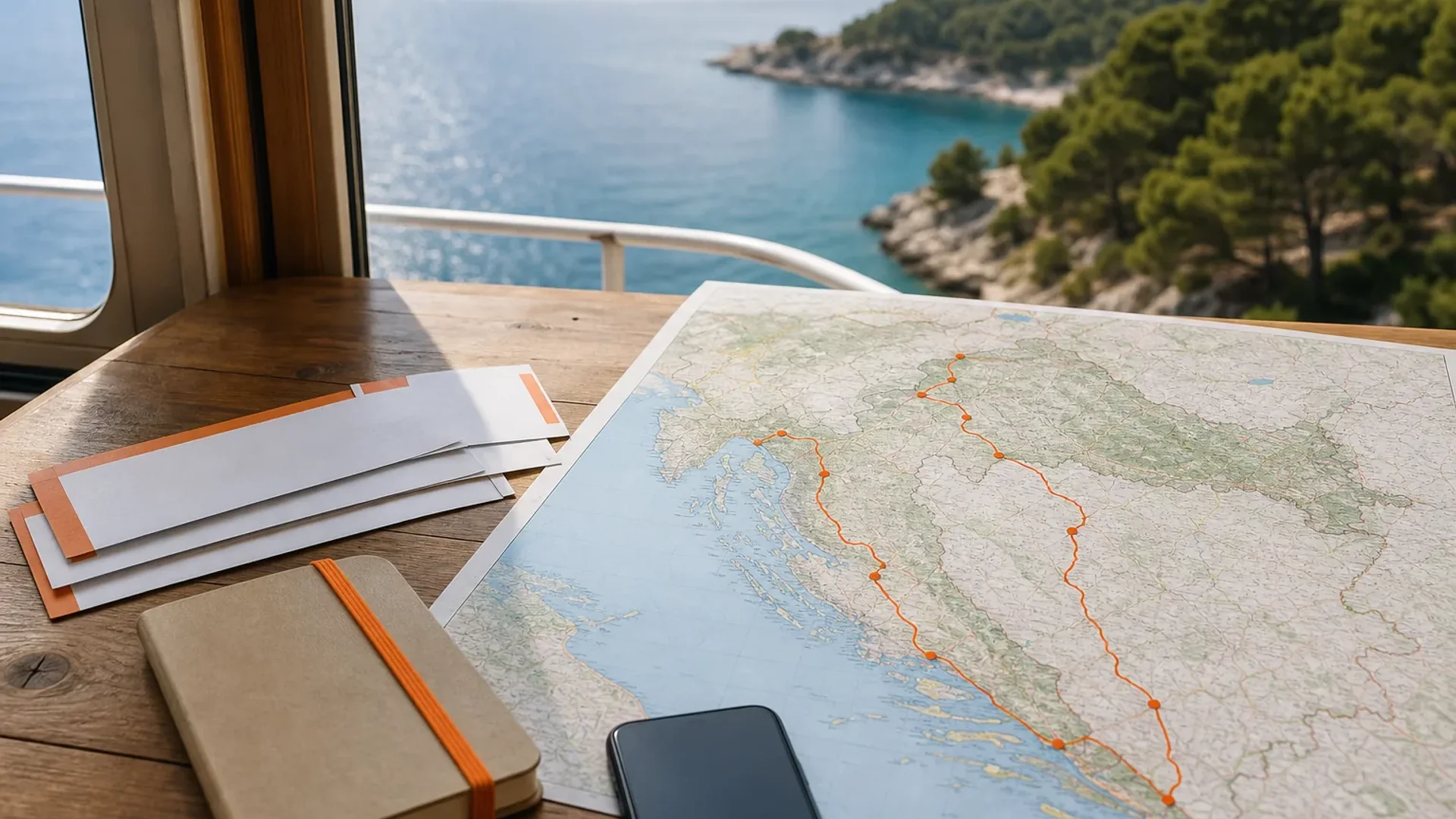
Croatia looks compact on a map, but its long coast, islands, inland parks, and southern dead end can turn a neat plan into a tiring one. One raw 10-day route even adds Lake Bled and Ljubljana, which are in Slovenia. We use a simpler approach: pick your trip length, set a clean route, then protect your travel days.
Dream Book Travel favors plans that leave room for a swim, a long lunch, or a ferry delay. Here’s how to build a Croatia itinerary for 7, 10, or 14 days without chasing every name on the map.
A good Croatia itinerary starts with one hard choice: coast only, mainland plus coast, or a wider trip with Istria. You can’t fit every region into one week and still enjoy the places you reach.
| Trip length | Route to use | What to skip | Transport plan |
|---|---|---|---|
| 7 days | Split, one island, Dubrovnik | Zagreb, Istria, and more than one island | Foot passenger ferries plus bus or car |
| 10 days | Zagreb, Plitvice, Split, one island, Dubrovnik | Adding Istria and a foreign day trip | Car for inland legs, ferries for islands |
| 14 days | Zagreb, Plitvice, Split, two islands, Dubrovnik, or Istria | Three-night island sprints | Open-jaw flights and a mixed car and ferry plan |
For seven days, fly into Split and leave from Dubrovnik if the fares work. Spend two nights in Split, two on Hvar, then finish with two or three nights in Dubrovnik. You’ll see the core of Dalmatia, but you won’t have time for Zagreb or Plitvice Lakes.
Ten days gives you room for Zagreb and Plitvice. A sensible shape is two nights in Zagreb, one night near the park, two nights in Split, two nights on an island, and three nights in Dubrovnik. The inland section works better with a car. Zagreb to Plitvice takes about two hours by car or bus, while Plitvice to Split takes about three hours.
With 14 days, add Istria before heading inland, or give Vis and Korčula enough nights to feel like places rather than ferry stops. Istria needs its own logic because it doesn’t connect neatly to the southern island network. Pula, Rovinj, and Motovun work well as a three or four-night loop.
We also check what the route leaves out. Budget still deserves attention before booking.
Before booking, compare your route against a ferry-based island itinerary plan. The same rule applies here: fewer bases usually mean more time in the place you paid to reach.
Key Takeaway: Choose Split, one island, and Dubrovnik for seven days. Add Zagreb and Plitvice at ten days. Save Istria or extra islands for two weeks.
Your Croatia itinerary should move in one direction. The cleanest 10-day route runs Zagreb, Plitvice Lakes, Zadar, Split, an island, then Dubrovnik.
Dubrovnik sits at the southern tip, so it’s a poor base for linking several islands. Treat it as your final stop or your first stop. Don’t place it in the middle unless you enjoy repeating long transfers.
There are two strong route shapes:
An open-jaw flight means you arrive in one city and leave from another. It can save a full return trip, though a rental car may add a one-way fee. Compare that fee with the cost of losing a day to a return drive.
Use the car on the mainland, not by default on the islands. Parking near the old cores of Split, Dubrovnik, Hvar Town, and Trogir can be hard. A car ferry also costs more than a foot-passenger ticket. The research cites car-ferry crossings at €35 to €50 or more, compared with roughly €6 to €14 for foot passengers on some routes.
Leave the car in Split before island time. Then collect it for the road to Dubrovnik, or continue by bus. This removes ferry queues from your plan and keeps the island days light.
Island order needs care. Hvar and Korčula connect more easily than Vis and Korčula. A direct daily Vis to Korčula route is not something to assume. Check the sailing before you reserve the room.
The mainland road route covers about 665 kilometers between Zagreb, Plitvice, Zadar, Split, and Dubrovnik. That sounds manageable, but old-town parking and mountain roads slow the day. Plan stops, not just distances.
Croatia’s long, narrow shape and coastal regions provide useful geographic context. We use maps for orientation, then check each operator’s current timetable before paying.
In a Croatia itinerary, a travel day is a real day. Count the packing, check-out, walk to the port, wait time, crossing, transfer, and check-in. A one-hour ferry can consume half a morning.
Book the fixed points first. These are the nights you can’t easily move:
Fast catamarans from Split to Hvar Town take about 50 minutes to one hour. The car ferry to Stari Grad takes about one hour and 50 minutes.
That difference matters. Hvar Town and Stari Grad are about 20 kilometers apart. The fast boat arrives at Hvar Town, while the car ferry arrives at Stari Grad. Read the arrival port before you book the room.
On the Dubrovnik corridor, the supplied timetable research lists passenger ferry services between April and October. A full Dubrovnik to Split trip takes about four and a half hours on the cited corridor. A listed high-season adult fare is about €50 one way for Dubrovnik to Split, with shorter legs priced lower.
Do not connect a same-day catamaran with an international flight. Rough seas can delay fast boats. If you must make the flight, sleep near the airport or arrive in the departure city the night before.
Think in bases, not checklists. Split deserves at least two nights. Hvar works with two nights, while Vis needs three or four if you want its towns and beaches without a sprint. Dubrovnik usually needs two or three nights for the fortifications, old town, and one day trip.
Accommodation patterns can also reveal a route’s bias. The sample repeated Maslina Resort three times. Falkensteiner Resort Punta Skala, D-Resort Šibenik, and Bellevue Hotel Dubrovnik each appeared twice. That points toward resort-style stays, not a low-cost city plan.
Dream Book Travel keeps this distinction clear. A resort base may suit a quiet beach trip, but it can add transfers when your goal is old towns and ferries.
Now turn the route into days. Keep the first day light and place demanding transfers before a flexible morning, not before a prepaid tour.
A coastal catamaran takes longer but turns the transfer into a sea journey. Pick one based on your arrival time, not on the fantasy of fitting both.
Plitvice has 16 terraced lakes linked by waterfalls and boardwalks. Arriving near opening gives you a calmer start. The park is worth the detour, but not if you force it into a same-day Zagreb to Split transfer.
Use the first three nights for Zagreb and Plitvice. Give Split two nights. Spend three nights on Hvar or Vis, then add two nights on Korčula if ferry times line up. Finish with three nights in Dubrovnik.
Another option is Istria for three or four nights before Zagreb. Pula, Rovinj, and Motovun bring a different food and town style, but adding Istria means you should drop a second island. The extra region is worth it only when you can sleep there.
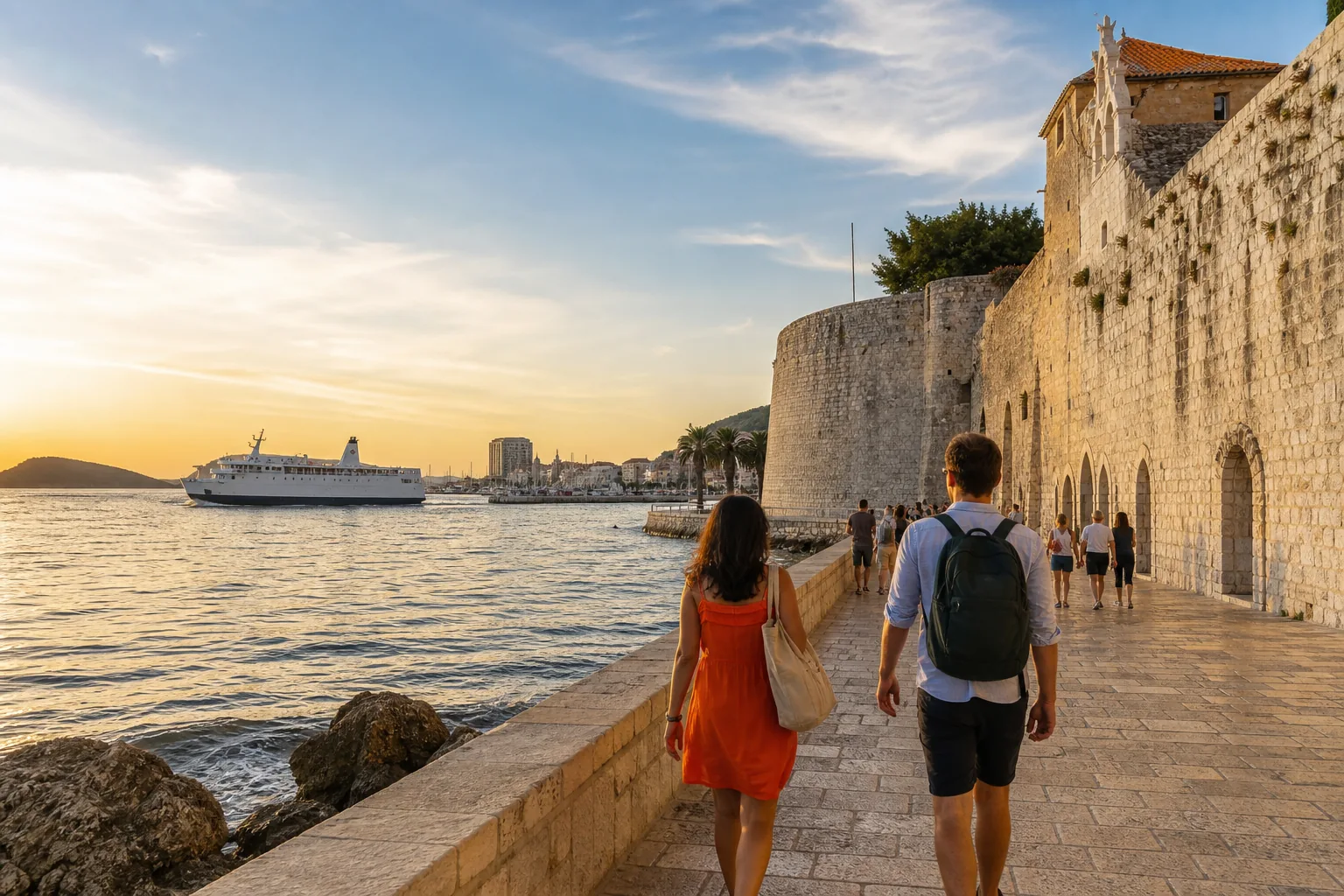
For a Dubrovnik-focused extension, our Dubrovnik day trips guide helps you decide if a border crossing belongs in the plan. Remember that a raw itinerary listing Lake Bled and Ljubljana is crossing into Slovenia. That may be fine, but it isn’t a pure Croatia route.
A useful Croatia itinerary has a budget line for each travel day. Use live quotes for your dates.
Build your sheet with these lines:
Croatia uses the euro. The euro is used in many European Union countries. Cards work widely, but small cafes and island businesses may still prefer cash. Carry some euros without keeping your whole trip fund in your wallet.
If you rent a car, ask the rental firm about taking it on a ferry. You may need extra cover, and you’ll need the vehicle documents. Don’t take a car onto an island unless the island plan truly needs it.
Keep one backup for every high-stakes move. If the catamaran is cancelled, know whether you can stay another night, take a bus, or move the flight. A saved screenshot of the next sailing won’t help if the weather shuts the port, so leave room in the final 24 hours.
Dream Book Travel’s planning rule is plain: if a route needs perfect weather, perfect ferry timing, and a perfect check-in, it’s too tight. Cut one stop before you cut sleep.
Seven days is enough for Split, one island, and Dubrovnik. It isn’t enough for those places plus Zagreb, Plitvice, and Istria without rushed transfers. Fly into Split and leave from Dubrovnik when possible. Keep two nights for Split, two for the island, and two or three for Dubrovnik.
A strong 10-day route runs Zagreb, Plitvice Lakes, Split, one island, and Dubrovnik. Use a car for the inland section, then leave it on the mainland before island travel. You can include Zadar as a stop, but adding Istria and Slovenia will make the route much tighter.
You need a car only for some Croatia itinerary shapes. It helps with Plitvice, Istria, inland roads, and flexible coastal stops. It becomes a burden on islands and near old towns. Most travelers can drive the mainland, park in Split, then use foot-passenger ferries.
Ferry prices depend on the route, operator, season, and whether you bring a car. The supplied 2026 figures put some fast Split to Hvar tickets near €20 and a Dubrovnik to Split catamaran near €50. Check the exact sailing before booking a room around it.
Include Slovenia only if you want a cross-border trip. Lake Bled and Ljubljana are outside Croatia, so label that day clearly and check border, rental-car, and timing rules. If your goal is a focused Croatian coast trip, use the day for an island or Plitvice instead.
We recommend a simple route for a first visit: Split, one island, and Dubrovnik in seven days, or Zagreb and Plitvice added at ten. Write down every transfer before you book the rooms. Then check ferry times and live prices for your dates. Dream Book Travel is built for that kind of honest planning, the advice a well-traveled friend gives before you lose a day at the port.
Use this Edinburgh itinerary 3 days plan for honest sightseeing, transit tips, free stops, museums, budget notes, and what to skip.
Find the best areas to stay in London for tourists, with honest advice for first-time visitors, culture lovers, foodies, and theater fans.
Find the best Greek islands for families by travel style, beach access, activities, and travel-day tradeoffs. Honest picks and planning notes.