Edinburgh Itinerary 3 Days: A Practical Plan
Use this Edinburgh itinerary 3 days plan for honest sightseeing, transit tips, free stops, museums, budget notes, and what to skip.
Seven days is enough for Croatia if you stop trying to see the whole country. This route keeps the coast moving in one direction, from Split to Hvar and then Dubrovnik, with time for Roman ruins, island swims, and slow dinners. We’ll also show where a Zagreb detour fits, what ferries need early booking, and which tempting stops we’d skip.
A focused Croatia itinerary 7 days long should use two or three bases. Our route starts in Split, spends two nights around Hvar, then finishes in Dubrovnik. Fly into Split and out of Dubrovnik if the fares work. That choice saves you from crossing the same coast twice.
Some popular plans start in Dubrovnik, move north through Split and Hvar, then add Pelješac or Korčula. Others squeeze in Zagreb. The inland stop adds museums and a different view of Croatia, but it also adds a long transfer. For a first coastal trip, we’d leave Zagreb for a longer visit.
| Route choice | Choose it when | What you give up | Our call |
|---|---|---|---|
| Split, Hvar, Dubrovnik | You want history, sea time, and a clean route south | Less inland Croatia | Use this for a first trip |
| Dubrovnik, Korčula, Hvar, Split | Your flight home leaves Split | Some ferry times work poorly northbound | Good in reverse |
| Zagreb, Plitvice, Split, Dubrovnik | You care more about culture and parks | Less island time and more road time | Choose it only with firm flight plans |
| Split base for seven nights | You hate packing and want day trips | You lose the feeling of sleeping on an island | Best for a slower pace |
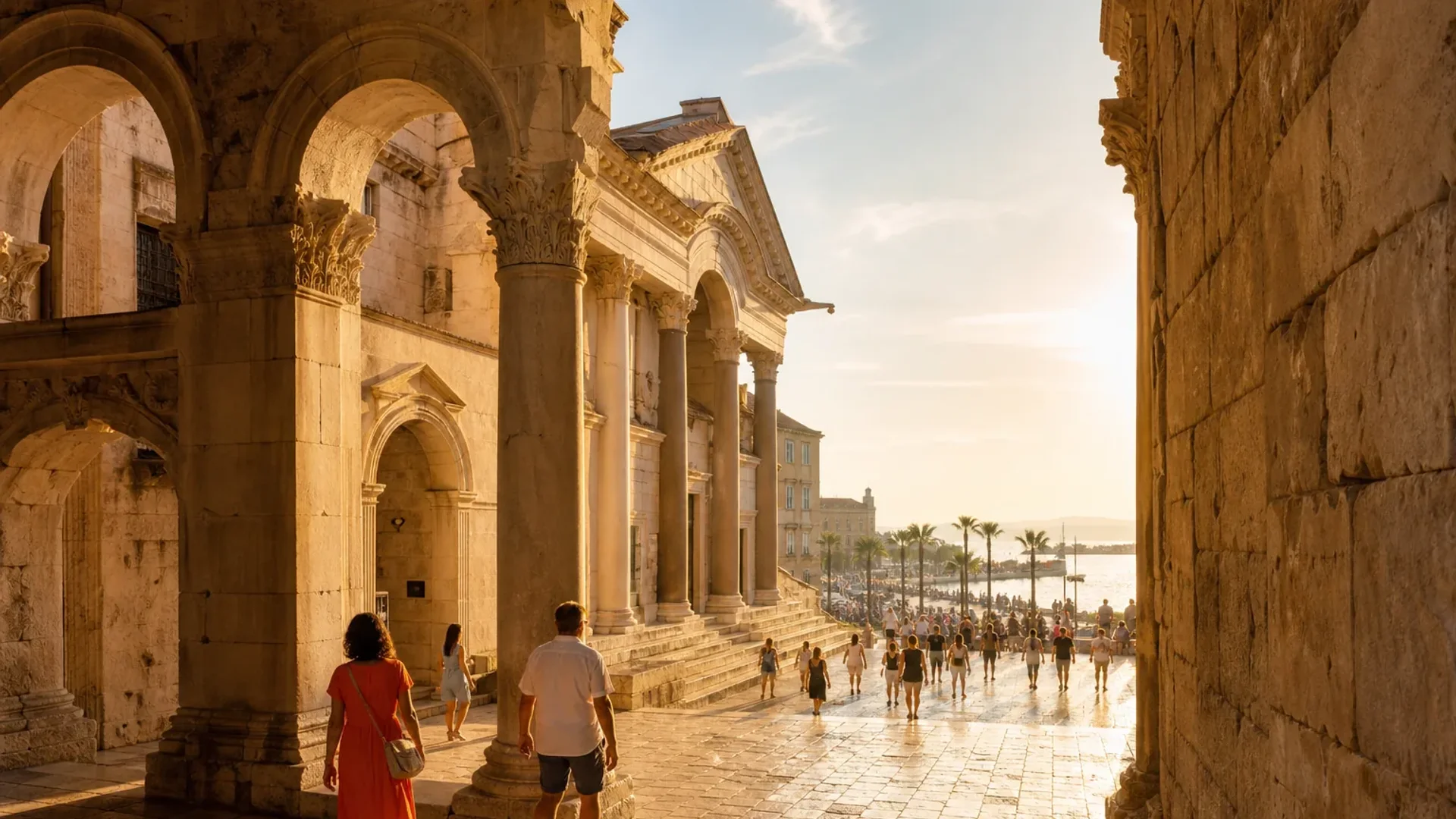
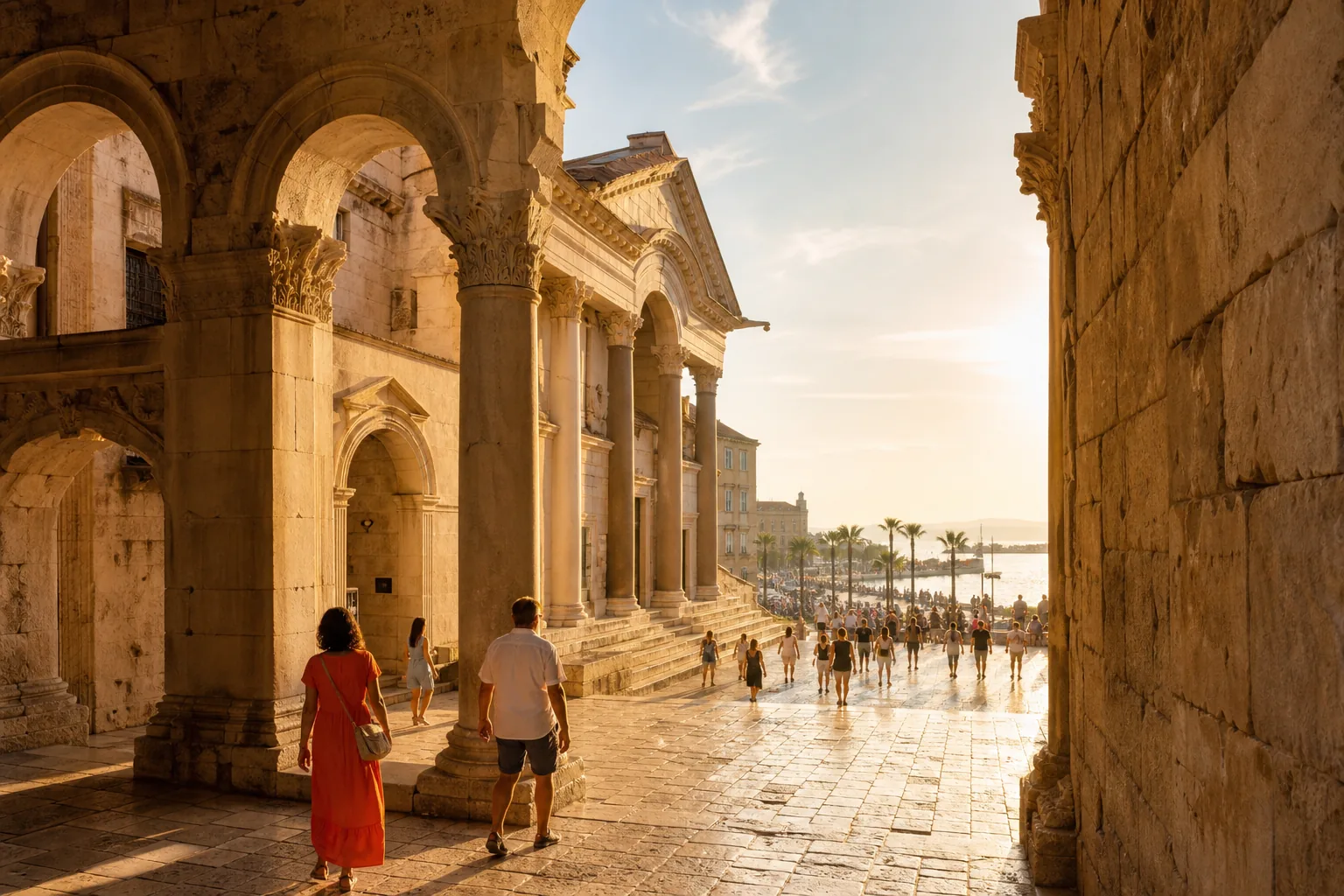
Split’s center grew inside Diocletian’s Palace, a Roman complex that remains part of daily city life. Wikipedia’s reference on Diocletian’s Palace explains the site’s long shift from imperial residence to living urban district.
Ferries and catamarans shape the week. Bus routes also matter, especially if weather changes your island plan. Research across 15 itinerary records found bus and catamaran trips each in 23 percent of transport mentions. That mix tells us to book more than one kind of ticket, not just a flight and hotel.
For a second route-planning example, our Iceland Ring Road Itinerary: 7, 10, or 14 Days follows the same rule: set the route first, then fit stops into the travel days. Do that before you reserve rooms.
Key Takeaway: Pick Split, Hvar, and Dubrovnik when the coast is your main goal. Add Zagreb only if you’re willing to trade island time for an inland stop.
For this Croatia itinerary 7 days route, give Split two nights. The old center is compact, but one afternoon won’t leave room for Marjan Hill, the market, or a day trip nearby.
After landing at Split Airport, take the airport bus for about €5, or expect roughly €25 to €30 for a taxi. The drive takes around 25 minutes when traffic behaves. Drop your bags near Diocletian’s Palace, then walk toward the Bronze Gate.
Start at the palace’s main courtyard. From there, see the palace’s cathedral and the palace cellars. The palace’s former mausoleum adds an odd and memorable twist.
Don’t force a museum marathon after a long flight. Walk through the narrow lanes instead. Then sit on the waterfront for an hour and watch the harbor work around you. Dinner in Veli Varoš usually feels calmer than eating beside the busiest part of the waterfront.
Stay within walking distance of the palace if you can. Old Town streets are pedestrian areas, and parking becomes a hassle in summer. A central room may cost more, but you’ll save time every evening.
Start with Marjan Hill. The walk to the main viewpoint takes about 20 to 30 minutes, and there’s no entry fee. You’ll see the red roofs, the harbor, and islands sitting beyond the city.
Next, choose one paid or half-day activity. A local art gallery takes about 1.5 hours, with pricing available on request. Or take a bus to Trogir. The ride takes about 30 minutes and costs about €3 each way.
Trogir works because it gives you a small medieval town without another hotel change. A half-day boat trip to the Blue Lagoon is another option, especially if swimming matters more than another church. Don’t try to do both in one afternoon.
Use the late day for the market or Bačvice beach. The point is to leave some room for a long lunch and a slow walk. Croatia gets worse when every hour has a booking.
Pro Tip: If you want a guided walk, book it for your first morning. Context makes the palace easier to read, and you’ll know which corners deserve a second look.
Hvar fits this seven-day Croatia plan because the catamaran from Split to Hvar Town takes about one hour. It also tempts people into packing too much into two days. We’d stay two nights and resist adding another island.
Buy your catamaran ticket before departure in peak season. A foot passenger ticket is listed around €10 in the route research, though schedules and fares change. Arrive at the dock about 30 minutes early during busy months.
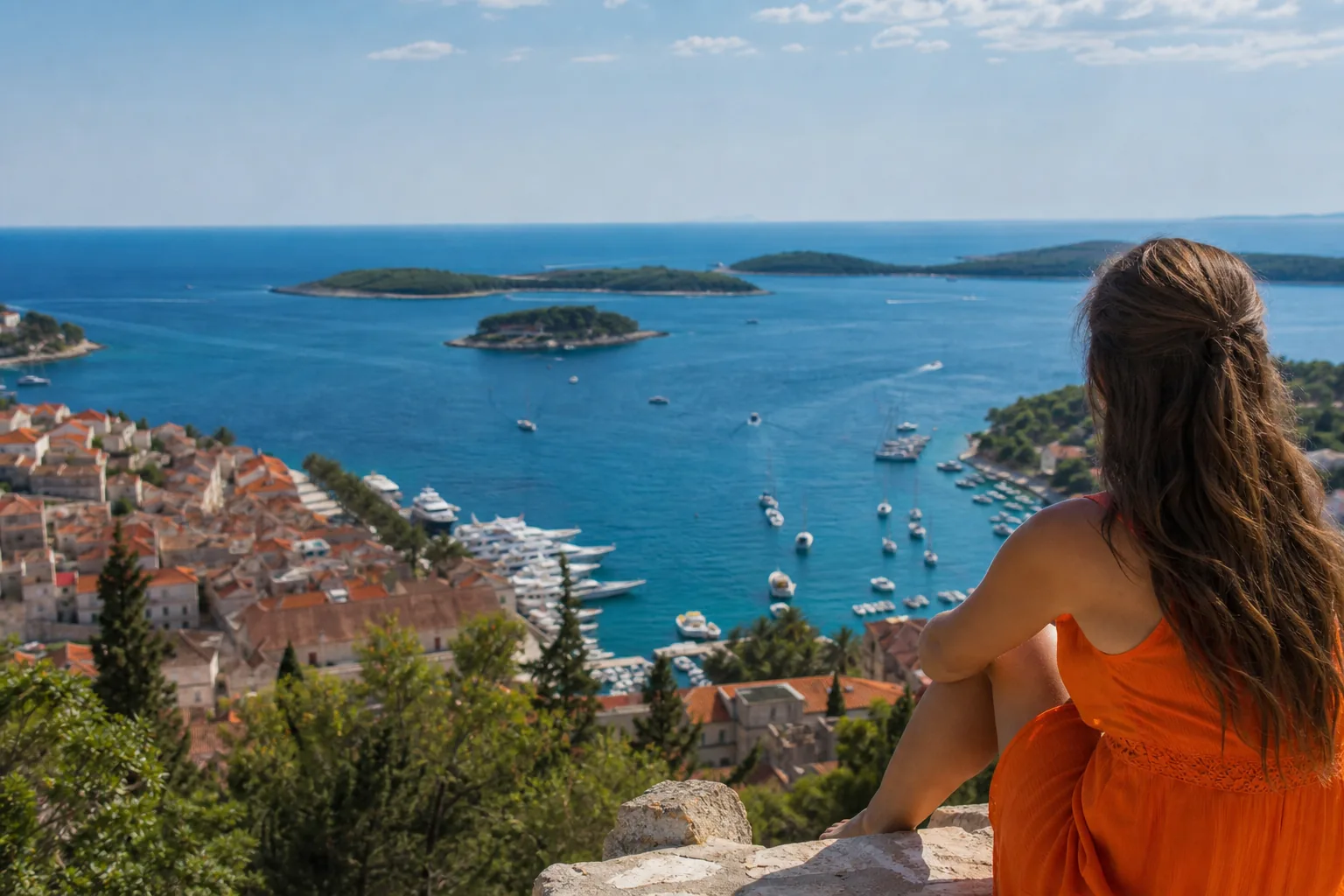
Check in, then walk the main square and harbor. Hvar Town has Venetian buildings, the old Arsenal, and steep lanes that lead toward the fortress. The climb to Fortica takes about 20 to 30 minutes. Entry is listed around €5.
Go up before sunset if the heat allows. The view takes in the harbor and the Pakleni Islands. It also helps you understand Hvar’s layout before you spend the next day on the water.
Water taxis from the harbor reach nearby Pakleni islands such as Jerolim, Stipanska, and Palmižana. Bring swimwear and shoes for rough shorelines. Many coves have rocks instead of soft sand.
Use the morning for a second Hvar walk. If you visit in May or June, the inland villages of Brusje and Velo Grablje bring lavender fields into the plan. Rent a scooter only if you’re comfortable on narrow roads. Otherwise, stay near town and use a water taxi.
Hvar is worth it for travelers who want polished waterfront bars and a late night. It’s a poor fit if you want quiet village life or low daily costs. Hvar Town is usually the priciest stop on this route, so set your food budget before dinner.
We use the same anti-rush test in our Greece 10 Day Itinerary: Athens, Naxos and Santorini: if a ferry leaves at breakfast and returns after dark, count the whole day as a travel day. That keeps a pretty map from becoming a tiring trip.
Skip the “five islands in one day” idea if you’ve already had a full travel week. You’ll see more water than island. A beach, a fortress, and one good dinner are enough here.
Key Takeaway: Stay in Hvar Town for two nights if you want easy access to the fortress and boats. Choose one water outing, then leave the rest open.
Dubrovnik gives the route its strongest finish, but it also brings the biggest crowd risk. In a Croatia itinerary 7 days long, plan your historic sights and old town walks outside the busiest midday window.
Travel from Hvar to Dubrovnik by catamaran if the seasonal timetable lines up. Some routes take around three hours, while other plans connect through Korčula. Check the departure before booking your Hvar room. A beautiful route still fails if it leaves after your airport flight.
After check-in, walk the Stradun and take in the old town without a checklist. The historic fortifications form a circuit of about 2 kilometers. Research used for this itinerary lists entry around €35 in 2026. Book ahead online, then go early or late in the day.
Dubrovnik’s old center is a working place as well as a visitor site. You’ll find homes, shops, churches, and lanes inside the historic center. Wikipedia’s Dubrovnik reference gives useful background on the old town and long maritime history.
Take a cable car to a high viewpoint if the sky is clear. Fares vary. If that cost feels high, walk the old town at sunset instead. The view is the point, not the transport method.
Start with the Rector’s Palace, Franciscan Monastery, or another historic religious site. Pick two. Trying to see every museum before lunch will make the old town feel like work.
Lokrum Island makes a good afternoon break. The boat ride takes about 10 to 15 minutes, and research lists a return fare around €15. The island has shade, a botanical garden, a former monastery, and a saltwater lake. Check the last return boat before you settle in.
If you want a longer outing, consider a boat trip to nearby islands. Tours are listed around €50 to €70 with lunch. Choose one, not both.
Dubrovnik is worth the extra cost for its historic setting. It is overrated if you expect an empty medieval town in July or August. Cruise arrivals can change the feel of the old center by late morning, so check the port schedule the night before.
Pro Tip: Sleep in Lapad if Old Town prices or night noise bother you. The bus ride takes about 20 minutes, and you’ll gain more space for the same budget.
Day 7 should stay light. A good Croatia itinerary 7 days plan ends with a short walk, breakfast, and a safe airport transfer instead of one last ambitious excursion.
If your flight leaves late, walk the quieter side streets in the morning. You can also return to a place you rushed past on Day 5. Keep your bags close and allow at least 45 minutes for the airport transfer. Arrive at the airport two hours before departure.
For a mid-range trip, daily costs vary by season, accommodation, and activities. That assumes guesthouses or apartments, local meals, island ferries, and one or two paid outings. Dubrovnik usually pushes the daily total higher.
A budget week and a mid-range week can vary substantially with room choice, dates, and paid tours. These totals exclude flights, so check current rates before setting your trip budget.
We don’t treat those figures as a promise. Only six of the 15 researched itinerary entries gave local prices, and none gave dollar conversions. That gap is why we recommend checking current ferry pages and attraction sites before paying a deposit. Dream Book Travel keeps this kind of budget check beside the route rather than hiding it in fine print.
Use the extra planning time to compare your arrival and departure airports. Our Iceland Itinerary 10 Days: A Route That Works follows the same open-jaw approach, where you fly home from the final stop instead of backtracking. Set a price alert, then book once the route and dates agree.
Seven days is enough for a focused coastal trip, not the whole country. A Split, Hvar, and Dubrovnik route gives you history, island time, and a clear finish. Adding Zagreb or Plitvice means more travel and less coast. For a first visit, we’d keep the route south and save northern Croatia for another trip.
You don’t need a car for the Split to Dubrovnik route. Catamarans connect the main coastal stops, while buses cover nearby towns such as Trogir. A car adds ferry costs, parking problems, and extra planning. Rent one only if you’re adding rural areas or building a route that ferries can’t serve well.
Spend two nights in Split and two nights in Hvar for this plan. Split needs time for the palace plus Marjan Hill or Trogir. Hvar needs a day for town and the fortress, then another for swimming or the island interior. If you dislike moving often, stay in Split and visit Hvar as a day trip.
Late May, June, and September usually give this route a better balance than July or August. Ferries run more often in the warmer season, while peak summer brings higher demand and heavier crowds. Check the current timetable before booking. Shoulder-season water can still work well, but weather is never guaranteed.
Skip Zagreb, Plitvice, and several islands unless one of them is your main reason for going. You should also skip a packed boat tour after a long ferry day. Dubrovnik’s walls are worth keeping, but visit early. The most common mistake is adding stops until every day becomes a transfer.
Choose Split, Hvar, and Dubrovnik if you want a first trip built around the Dalmatian coast. Book the key ferries and Dubrovnik walls before the busy season, then leave one afternoon loose in each base. Before you pay, check the current fares and flight times against the route. That small step can save a whole travel day. Dream Book Travel’s approach is simple: plan enough to avoid trouble, but leave room for the coast to set the pace.
Use this Edinburgh itinerary 3 days plan for honest sightseeing, transit tips, free stops, museums, budget notes, and what to skip.
Find the best areas to stay in London for tourists, with honest advice for first-time visitors, culture lovers, foodies, and theater fans.
Find the best Greek islands for families by travel style, beach access, activities, and travel-day tradeoffs. Honest picks and planning notes.