
Edinburgh Itinerary 3 Days: A Practical Plan
Use this Edinburgh itinerary 3 days plan for honest sightseeing, transit tips, free stops, museums, budget notes, and what to skip.
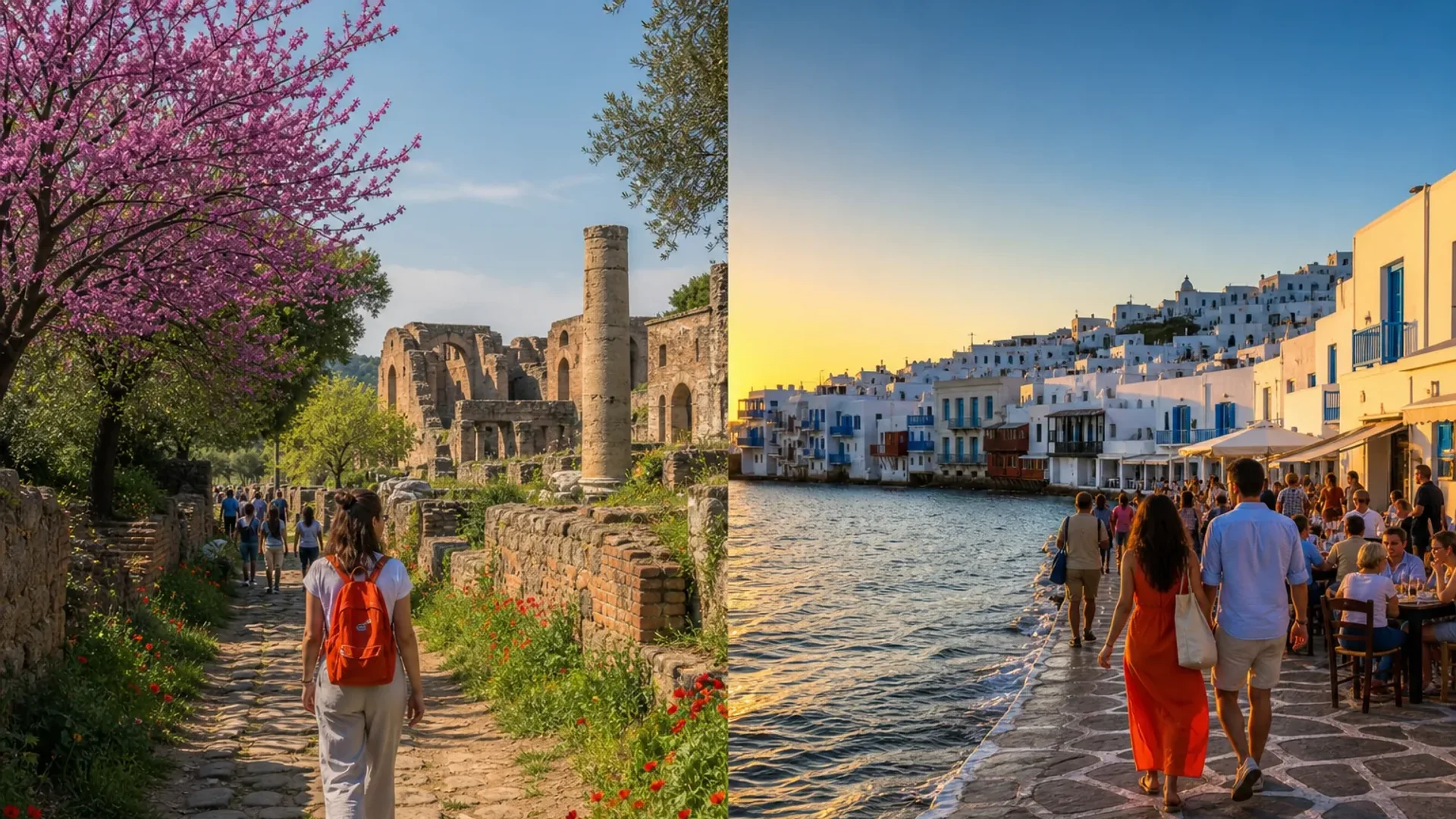
August gives Greece its peak crowds, yet nightlife is the season’s standout draw. That tells us something useful: the right travel month depends on your trip, not a postcard view. We use this five-step plan to match your dates with sightseeing, beaches, ferries, crowds, and your limited vacation time.
We pulled Eurostat’s 2025 Greece tourism data and Weatherspark’s Athens and Rome temperature tables, 36 data points in total. Greece packed 41.6% of its overnight stays into July and August alone, with August nights running 20.5 times higher than January’s. Athens averages a 91°F high in July against 55°F in January, and Rome swings from 87°F in August down to 54°F in January. Those gaps back the case for shifting a mixed Italy and Greece trip toward May, June, September, or October instead of peak summer.
To find the best time for Italy and Greece, compare seasons by use case instead of chasing one universal month. Both countries have Mediterranean patterns with hot, dry summers and milder, wetter winters.
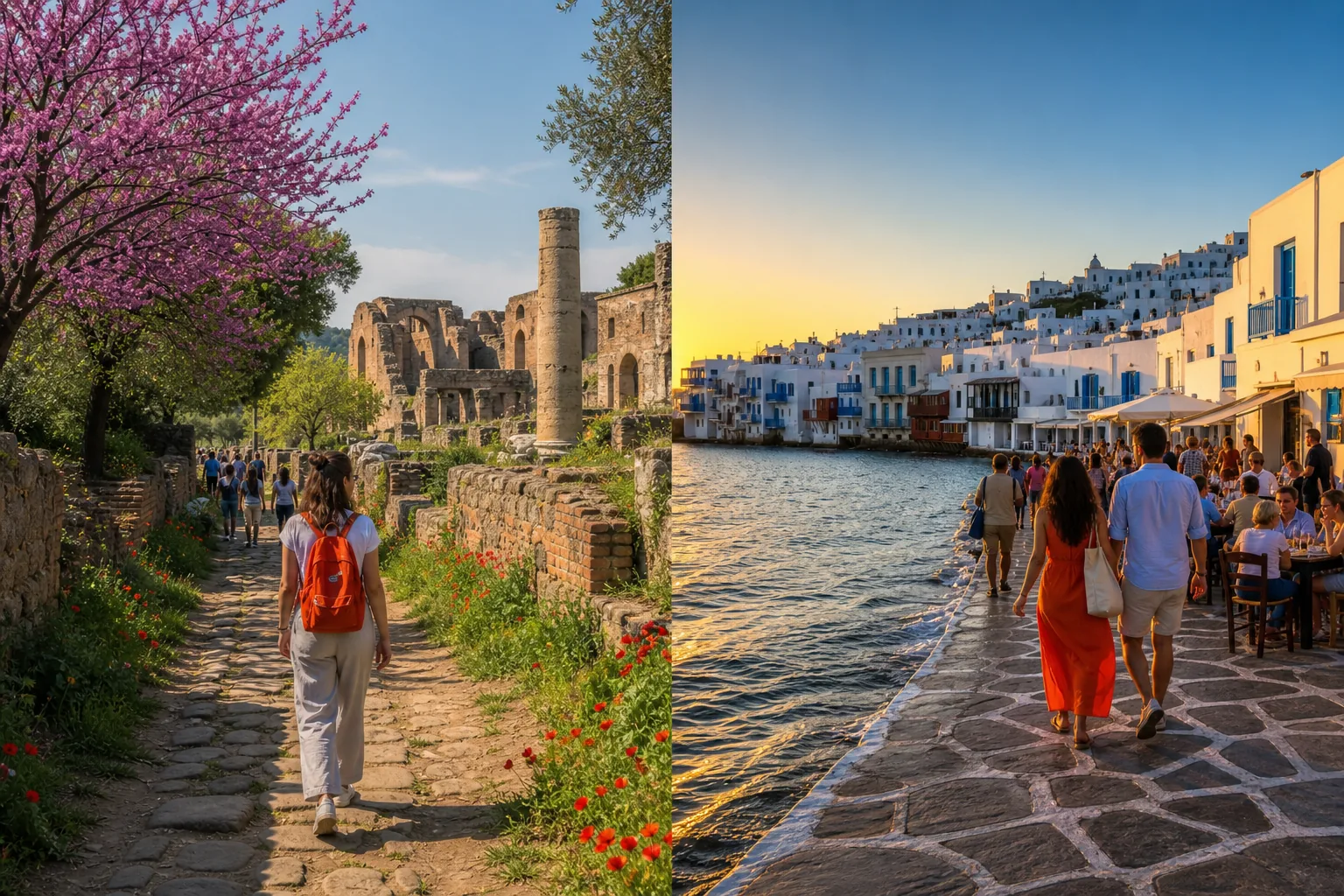
Spring and fall are the safest picks for a mixed itinerary. May, early June, September, and October can give you warm days with less strain than the height of summer. Spring also suits hikes and archaeological sites. Fall keeps the sea warm after summer, especially in Greece.
Summer is a different bargain. July and August bring beach weather, long evenings, and full outdoor life. They also bring high crowds and higher demand. Lonely Planet lists Greece in August as high season with high crowd levels, and highlights nightlife as the activity that stands out. So if August is fixed, plan around evenings rather than pretending midday sightseeing will feel easy.
 Season Season | Works well for | Trade-off | Planning move |
|---|---|---|---|
| April to May | Hiking, ruins, city walks | Some days can still feel cool or wet | Pack a light rain layer and keep one indoor backup |
| Early June | Families, cities, first beach days | Demand starts to rise | Book key rooms before school holidays spread through Europe |
| July to August | Swimming, island nights, beach clubs | High crowds, heat, and peak prices | Book ferries early and visit open-air sights at first light |
| September to October | Mixed city and island trips | Some island venues close later in fall | Choose September for swimming, October for quieter culture |
| November to March | Museums, galleries, major cities | Rain, cool weather, and reduced island service | Focus on Rome, Florence, Venice, and Athens |
Winter can save stress, but don’t assume every Greek island works normally. Research notes that some island hotels, ferries, and venues close or reduce service in the colder months. Italy’s major cities stay more usable, while coastal towns can feel very quiet.
Our rule is simple. Pick peak summer only when beach time or nightlife matters more than space and price. Otherwise, move your dates toward the shoulders. The guides won’t always say that a quiet museum day may beat a famous beach day, but your feet usually will.
The best time to visit Italy and Greece changes once you map the route. A three-week plan can absorb more travel days than a nine-day trip, but both still need a clear rhythm.
For a city-heavy route, use April through June or September through October. Rome is easier to pace when you can spend part of the day indoors and part outside. The same logic applies to Athens, Florence, Venice, and Naples. Put your long site visits in the morning, then use lunch or a museum for the hottest hours.
For islands, choose May through early October, with September as our preferred middle ground. Island services run more often in the warmer season, but summer crowds are strongest from late June through August. In August, small boats can face rough conditions from strong winds, so don’t build a tight chain of ferry connections.
For a first combined trip, we like a simple split:
A three-week route can add Meteora, Santorini, or a second Greek island. A shorter trip should resist that urge. Our Greece itinerary for Athens, Naxos, and Santorini is useful when you want island time without turning every morning into a transfer.
Watch this planning overview before you lock the route. It won’t replace checking current ferry schedules, but it can help you see how the pieces fit.
By now, you should have a month, a country split, and a limit on hotel changes. If you still have six destinations on the list, cut two.
The order matters less than the flight price and the shape of your last few days. Italy first, then Greece, lets the trip move from city intensity toward island rest. Greece first, then Italy, works when you want beach time while fresh, followed by museums and food.
Start with the flight search. Compare an open-jaw ticket, which flies into one country and home from the other, against a normal return ticket. Let the fare and arrival times decide. Everyone argues about the order. Your inbox does not care.
For most travelers, flying between the countries is the cleanest use of time. A flight can take about two hours on common routes, while ferry options vary widely. A Brindisi to Corfu ferry may take five to fifteen hours, based on the sailing and conditions. A longer Ancona to Patras crossing can take about twenty-one hours.
Take a ferry when the journey itself is part of the trip. It can suit a slower route or an overnight crossing. Skip it when you have fewer than two weeks and every lost hour affects a major sight.

Don’t use a train as the default link between Italy and Greece. The route requires several border crossings and does not provide a simple direct rail connection across the sea. Driving adds even more time. A Rome to Athens road journey is a lengthy commitment before rest stops.
If you have fifteen days, a week in Italy, a travel day, and a week in Greece is a sensible frame. If you have ten days, reduce the number of bases before you reduce sleep.
Decision rule: Fly when time is scarce. Take the ferry when you have spare days and want the crossing to count as part of the holiday.
The best time to visit Italy and Greece is also the time you can book without forcing the rest of the trip into a corner. We book the fixed pieces first, then fill in the flexible days.
Start with the international flight. Check both country orders and set a price alert. A lower fare is useful only if it doesn’t add an expensive extra night or a bad connection.
Next, reserve the high-risk pieces:
Shoulder-season rooms can often be planned two to three months ahead, while peak summer needs more lead time. Treat those as planning ranges, not promises. Rates change by route, demand, room type, and cancellation terms.
Think in travel days, not map distance. A two-hour flight still needs time for airport transfers, security, baggage, and check-in. A ferry can take most of a day even when the port looks close on a map.
Both countries sit within the Schengen Area, whose rules cover passport-free movement between participating member states for eligible travelers. You should still check your own passport rules before booking; review the details before you go.
At Dream Book Travel, we put the honest trade-off beside the recommendation. August may be worth it for nightlife and swimming. It is a poor fit if you want empty streets and easy ferry changes. Winter may suit Rome and Athens, but it can disappoint someone who built the trip around island beaches.
Pro Tip: Put one no-transfer day after every major country move. That buffer protects the trip when a ferry runs late or a flight leaves you drained.
Before you pay, ask one blunt question: what are you willing to give up? Price, heat, crowd levels, island access, or time. Pick one trade-off on purpose instead of accepting all five by accident.
September is the strongest all-around month for a combined trip because it can support city walks, island time, and warm water. Crowds usually ease after summer’s peak, though popular places remain busy. For cooler sightseeing, choose May or early June. The right month still depends on whether beaches or museums lead your plan.
August works for Greece if you want nightlife, beach days, and late dinners. It is also high season with high crowds, so expect pressure on ferries, roads, rooms, and famous sites. Visit ruins early, keep afternoons light, and reserve key transport well ahead. Skip August if quiet streets matter more than summer energy.
Fall is better for warm sea time, especially in September. Spring is better for hiking, flowers, and long walks before the strongest heat arrives. April and May can bring rain or cool days, while October may see some island businesses close later in the month. Both seasons work well for a mixed Italy and Greece itinerary.
You can visit some Greek islands in winter, but service is limited and swimming may not suit the weather. Some hotels, restaurants, and ferries reduce operations between the colder months. Winter works better when Athens and mainland Italy are the main goals. Check each island’s current transport and opening dates before you commit.
Visit Italy first if you want to finish with slower island days. Start in Greece if beach time is your main reason for going, then end with Italy’s museums and city food. In either case, compare open-jaw flights before deciding. The cheaper and simpler routing usually beats a theoretical perfect order.
Choose September for the most balanced mix of cities, islands, and manageable heat. Choose May or early June for walks and ruins, or August only when beach life and nightlife justify the crowds. Set a flight alert, cut one rushed stop, and let the season shape a trip you can actually enjoy.
Use this Edinburgh itinerary 3 days plan for honest sightseeing, transit tips, free stops, museums, budget notes, and what to skip.
Find the best areas to stay in London for tourists, with honest advice for first-time visitors, culture lovers, foodies, and theater fans.
Find the best Greek islands for families by travel style, beach access, activities, and travel-day tradeoffs. Honest picks and planning notes.