Edinburgh Itinerary 3 Days: A Practical Plan
Use this Edinburgh itinerary 3 days plan for honest sightseeing, transit tips, free stops, museums, budget notes, and what to skip.
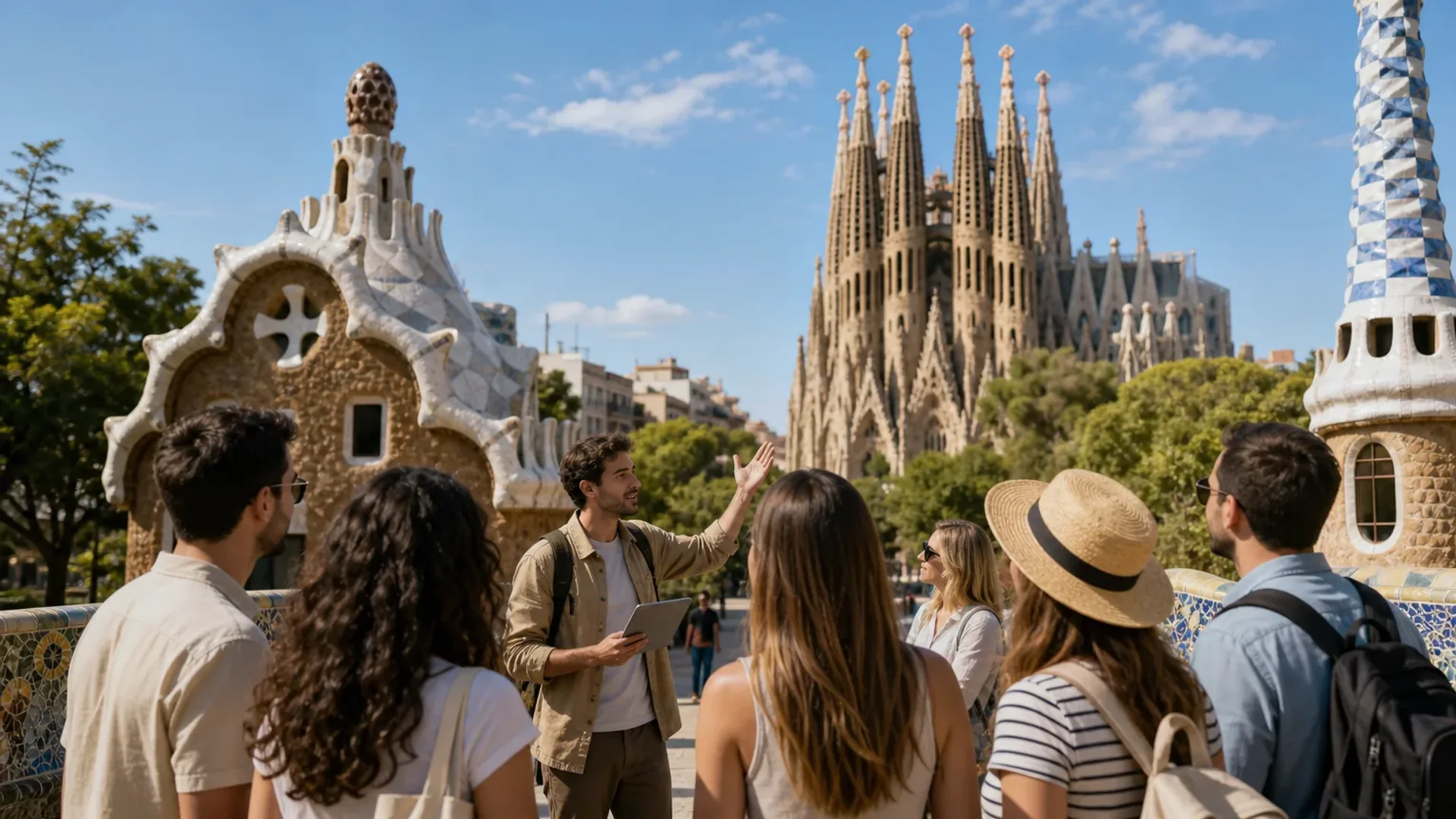
Barcelona’s free walking tours look like a great deal until you show up and realize “free” almost always means tip-required, and the tip expectation is higher than most people budget for. We’ve spent time sorting through the options so you don’t have to guess. Here’s what’s actually worth two and a half hours of your trip, and what to skip.
The Gothic Quarter is where most free walking tours in Barcelona begin and end. It’s the densest concentration of Roman ruins, medieval architecture, and genuinely interesting street history in the city, which is exactly why every operator runs a version of this route.
Most Gothic Quarter free tours run around 150 minutes — that’s two and a half hours on foot, often starting near the Plaça de Catalunya and winding through the Barri Gòtic to the Roman temple of Augustus, the old Jewish quarter, and the Cathedral of Barcelona. The Gothic Quarter layers Roman, medieval, and early modern history into a small area, which means a good guide has plenty of material without needing to rush.
The honest caveat: this is the most crowded category of free tour in Barcelona. On peak summer days, groups can hit 20 to 30 people, which makes it hard to hear the guide and harder to stop and look at anything without blocking pedestrian traffic. If you’re doing this route in July or August, go for an early-morning start if the operator offers one. Late morning and midday tours through the Gothic Quarter are loud and slow.
Language availability is also something operators rarely advertise clearly. Most English-language tours run daily, but Spanish and other language options depend on the company and the day. Check before you show up, especially if you’re traveling with non-English speakers. This is a real gap in how most free tour operators communicate online.
El Born and Barceloneta sit east of the Gothic Quarter and attract fewer tour operators, which is exactly why they’re worth considering. El Born is the neighborhood around a landmark Gothic church and a modernist covered market. Barceloneta is the old fishermen’s quarter that runs into the beach. Neither gets the same volume of free tour traffic as Las Ramblas or the Gothic Quarter, so group sizes tend to stay smaller.
A free tour focused on El Born typically covers the neighborhood’s role in the 1714 Siege of Barcelona, the ruins now visible beneath a cultural center built over the old Ribera neighborhood, and the contrast between the medieval church and the modernist market nearby. This is the kind of layered storytelling that works well in a walking format because you’re literally standing above history. The cultural center sits over an archaeological site of the old Ribera neighborhood, demolished after the siege, and you can see it through the glass floor.
Barceloneta tours tend to focus more on the neighborhood’s transformation from a working fishing district to a tourist-heavy beach strip. That’s a less romantic narrative, but it’s an honest one. A guide who leans into it can make the walk genuinely interesting rather than just pointing at beach bars. The risk with this route is that some operators treat it as a filler add-on to a longer Gothic Quarter tour rather than giving it proper attention.
We recommend checking whether a tour dedicated to El Born runs as its own product or just as an extension. A standalone El Born tour of 90 to 120 minutes is more worthwhile than a padded 3-hour combined route that rushes both neighborhoods. If you’re already planning time in southern Europe, the same principle applies to walking tours elsewhere: context-specific depth matters more than breadth. We cover a similar dynamic in our guide to things to do in Bremen, where a focused guided tour of the Town Hall beats a generic city circuit.
If you’ve already done the Gothic Quarter or you’re arriving in high season and want to avoid the Las Ramblas corridor entirely, Gracia and Eixample are the right alternatives. Eixample is the 19th-century grid district where most of Gaudí’s major works sit. Gracia is the former independent village that got absorbed into the city but still has a distinct neighborhood feel, with squares, local markets, and almost no souvenir shops.
A free tour of Eixample that covers the Cerdà grid plan, the Sagrada Família exterior, Casa Batlló, and Casa Milà (La Pedrera) gives you a solid orientation to Modernisme architecture without paying for interior entry. The interiors of those buildings cost real money. But the exteriors are public-facing and a good guide can explain the architecture, the symbolism, and Antoni Gaudí’s design logic in a way that makes the paid interior visits more meaningful afterward.
Free tours in Gracia are rarer and usually run by smaller operators. The neighborhood is walkable on your own, but a guide who knows the local history, including the annual Festa Major de Gràcia when residents decorate the streets, adds real texture. The downside is that free tour operators in Gracia change frequently. If you find one that’s been running consistently, that’s a good sign. If a company just added a Gracia route in the last few months, check recent reviews for guide quality before committing your afternoon.
One honest note: if someone on a travel forum is pushing a specific Eixample or Gracia free tour heavily, be cautious of astroturfed recommendations. We prefer tours that come up in multiple independent mentions, not ones that appear because someone created an account specifically to recommend them.
Not every traveler wants to follow a guide. If you’d rather walk at your own pace, stop when something interests you, and skip the tip calculation entirely, self-guided routes are a real option in Barcelona. The city’s layout makes it easier than most European capitals to build your own walking circuits.
The most reliable self-guided approach is to pick one neighborhood per half-day. The Gothic Quarter is dense enough that two hours of wandering without any agenda turns up Roman walls, old palaces, and unexpected courtyards. El Born to Barceloneta is a natural east-west walk that takes you from medieval streets to the waterfront in about 40 minutes of walking, longer if you stop. The Eixample grid is logical enough that you won’t get lost, and the density of Modernisme buildings on the Manzana de la Discordia block (Passeig de Gràcia between Carrer d’Aragó and Carrer del Consell de Cent) means you can see three major Modernisme buildings within a few meters of each other without buying tickets to any of them.
Audio guide apps exist for Barcelona and some are free. The quality varies. Some are genuinely well-researched with location-triggered audio. Others are thin scripts recorded over background music. We don’t recommend a specific app here because quality changes with updates, but reviews from the last three months are a better signal than the app’s overall rating, which can reflect versions that no longer exist.
The main thing you lose with self-guided routes is the ability to ask questions. A good guide can tell you why a specific building has bullet holes in it, or which of the narrow lanes was the site of a particular historical event. That conversational layer is real value. If you’re a detail-oriented traveler who researches deeply before arriving, self-guided works well. If context and storytelling matter to you, a guided tour, even a free one, is worth the tip.
“Free” walking tours run on a pay-what-you-feel model. In practice, that means you pay at the end based on what you thought the tour was worth. The honest answer to what’s expected is higher than most first-timers assume. A suggested tip of $11 USD per person is a reasonable baseline for a 150-minute tour with a knowledgeable guide. That’s around €10 at current exchange rates.
| Tour Length | Suggested Tip (USD) | Suggested Tip (EUR) | Notes |
|---|---|---|---|
| Under 90 min | $5–7 | €4–6 | Short route, adjust for quality |
| 90–120 min | $8–10 | €7–9 | Standard tour length |
| 150 min (2.5 hrs) | $11–15 | €10–14 | Confirmed baseline for Barcelona tours |
| Over 150 min | $15+ | €14+ | Tip based on value delivered |
Most guides in Barcelona are working this as their primary income. They don’t get a base salary from the operator in most cases. If the guide was good, the tip reflects that. If the group was large (say, 25 people all tipping €10), the guide has a reasonable day. If you’re in a small group of five, your individual tip matters more. Cash is preferred because it goes directly to the guide rather than through a payment processor.
Pro Tip: Carry small bills before your tour. Getting change from a €50 note at the end of a walking tour is awkward for everyone. A couple of €10 notes in your pocket means you can tip cleanly without the math becoming a group event.
If you’re also planning other paid experiences in Spain or beyond, the same budget-conscious thinking applies. Knowing the real costs of “low cost” activities, from gondola rides in Venice to museum entry fees, helps you plan honestly rather than getting surprised at the end of each day.
One thing most operators don’t publish: language availability. Walking tours in a multilingual tourist destination like Barcelona theoretically run in multiple languages, but in practice English tours are the most frequent and Spanish tours second. If you need a tour in French, German, or another language, confirm directly with the operator before you travel, not the day of.
Key Takeaway: Budget at least €10 per person for a 150-minute free tour in Barcelona. It’s not optional if the guide was good, and most of the guides running these tours every day are genuinely good at their jobs.
No, not fully. Free walking tours run on a tip-based model: you pay nothing upfront, but you tip the guide at the end based on what you thought the tour was worth. A reasonable baseline is $11 USD per person for a 150-minute tour with a knowledgeable guide. Budget for it so you’re not caught off guard.
Most run about 150 minutes, or two and a half hours. Some shorter options exist in the 90-minute range for specific neighborhoods. Factor in walking pace, group size, and how often the guide stops to answer questions, which can add 10 to 20 minutes on a curious group.
The Gothic Quarter has the most operators by a significant margin. It’s followed by El Born and the Eixample Modernisme circuit. Gracia and Barceloneta have fewer operators but smaller, more manageable group sizes. If you’re visiting in peak summer and group size matters to you, a less common neighborhood route will likely give you a better experience than the main Gothic Quarter circuit.
It depends on the operator. Many run as show-up tours where you meet at a set location, usually Plaça de Catalunya, at the advertised time. Others require an online reservation to cap group sizes. In high season (June through September), booking ahead is worth the extra step. A 30-person group on a narrow Gothic Quarter alley is technically a tour, but it’s not a great one.
Spanish tours run frequently and are easy to find. Tours in French, German, or other languages are less consistent and depend on the operator’s schedule. Most tour listing pages don’t highlight language options clearly, which is a real planning gap. If you need a specific language, contact the operator directly before you travel rather than assuming it’s available when you arrive.
If you want a structured introduction to Barcelona with a guide who can answer questions, the Gothic Quarter free tour is the most reliable starting point, but go early to beat the crowds. If you’ve already covered the Gothic Quarter or you want a quieter experience, an El Born-focused tour or a self-guided Eixample walk both deliver well. Start your research at Dream Book Travel’s Europe planning guides before you book flights, so your Barcelona days are already mapped out when you land. Carry cash, budget around €10 per person for the tip, and pick a guide who keeps the group small.
Use this Edinburgh itinerary 3 days plan for honest sightseeing, transit tips, free stops, museums, budget notes, and what to skip.
Find the best areas to stay in London for tourists, with honest advice for first-time visitors, culture lovers, foodies, and theater fans.
Find the best Greek islands for families by travel style, beach access, activities, and travel-day tradeoffs. Honest picks and planning notes.