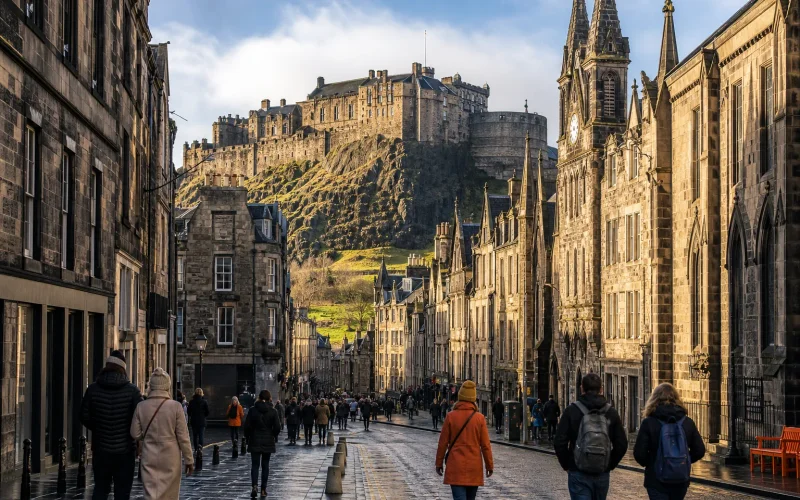
Edinburgh Itinerary 3 Days: A Practical Plan
Use this Edinburgh itinerary 3 days plan for honest sightseeing, transit tips, free stops, museums, budget notes, and what to skip.

Winter changes the question. You’re not only picking a city, you’re picking the kind of cold, daylight, crowds, and indoor life you can enjoy. We use this simple process to match your travel style with the right European city, whether you want mild streets in Lisbon or snow-lit nights in Stockholm.
We pulled winter solstice sunset times and December climate averages for six European cities, Lisbon, Seville, Vienna, Copenhagen, Prague, and Stockholm, using brilliantmaps.com and climate-data.org. Stockholm’s sun sets at 14:48 on December 21, a full 150 minutes before Lisbon’s 17:18. December highs range from Seville’s 16.6°C down to Prague’s 2.7°C, a 13.9°C spread, and Lisbon still averages 10 rainy days that month according to climatestotravel.com. Numbers this wide show why a city’s actual daylight, cold, and rain patterns matter more than its reputation when picking a winter trip.
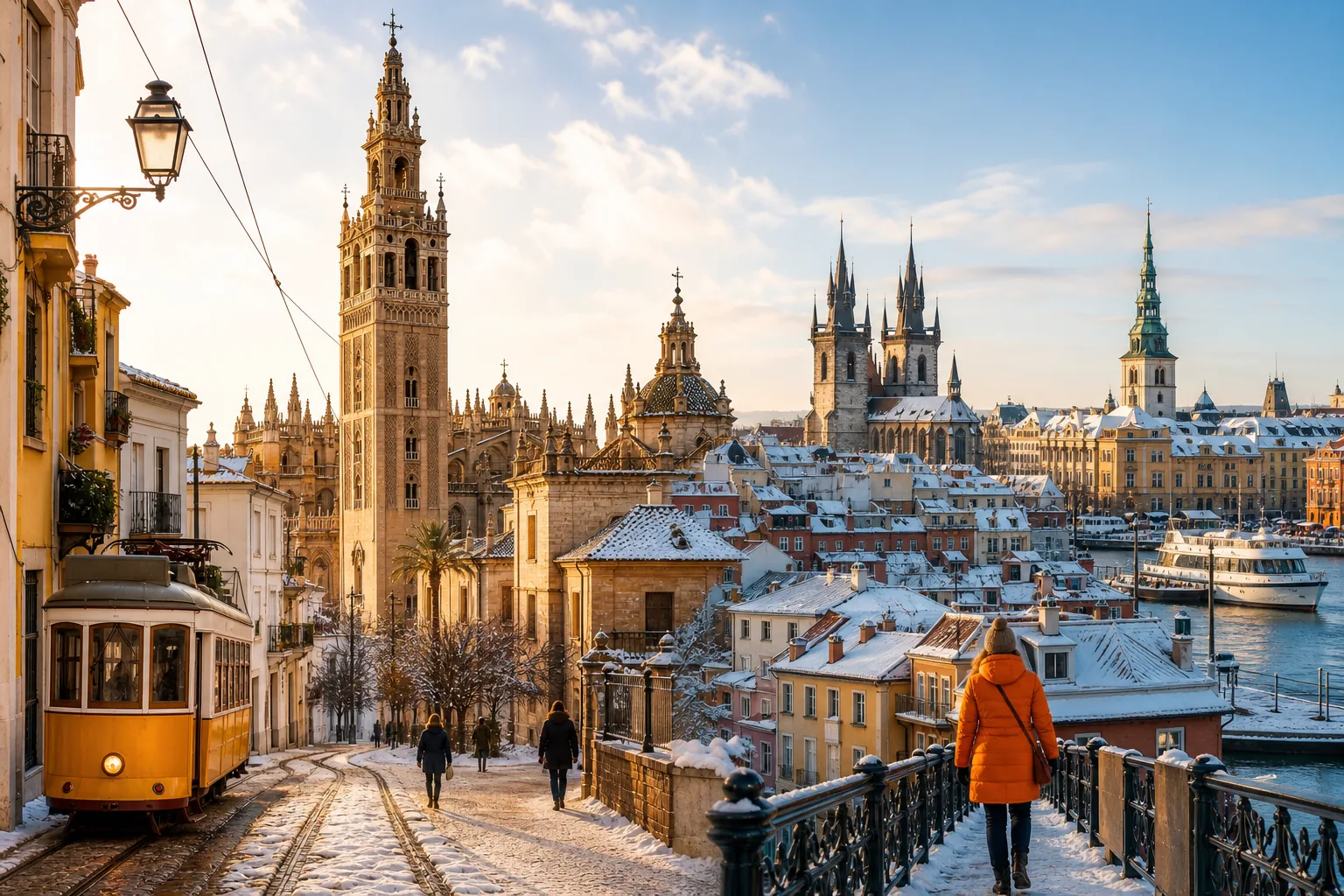
The best European cities to visit in winter depend on how you want the days to feel. Lisbon suits travelers who want mild air, hills, tiled streets, and long meals. Vienna fits people who enjoy museums, concert halls, coffee houses, and order. Copenhagen works for travelers who accept cold weather in exchange for warm interiors and a slower pace.
Lisbon is the safer pick if outdoor walking matters most. Winter can still bring rain, and the hills make wet days tiring. Still, the city gives you more usable daylight than northern Europe and makes sense for a relaxed short break. If you’re unsure, our honest Lisbon explainer covers the trade-offs before you commit.
Seville has a similar appeal, with a different feel. Winter lets you walk through major squares without the strain of summer heat. The city’s orange trees and tapas culture suit travelers who want to move between short outdoor walks and long indoor meals. It is less suitable if you want snow, festive markets, or a dense museum schedule.
Vienna is at its strongest when you build the trip around indoor culture. Spend one morning in a museum, then take a tram to a coffee house. Add music or a bakery stop instead of trying to fill every hour with outdoor sightseeing. The city’s winter character comes from structure and comfort, not mild weather. Our guide to Vienna in January is useful if your trip falls after the holiday period.
Copenhagen makes sense for people who enjoy design, food, and conversation more than landmark collecting. Short days are part of the deal. You’ll need proper layers and a willingness to spend time indoors. The reward is a city that works with winter rather than pretending it isn’t there.
Prague and Budapest sit between mild southern trips and northern cold. Both suit travelers who want architecture, hearty food, and a strong indoor backup plan. Prague can feel gray for long stretches, so it’s a poor match if sunshine affects your mood. Budapest works well when thermal bathing is a main reason for going, though you should still check opening hours before you build the day around one place.
For a sharper match, score each city from one to five on these factors:
The highest score is not automatically the answer. A city that scores well for museums may still disappoint if you need mild afternoons.
Winter travel often rewards a slower pace. A source discussing seasonal city travel makes the same point about places such as Vienna, Copenhagen, Seville, and Lisbon: their appeal shifts when crowds thin and daily life moves indoors. Read that view with a critical eye, but use it to ask a better question: what do you want to notice?
The best European cities to visit in winter can become poor choices when the route wastes a full day. Check the door-to-door journey before you fall for a cheap flight. A low fare means little if it requires a long airport transfer, two connections, or an overnight stay.
Start with your departure airport and search a flexible window of three to five days. Compare the full trip, not only the flight. Add airport transfers, rail links, checked bags, seat fees, and one meal during the travel day.
Next, check the final arrival time. A late landing may mean limited public transport or a higher transfer cost. Winter weather can also make a tight connection a bad bet. Give yourself room when the itinerary crosses a large airport or depends on a short train connection.
Use a simple travel-day worksheet:
Then compare the result with a direct route. Sometimes the more expensive ticket wins because it saves a workday and reduces the chance of a missed connection.
For rail trips, check the official operator before relying on a third-party timetable. Winter schedules can change, and engineering work may affect weekend service. You’ll also want to know if a ticket ties you to one departure or permits a later train.
Weather deserves its own check. Look at normal conditions for your travel month, then plan for worse days. The general climate patterns across Europe explain why southern cities often feel easier in winter, while northern trips require more planning around daylight and cold.
That does not mean mild cities are rain-free. Lisbon and Seville can still have wet days. It means your backup plan is more likely to include a walk, a market, or an outdoor lunch when conditions improve.
We also check local transport before booking a stay. A central room may cost more but save time and fares. A cheaper room outside the center may work if the last train runs late and the route stays simple.
Set a price alert once you know the route. Then stop checking every hour. Winter fares move, but obsessive checking rarely improves the trip.
Useful test: if the connection plan looks fragile on a calm summer day, it won’t feel better with a delayed winter flight and a suitcase.
Now compare the cities that survived your first filters. The strongest fit is the one with a good main plan and an honest backup plan. We would rather see you enjoy four repeatable days than chase six places that only work in perfect weather.
Prague is worth considering if you like old streets, museums, classical music, and filling food. Winter prices can be more attractive outside the holiday rush, but January through March can feel dark and gray. The city is still busy in popular areas, so don’t assume winter means empty streets. A local guide describes Prague’s cold-season trade-off well: fewer crowds can come with less festive energy.
Stockholm suits travelers who want northern design, waterfront walks, museums, and a clear sense of season. It is a poor match if you need long afternoons outside. Pack for cold and plan your indoor stops by neighborhood so you’re not crossing the city every hour.
Lisbon and Seville work better for travelers who want flexible outdoor time. Vienna is the stronger pick for planned cultural days. Copenhagen suits people who see cafés and restaurants as part of the trip rather than a break from sightseeing.
 City type City type | Works well for | Watch out for | Backup plan |
|---|---|---|---|
| Lisbon | Walks, food, mild days | Rain and steep streets | Museums, cafés, neighborhood meals |
| Seville | Outdoor culture and relaxed meals | Less winter atmosphere | Palaces, markets, long lunches |
| Vienna | Museums, music, cafés | Cold and formal pace | Indoor cultural route |
| Prague | Architecture and lower-season city breaks | Gray weather and tourist pockets | Museums, pubs, concert halls |
| Copenhagen | Food, design, calm evenings | Short daylight and high costs | Indoor neighborhood day |
| Stockholm | Nordic atmosphere and museums | Cold, dark afternoons | Museum district and warm cafés |
When judging Prague’s historic center, it helps to know that the city’s Old Town is part of a UNESCO-listed historic area. That status does not make every street quiet or every attraction worth your time. It does explain why walking remains a major part of the experience, even in cold weather.
Skip a city when its main appeal depends on weather you’re unlikely to get. A coastal city can still work in winter, but don’t book it expecting beach conditions. A northern city can still feel special without snow, but don’t make the aurora your only reason to go.
The best European cities to visit in winter need a different itinerary shape. Plan fewer major sights per day, then group stops by neighborhood. This cuts outdoor transit and gives you room to warm up without losing half the afternoon.
Use an anchor plan for each day:
Check opening hours before you lock the route. Museums may close on different weekdays. Seasonal attractions can run shorter hours. Christmas markets may finish earlier than expected once the holiday period ends.
Build your first day lightly. A winter arrival often takes longer than expected because of baggage, transit, and a dark early evening. Put a simple neighborhood walk near your hotel on the schedule. Save the farthest sight for day two.
Keep a daily cost sheet. You don’t need perfect prices before booking, but you do need categories:
Rates change by date, so we won’t invent a neat citywide budget. Check the official attraction site and transport operator for current prices, then add a margin for weather-driven choices. A rainy afternoon can turn a free walk into a museum ticket and a café stop.
Neighborhood planning also helps slow travelers. In Lisbon, you may prefer one hill area per day instead of crossing the city repeatedly. In Vienna, pair a museum visit with nearby cafés. In Stockholm, group indoor sights before the light fades.
Don’t pack every night. Winter trips benefit from open space. You may find a good local meal, a small event, or a street worth revisiting. The guides won’t always tell you that the best part of a city break can be having enough time to return to one place.
Dream Book Travel keeps this final stage focused on what you’ll actually do, not how many attractions you can list. Choose your city, set a weather-proof route, and book the one time-sensitive activity first.
Lisbon and Seville are strong choices for milder winter city breaks. They can still have rain and cool evenings, so pack layers rather than summer clothes. These cities suit travelers who want outdoor walks and relaxed meals. They are less suitable if your main goal is snow, Christmas markets, or northern lights.
Europe is worth visiting in winter if you’re happy to trade long daylight for quieter streets and more indoor time. Vienna, Prague, Copenhagen, and Lisbon each work for different reasons. The trip becomes harder when you choose a city for summer activities, then refuse to change the itinerary when the weather turns.
Vienna is a strong all-purpose choice for a winter city break because museums, music, cafés, and public transport support a full itinerary in cold weather. Lisbon is better for mild outdoor days. Prague suits architecture and hearty meals. Copenhagen fits travelers who enjoy slow evenings and indoor culture.
Prague is worth visiting in winter if you can handle cold, short days, and periods of gray weather. January through March can feel quieter than the holiday season, while December brings markets and heavier demand. The city works best when you mix walks with museums, cafés, and indoor cultural stops.
Three full days works for one compact city, while four or five days gives you room for bad weather and slower mornings. We suggest avoiding a packed multi-city route unless the rail links are simple. Winter travel days can consume more energy than the timetable suggests, especially after a late arrival.
Choose Lisbon or Seville if mild outdoor time matters most. Pick Vienna or Prague if indoor culture can carry the trip. Choose Copenhagen or Stockholm only when you genuinely want a darker, colder season. Start with Dream Book Travel, score your priorities, then set one price alert and build a route that still works when the forecast does not.
Use this Edinburgh itinerary 3 days plan for honest sightseeing, transit tips, free stops, museums, budget notes, and what to skip.
Find the best areas to stay in London for tourists, with honest advice for first-time visitors, culture lovers, foodies, and theater fans.
Find the best Greek islands for families by travel style, beach access, activities, and travel-day tradeoffs. Honest picks and planning notes.