
Edinburgh Itinerary 3 Days: A Practical Plan
Use this Edinburgh itinerary 3 days plan for honest sightseeing, transit tips, free stops, museums, budget notes, and what to skip.
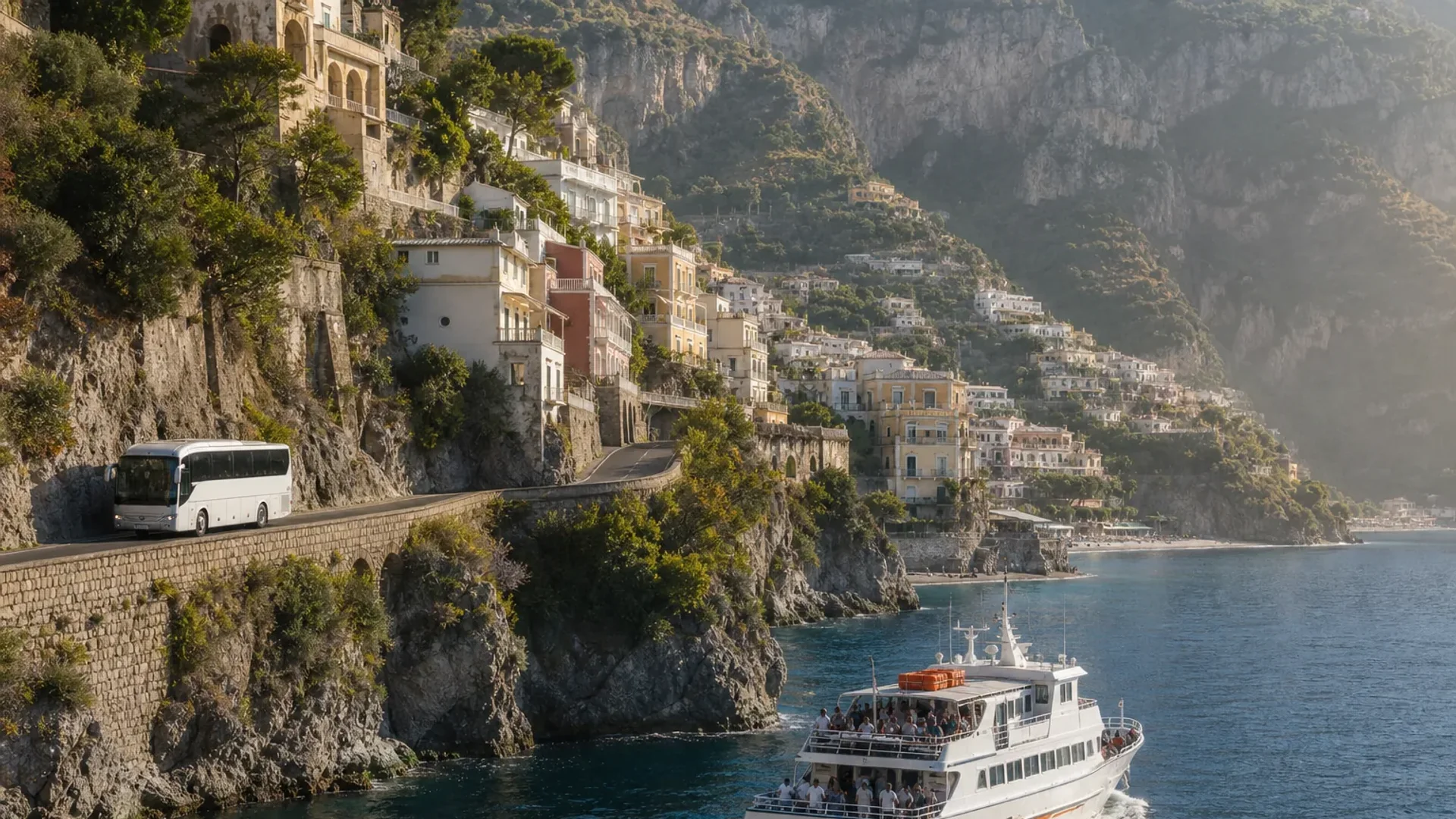
A seven-day Amalfi Coast itinerary can feel calm or exhausting. The difference comes down to where you sleep and how much time you allow for each move. Some days cost €0 to €10, while one premium day can reach €30 per person. We built this route around Positano, Capri, Ravello, Amalfi, and Sorrento without pretending the coast moves fast.
Dream Book Travel focuses on the details that often get skipped, such as fare changes, queues, luggage problems, and the day you should leave blank.
We checked the 5 highest-ranking Amalfi Coast 7-day itinerary guides for 6 planning details, 30 checks in total. Only 1 of 5 warned about overcrowded buses, and only 1 of 5 flagged Positano’s suitcase-and-stairs problem. Only 1 of 5 built in a blank day, and none named a Capri landing fee or a parking-cost figure for skipping a rental car. Those gaps are exactly where luggage logistics, bus crowds, and a blank recovery day change a 7-day Amalfi Coast trip.
Your base shapes the whole Amalfi Coast itinerary. Pick the town that fits your travel style, not the one that looks best in a photo.
Sorrento works best for transport. It sits outside the coast proper, but it has the easiest links to Naples, Pompeii, Capri, Positano, and Amalfi. The local train connects Sorrento with Naples. Local buses run south toward the coast. Boat services also leave for Capri and coastal towns during the sailing season.
Sorrento makes sense if you arrive by train, want day trips, or prefer a town that stays active at night. It also gives you a simpler final morning if your onward route starts in Naples.
Amalfi works best as a central base. Buses and ferries meet here, so you can reach Ravello, Positano, and nearby villages without crossing the whole coast each day. Amalfi has a cathedral, a broad piazza, and a working port. The shoreline is pebbly and mostly built up, so don’t book it for a classic sand beach.
Positano works best for the postcard version of the trip. It has the steep lanes, the main beach, and quick ferry links when the sea is calm. The trade-off is clear. Rooms cost more, stairs are constant, and carrying a suitcase uphill can turn check-in into a workout.
Praiano suits travelers who want quieter nights. It sits between Positano and Amalfi, with access to the Path of the Gods area. It is less central than Amalfi, so check the last bus before booking dinner or a late arrival.
Ravello is a fine place for one or two quiet nights, but I wouldn’t use it as a first base unless you want hilltop mornings. The town sits above Amalfi. Every trip to the port takes extra time.
We’d skip a rental car for this plan. The SS163 coast road is narrow, parking is scarce, and traffic can erase a full afternoon. Boat services can be less stressful when available, while road transport provides a fallback. The Amalfi Coast’s steep geography explains why short map distances can still mean slow journeys.
For a first trip, I recommend four nights in Sorrento or Amalfi, followed by two nights in Positano or one final night near your departure route. If changing hotels sounds tiring, stay in one base for all seven nights.
Key Takeaway: Choose Sorrento for easy connections, Amalfi for a central route, or Positano for atmosphere. Don’t choose a base before checking the return journey.
A good Amalfi Coast itinerary treats transport as part of the day. You won’t glide between towns in ten minutes just because they look close on a map.
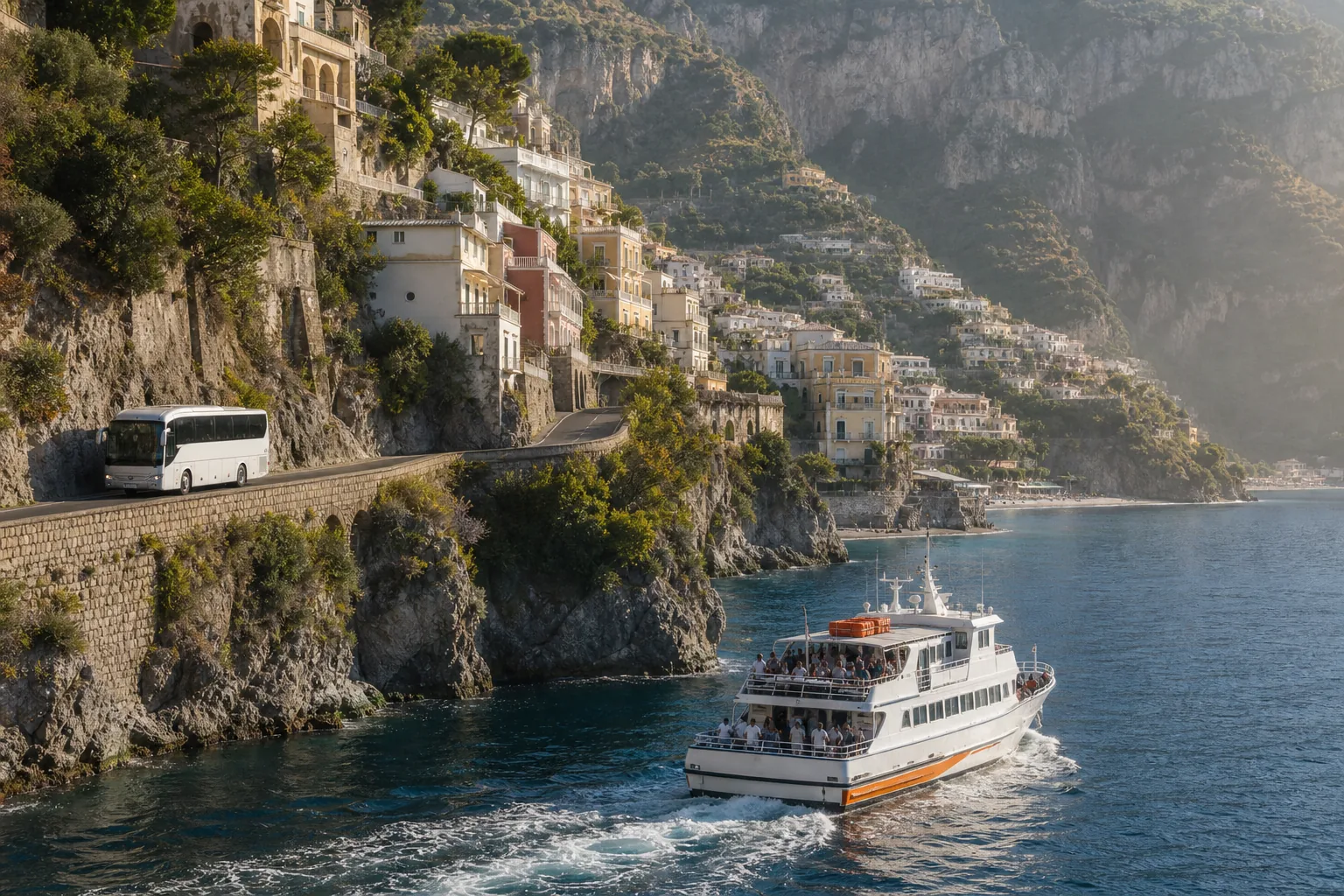
Use the network in three layers. Trains bring you to Naples, Sorrento, or Salerno. Bus services connect the coast road. Boat services skip the worst road traffic but depend on the sea.
A single bus fare varies by route. A Travelmar ferry from Positano to Amalfi is an option. From Sorrento to Positano, the bus takes roughly 45 to 50 minutes in light traffic. In peak season, plan longer.
Boat services are often faster and easier on the stomach. They also stop running when the weather turns rough. Keep a bus plan ready. A boat-only day is a bad idea if you need to catch a flight.
| Travel choice | Use it when | Watch out for |
|---|---|---|
| Bus service | You want the lowest fare or need an inland route | Traffic, full buses, and limited late service |
| Boat service | You want a scenic town-to-town move | Wind cancellations and sold-out departures |
| Train | You are moving between Naples, Sorrento, or Salerno | There is no train along the coast itself |
| Private transfer | You have luggage or a fixed flight time | Higher cost than public transport |
 |
Buy paper bus tickets before boarding at a tabacchi shop or newsstand. Validate the ticket once you step on. If you use a digital ticket, activate it before the ride starts. Drivers may not sell tickets on the bus.
For your route, leave the hardest transfer early. A Positano to Amalfi ferry takes about 25 minutes when it runs. Amalfi to Ravello takes about 20 minutes by bus. The Path of the Gods needs about two hours of public transport before the walk even starts, then roughly three hours on the trail.
The Amalfi Coast is a cultural landscape shaped by steep terrain, terraces, and small settlements. That description matters when you plan. This is a vertical region, not a flat beach strip.
Keep at least one day free of a long transfer. If buses run late earlier in the week, that blank space can absorb the delay without wrecking your plan.
This seven-day Amalfi Coast itinerary works because each day has one main job. Leave room for lunch, stairs, weather, and the odd place you want to revisit.
Make arrival day local. Drop your bags, walk the lanes near your base, and keep dinner simple. Jet lag is real, and a packed first day can make the rest of the week feel like work.
If you arrive through Sorrento, a public bus connects with Positano. Choose your onward transport based on sea conditions and your luggage.
Start in Bomerano and walk toward Nocelle. The route runs about 7.8 kilometers and takes around three hours. Add the bus connections, breaks, and the descent toward Positano. This becomes a six- to seven-hour day.
Wear trail shoes. Carry at least 1.5 liters of water. If rain has affected the path, check local conditions before leaving. The shorter Nocelle loop gives you a fallback when the full route is not suitable.
Take the ferry to Amalfi if the sea is calm. Visit the cathedral area, then take the bus uphill to Ravello. Ravello’s gardens are a natural stop. Allow half a day for the hilltop town.
Keep lunch in Amalfi, where a deli counter or panino is usually easier on the budget. Have coffee or gelato in Ravello, then return before the last useful bus.
Walk to a nearby beach from central Positano. Add Laurito only if you still have the energy. This day can cost €0 to €10 if you walk and use public beach space.
Public beaches are small. Beach clubs can cost €30 to €60 per day for two loungers. Arrive before 10 a.m. in the busiest months if you want free space.
Capri is worth a day, not a rushed add-on to Amalfi. Pick one or two areas. A central square, a scenic viewpoint, and Anacapri are enough for a first visit.
The ferry from Positano has a one-way fare that varies. Capri also adds a €5 landing contribution during the cited seasonal period. A Blue Grotto visit can bring long queues, so skip it if the line eats half your day.
Use Sorrento for a lemon grove visit, a museum, or a long lunch. Try gnocchi alla sorrentina, which is associated with the town. Don’t stack this day with another island trip.
If you already sleep in Sorrento, make this your easy local day. If you stay on the coast, allow extra time for the bus or ferry back.
Use the final day for the place you missed. Ravello works well for a slower sunset visit, but keep the route short if you leave the next morning.
Plan for some days to cost more than others rather than treating a daily average as a promise.
Readers planning another Mediterranean trip can use Dream Book Travel’s Greece itinerary with ferry logistics and travel costs as a model for spacing out island moves.
Your Amalfi Coast itinerary needs two budgets: a normal day and an expensive day. The average can hide the ferry, activity, or sunset cost that changes the whole week.
For transport, set aside money for local bus rides. A day pass can work when you make several bus trips. Ferry fares vary by route and season. Capri is the outlier. The ferry alone can be a significant expense from Positano, before the island contribution and local tickets.
Entry fees stay modest when you choose carefully. Some garden attractions, historic sites, and museums charge admission. The Path of the Gods has no entry fee, though the bus ride to Bomerano still adds cost.
For meals, use a bar coffee in the morning. Buy a panino or fruit before a hike. Save one sit-down meal for the town you care about most. A beach club can add to the day’s cost, while public beach space costs nothing beyond what you bring.
Seven-day costs vary widely by travel style. Flights aren’t included, and rates change with the month and room type.
Pro Tip: Keep €30 per person unassigned for the expensive day. It is easier to spend less than to find cash after a ferry booking or paid sunset plan.
Dream Book Travel uses the same line-item approach in its Mediterranean planning work. That makes it easier to compare a low-cost bus day with a ferry-heavy day before you book.
The last step turns a nice Amalfi Coast itinerary into one you can actually follow. Plan the awkward parts before you arrive.
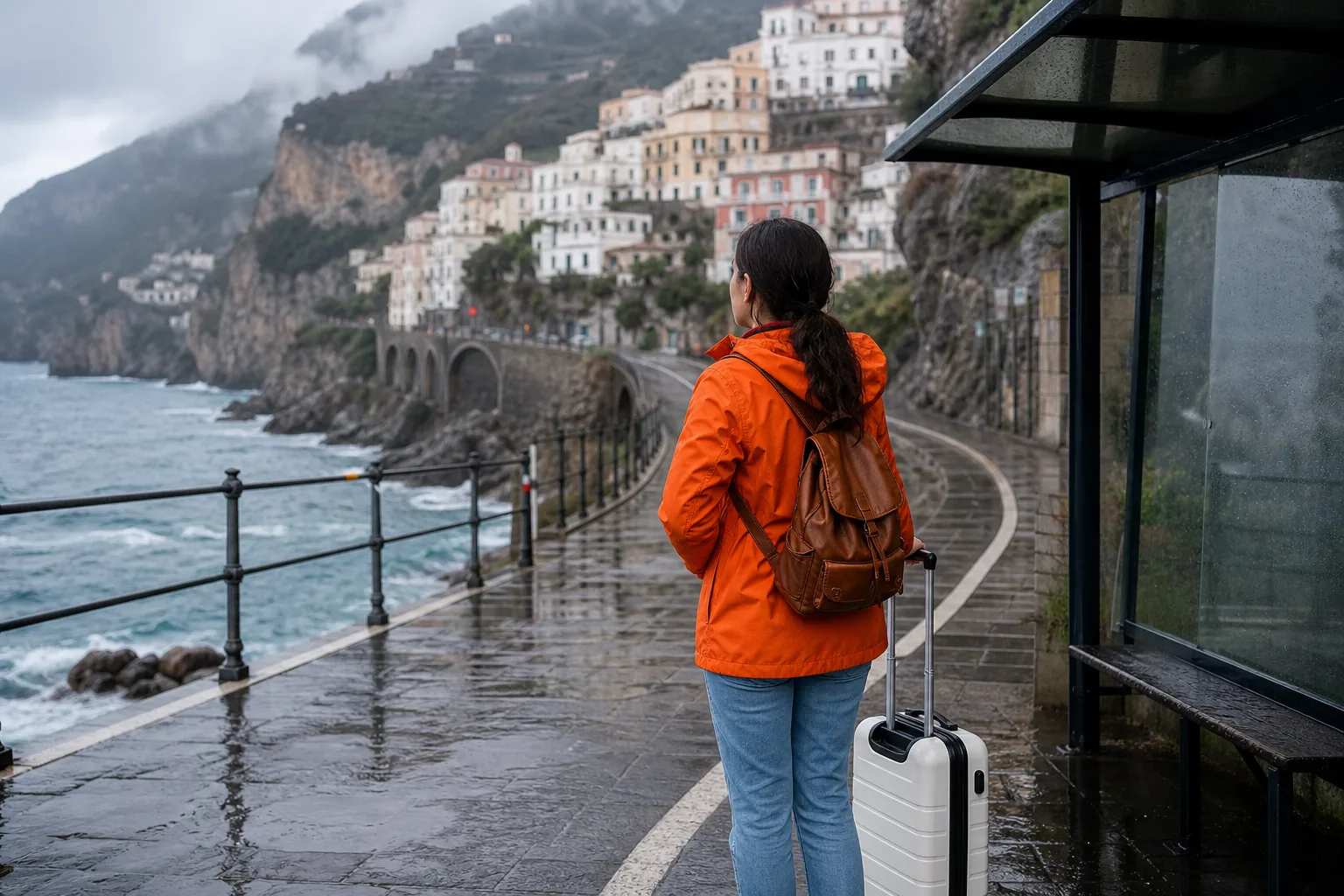
Travel with one small case if you can. Positano and Ravello have steep lanes and long stair runs. A large suitcase becomes a problem when a taxi cannot reach your door or a bus has no room below.
On arrival, confirm the final route before leaving the station or port. If you use a bus, buy the ticket first. If you use a ferry, check the sailing that matches your luggage and arrival time. Leave four to six hours for an arrival-and-settle day, not a full sightseeing schedule.
Weather needs a plan B. Ferries mainly run between April and October, and rough seas can cancel them. When that happens, buses may fill quickly because everyone shifts to the road. A recent service disruption showed how packed buses can leave passengers waiting with luggage.
Don’t schedule Capri on the same day as a flight. Don’t place a long hike before an early departure. If you leave from Naples, Sorrento gives you a simpler final night than Positano. If you leave from Salerno, Amalfi can reduce the backtrack.
Download route maps before a hike. Phone signals can drop in valleys. Keep a paper note with your lodging address and the name of your arrival stop.
Our one hard skip is the rental car unless your lodging has private parking and you already know the road. The coastal road can move slowly, and parking may cost €25 to €40 per day. A car gives you control, but it can also trap you in traffic when a ferry or bus would have been simpler.
For another route built around honest travel days, Dream Book Travel’s Greek islands route guide uses the same rule: count transfer time as part of the trip, not as empty space.
Key Takeaway: Pack light, keep a road backup for every ferry day, and protect the final morning from a long connection.
Seven days gives you enough time for Positano, Amalfi, Ravello, Capri, Sorrento, and one slow day. Three days covers the main sights but feels tight. A longer stay works when you leave room for weather and rest instead of adding another town every morning.
Amalfi is the most central base for buses and ferries, while Sorrento is easier for trains and day trips. Positano suits travelers who want to sleep in the famous cliff town. We prefer Amalfi or Sorrento for a first seven-day route because both reduce backtracking.
The bus is cheaper and runs inland routes, while the ferry is often faster between coastal towns. Coastal bus fares vary, while the Positano to Amalfi ferry offers a direct coastal option. Ferries can cancel in rough seas, so keep a bus fallback.
Capri is worth a full day if you want island views and don’t mind a higher transport cost. From Positano, transport costs extra, plus a €5 landing contribution during the seasonal period. Skip the Blue Grotto if queues take over the day.
You usually shouldn’t rent a car for this itinerary. The coast road is narrow, traffic is heavy in peak season, and parking can cost €25 to €40 per day. Use trains for the gateway leg, then combine coastal buses with ferries. A private transfer makes more sense when luggage and flight times matter.
Choose one base, give each day one main commitment, and reserve €30 per person for the costly outlier. Before booking rooms, mark every ferry day and check the last bus home. That small bit of planning is the difference between seeing the coast and spending your holiday arguing with a timetable. Dream Book Travel is a useful next stop when you want the same clear euro breakdown for another Mediterranean route.
Use this Edinburgh itinerary 3 days plan for honest sightseeing, transit tips, free stops, museums, budget notes, and what to skip.
Find the best areas to stay in London for tourists, with honest advice for first-time visitors, culture lovers, foodies, and theater fans.
Find the best Greek islands for families by travel style, beach access, activities, and travel-day tradeoffs. Honest picks and planning notes.